Cavities, gum issues, enamel erosion, and tiny cracks do not always hurt or show other visible signs. When a dental problem is already happening, you can think everything is alright. Regular checks allow your dentist to see these problems early, before they get bigger or more painful.
Preventive dental care isn’t only what your dentist sees in the chair. They also examine your everyday routines, such as brushing, eating, biting, gum health, and any dental work you have. These details can speak volumes to your dentist about what your teeth and gums need.
Dental visits in 2026 will be better thanks to improved diagnostic technologies. Dentists can use these instruments to detect changes that might be missed during a simple visual examination.
Keeping up with regular exams is still one of the easiest things you can do to look after your natural teeth and prevent problems that may become more difficult, unpleasant, or expensive to cure.
What Is Preventive Dentistry?
Preventive dentistry is the practice of maintaining healthy teeth and gums so that problems do not need treatment. It includes routine dental checkups, professional cleanings, oral cancer screenings, dental X-rays where needed, and advice on daily oral care.
During a preventive appointment, your dentist will look for early symptoms of decay, inflamed gums, wear of the enamel, cracks and other oral health problems. Your team may also consider how you brush, what you eat, whether you use tobacco or grind your teeth, or any other habits that influence your teeth and gums.
Preventive care also includes procedures to guard the teeth. Depending on your needs, your dentist might recommend fluoride treatments, dental sealants or a special cleaning schedule.
Also Read: How to Choose the Right Dentist for Your Family
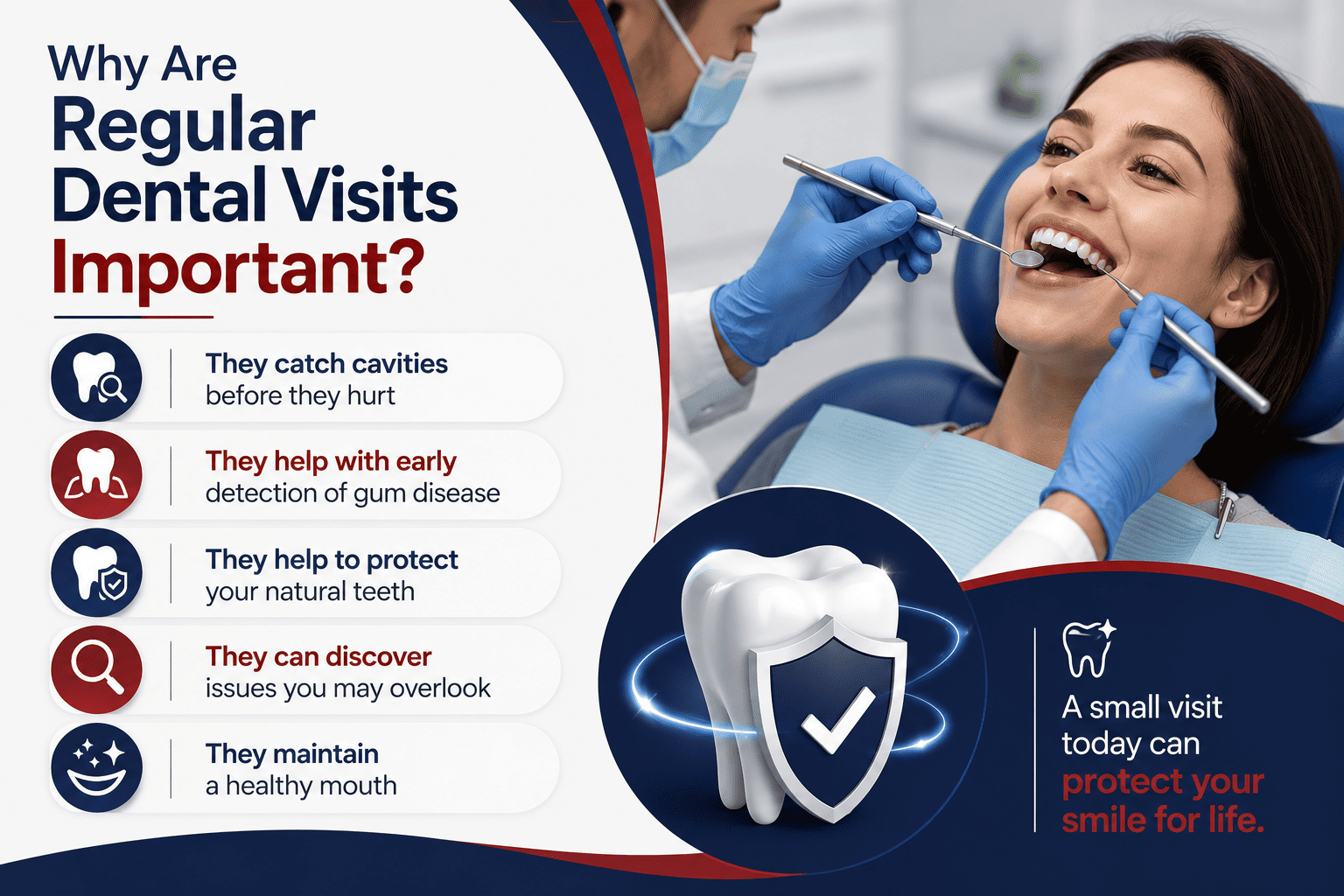
Why Are Regular Dental Visits Important?
Dental checkups can catch problems long before you feel them. That early information can assist you to safeguard your teeth and avoid more complex treatment.
They catch cavities before they hurt
In most cases, the initial stages of tooth decay are painless. A dentist can identify changes in the enamel and treat the cavity before it reaches the interior part of the tooth.
They help with early detection of gum disease
Gingivitis shows up with bleeding, redness, and swelling. During a dental exam, deeper periodontal pockets and alterations in the supporting bone might also be found.
They help to protect your natural teeth
Early treatment prevents decay, infection, or gum disease from harming the tissues that support your teeth. This can help you preserve your natural teeth longer.
They can discover issues you may overlook
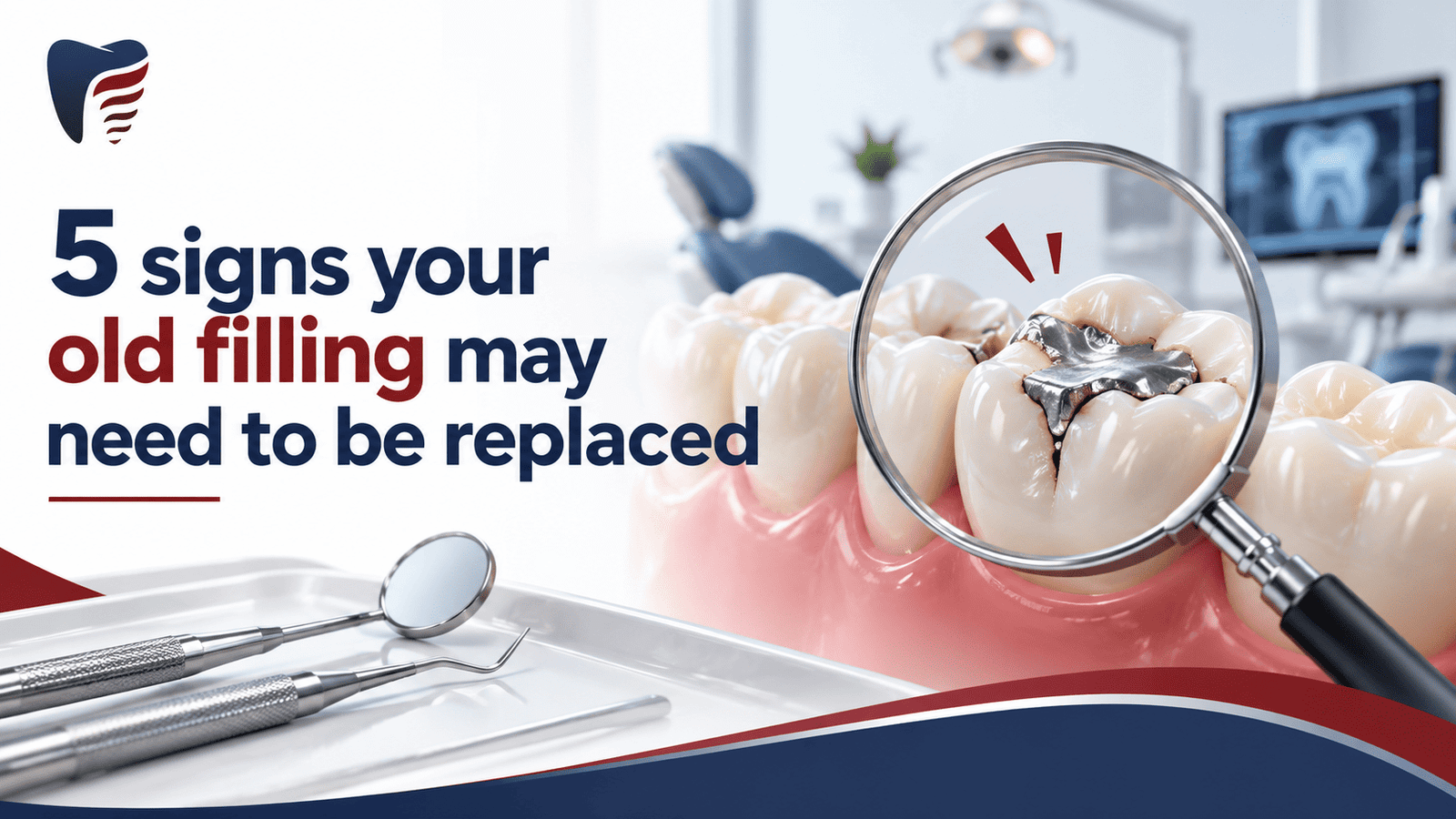
Cracks, damaged enamel, fillings that are falling out, problems with the bite and evidence of teeth grinding can all occur with no evident symptoms. These changes can be seen by your dentist at a regular check-up.
They maintain a healthy mouth
Your dentist can see the changes in your teeth and gums from one appointment to the next. This means you can more easily find any new issues and make changes to your preventative care plan.
What Happens During a Preventive Dental Visit?
A preventive visit is more than a brief inspection at your teeth. Your dentist looks for symptoms of disease in your mouth and utilizes the results to plan your continuing care.
Dental check-up
Your dentist will check your teeth, gums, bite, existing restorations, and other oral tissues. The exam can show decay, gum irritation, fissures, enamel erosion, and other problems.
Professional cleaning
A dental hygienist cleans plaque and tartar off teeth, even in spots your brushing at home doesn’t reach. It controls the microorganisms that cause cavities and gum disease.
Digital X-ray and other imaging methods
Your dentist may utilize digital X-rays when he needs to look underneath the surface of the tooth. Imaging may be used to determine if there is decay between teeth, loss of bone, impacted teeth, or changes around current dental treatment.
Screening for oral cancer
The dental team looks for unexpected changes in the lips, tongue, cheeks, gums, and other soft tissues. If you have a sore, bump or other location that doesn’t heal, it’s important to get it checked out early.
Discuss your everyday habits
Your dentist may ask about brushing, flossing, diet, tobacco usage, teeth grinding, or tooth sensitivity. This information helps us to provide advice targeted to your real oral health needs.
A preventive visit allows your dental team to have a clear picture of what is going on in your mouth and what you can do to keep your mouth healthy.
Must Read: 7 Signs You May Be a Good Candidate for Dental Implants
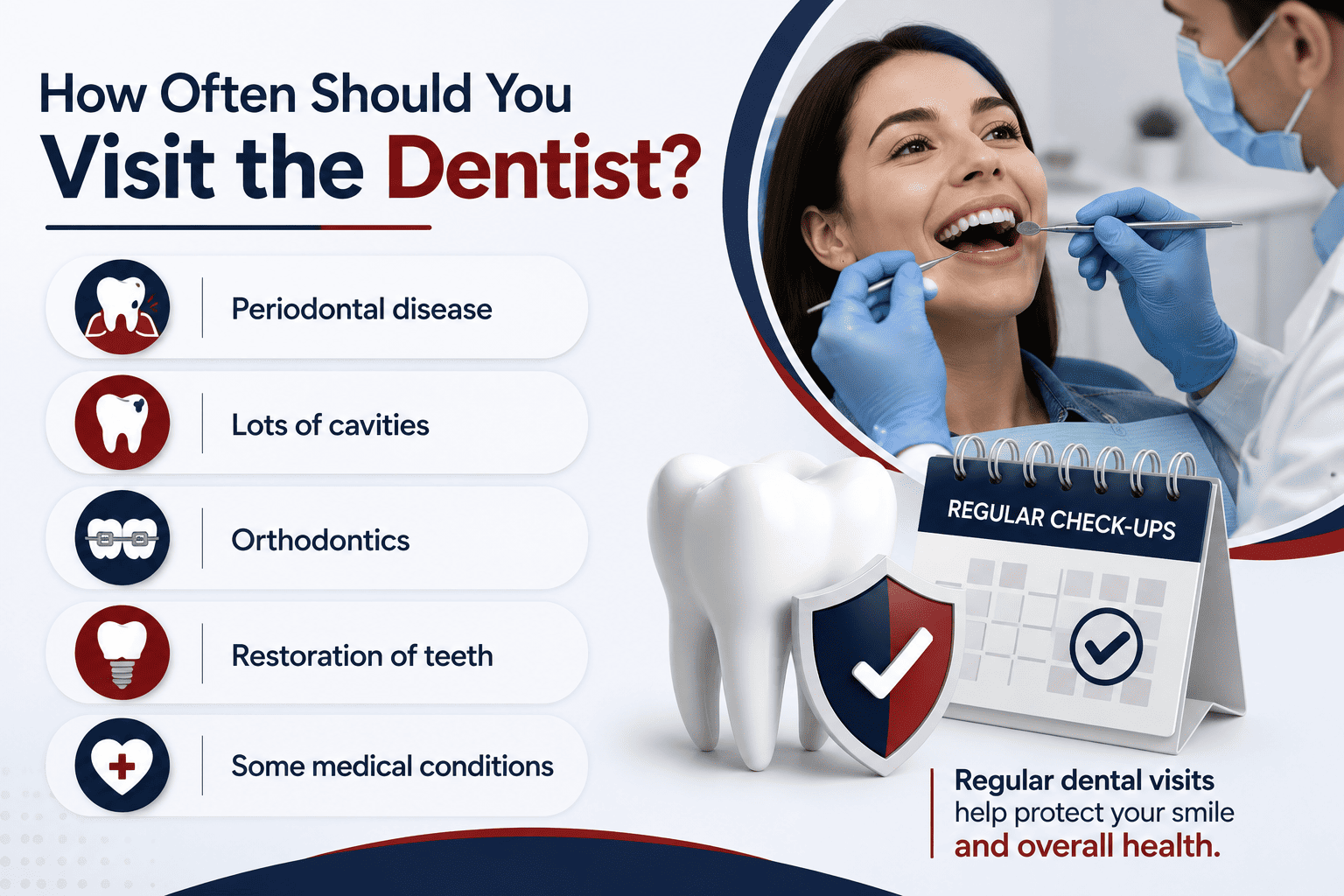
How Often Should You Visit the Dentist?
A good rule of thumb is six-month visits to the dentist, but it is not a hard and fast rule for everyone. Some people need to come in more often, and some may do great with less visits. It actually depends on your teeth, gums, and dental history.
If you have, you could require extra visits:
Periodontal disease
Gum disease is not a one-time issue. Your dentist might want to see you more often to help reduce plaque and make sure your gums stay healthy.
Lots of cavities
If you’re creating a new cavity every time you visit the dentist, you may need to have checks more often. Your dentist can also provide you tips to help cut your chance of having more cavities.
Orthodontics
Braces and aligners can make cleaning between your teeth more difficult. Regular visits provide your dentist a chance to see plaque buildup, early decay or gum problems while treating you.
Restoration of teeth
Crowns, bridges, implants and other restorations also require maintenance. Your dentist can ensure they are still looking and functioning as they should and assess the condition of the surrounding teeth and gums.
Some medical conditions
Certain drugs can impair your dental health, as can diabetes. If you have any of these risk factors, your dentist may want to see you more often.
If your teeth and gums are healthy, you may not need to be on the routine six-month schedule. Your overall dental health can help determine a good timetable for you to consult with your dentist.
What Can Happen When You Skip Regular Visits?
If your teeth feel well, you might think skipping a dentist checkup is a good idea. But problems can still grow beneath the surface and progress without evident signs.
Small cavities can become major decay
The cavity might become bigger and go deeper into the tooth. Decay that reaches the pulp may need a root canal or extraction.
Can develop early gum irritation
Gingivitis that is not treated might progress to periodontal disease. Advanced gum disease may compromise the bone and tissue that hold your teeth in place.
Cracks can spread
Continued chewing pressure might cause a tiny crack to expand. A tooth that may have been simply fixed can require a crown or perhaps an extraction.
Tartar can grow up under the gumline
A toothbrush cannot remove hardened tartar. The formation of subgingival plaque can irritate the gums and contribute to periodontal pockets.
Dental emergencies happen more often
If left untreated, decay, infection or structural damage can cause extreme pain, swelling or a broken tooth that requires emergency treatment.
Regular checkups also provide your dentist with the opportunity to catch these problems before they become harder and more expensive to treat.
You Might Also Like: Dental Implant Procedure in Modesto: Step-by-Step Guide to Replacing Missing Teeth
What Has Changed in Preventive Dentistry in 2026?
During your dental checkups, dentists now have access to instruments that make it easier to notice changes in your oral health. These instruments are an addition to your normal exam and give your dentist more information to help guide your treatment.
1. Digital imaging
Digital X-rays give precise images of your teeth and the structures surrounding them. Your dentist can use them to check for decay, bone loss, impacted teeth and other problems not obvious during a standard exam.
2. Intra-oral cameras
An intraoral camera enables you and your dentist to get a better view inside your mouth. It can find cracks, worn fillings or crowns, plaque accumulation and other abnormalities that may need care.
3. More targeted preventative care
Your dentist will consider your dental history, exam findings and risk factors to determine the follow-up visits you need and the preventative treatments that are right for you.
4. Earlier attention to small changes
These diagnostic technologies enable dentists to check more closely at issues before they become obvious symptoms. Catching an issue early can help protect more of your natural tooth structure and may help you avoid more extensive treatment later.
How to Make the Most of Your Dental Visits
A visit to the dentist provides a chance to do more than get your teeth cleaned. A little preparation might assist your dentist in understanding what has changed and what your mouth may need.
Tell your dentist if anything changes
Talk about dental sensitivity, bleeding gums, toothaches, jaw pain, foul breath or changes in your bite. A small detail can help your dentist detect a developing problem.
Stay on top of home care
Brush your teeth twice a day with fluoride toothpaste and clean between your teeth every day. Good home care helps control plaque between professional cleanings.
Stick to your recommended visit plan
Depending on your dental health, your dentist may suggest you come in every six months or possibly more often. Stick to the program even if your teeth feel fine.
Ask questions
If your dentist prescribes an X-ray, a filling, a crown, a fluoride treatment, or some other operation, ask why you need it and what’s involved. Clear information makes it easier for you to make informed choices regarding your care.
Share your health background
Tell your dentist about new drugs, medical conditions, pregnancy or health changes. These details could make a difference in your dental care.
Good communication is important. A thorough picture of your overall and oral health allows your dentist to give better care.
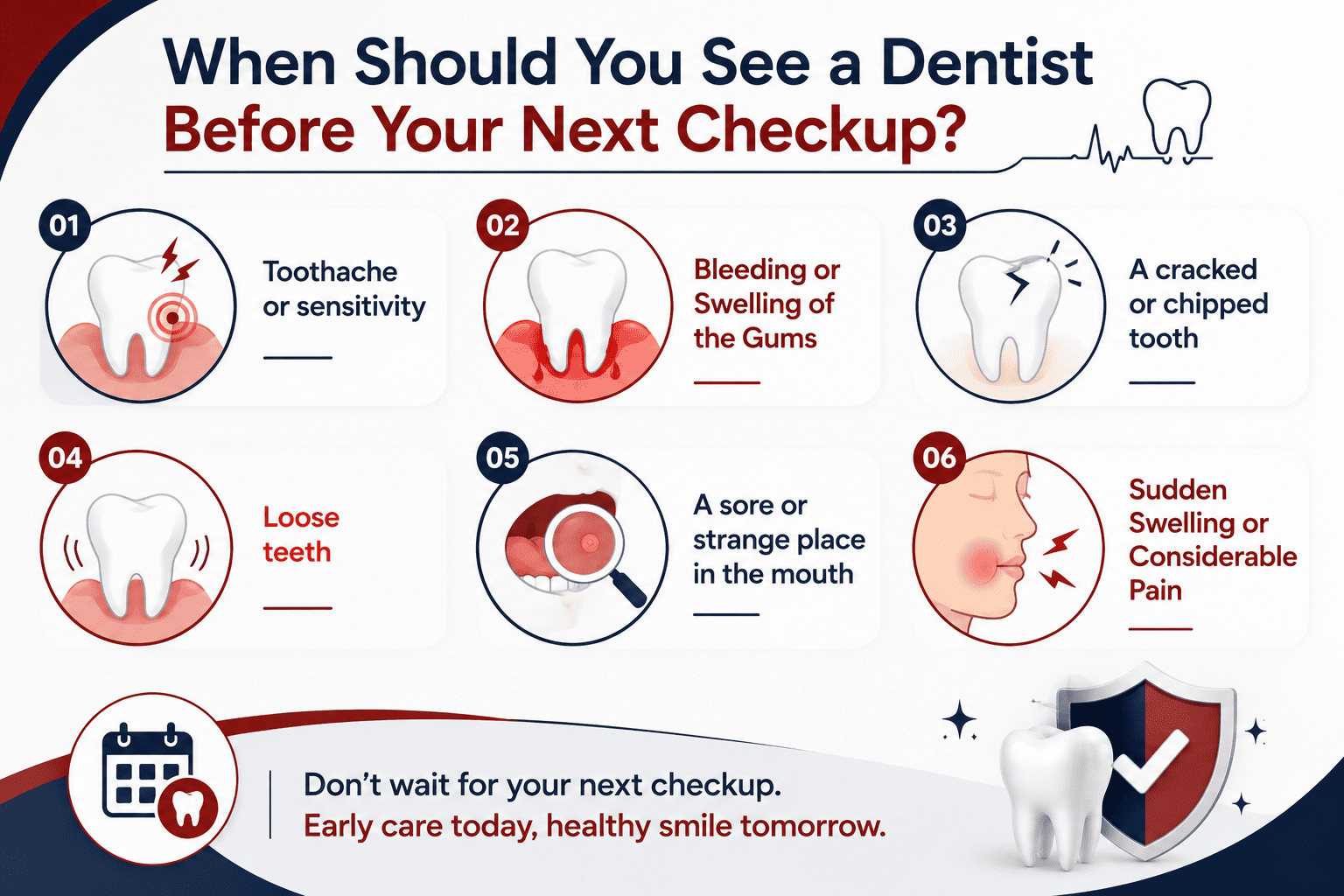
When Should You See a Dentist Before Your Next Checkup?
If you feel anything is not right, you don’t have to wait until the next normal appointment. Some symptoms require an earlier dental evaluation.
- Toothache or sensitivity: Constant pain or sensitivity to hot, cold or sweet meals might be an indication of decay, loss of enamel, or a broken tooth.
- Bleeding or Swelling of the Gums: Bleeding, redness or swelling that doesn’t go away can be an indication of gum inflammation or periodontal disease.
- A cracked or chipped tooth: Even a minor crack can propagate under biting pressure. And treating it early can help to prevent future harm to the tooth.
- Loose teeth: Adult teeth should never feel loose. This may mean advanced gum disease or injury to the supporting bone.
- A sore or strange place in the mouth: A sore, lump, patch or other change that does not heal should be examined by a dentist.
- Sudden Swelling or Considerable Pain: A tooth may swell suddenly or cause considerable pain, indicating infection. These symptoms may be in need of urgent treatment.
Regular check-ups are important for prevention, but you should call your dentist whenever you notice a change between appointments.
How Paragon Dental Supports Preventive Dentistry
The best way to benefit from preventive care is to have your dentist know your oral health history and follow any changes over time.
At Paragon Dental, weekly appointments include exams, professional cleanings and assessments of your teeth and gums. The team also uses diagnostic tools when needed to look for disorders that don’t have clear signs.
Depending on your particular needs, your care may involve fluoride treatments, dental sealants, gum assessments or other preventive procedures. The aim is to discover any problems early and to help you preserve your natural teeth in good condition.
If you’ve been delaying your next dental visit, schedule an appointment with Paragon Dental and get back to your preventive care.
FAQs
1. How often should I visit the dentist for a standard checkup?
While many people benefit from a dental checkup every six months, your schedule might need to vary depending on your oral health. People with gum disease, numerous cavities, certain medical issues or major dental work may need to come in more often.
2. Is it okay to miss a dentist visit if my teeth don’t hurt?
Best not. Cavities, gum disease, cracks, and other dental disorders can occur without discomfort. A routine exam can catch these problems before they create any visible symptoms or before treatment becomes more complicated.
3. What does preventive dentistry include?
Preventive dentistry consists of dental checkups, professional cleanings, X-rays as needed, gum evaluations, oral cancer screenings, and instruction on daily oral care. Your dentist may also suggest fluoride treatments or dental sealants depending on your risk for tooth decay.
4. Are dental X-rays safe and needed?
Dental X-rays use a small amount of radiation and allow dentists to see places that they can’t see during a typical oral checkup. Your dentist will recommend X-rays based on your age, dental history, symptoms, and risk factors, not at every visit.
5. What if I haven’t been to the dentist in years?
Please don’t allow embarrassment to prevent you from arranging an appointment. Your dentist can look at your present oral health and develop a treatment plan for what needs to be taken care of initially. You may need cleaning, X-rays, restorative treatment, or periodontal therapy.
6. Does preventive dentistry save costs?
It may. Fixing a little cavity or a minor gum condition can save you from more involved procedures in the future. Regular visits also help maintain natural teeth, which may decrease the need for costly repair or tooth replacement.
7. What may I do between my dentist visits?
Brush your teeth twice a day with fluoride toothpaste, clean between your teeth daily, and limit your intake of sugary snacks and drinks on a frequent basis. Avoid tobacco products. If you have discomfort, bleeding gums, swelling, sensitivity, or any other strange change in your mouth, call your dentist.

As the leading cosmetic dentist in Modesto, CA, and founder of Paragon Dental, I’m proud to serve our community with state-of-the-art care. A Fellow of the International Congress of Implantology (ICOI) and Associate Fellow of the American Academy of Implant Dentistry (AAID), I focus on advanced, evidence-based care. Through continuous learning and modern technology, my team and I are committed to delivering comfortable, personalized treatment for healthy and lasting smiles