Tooth loss impacts much more than just how you look. A gap in your smile can make it harder to chew, change the way you talk, and eventually, reshape your jaw. The teeth next to the missing one might move, and the bone underneath can start to deteriorate because it’s not being used.
For a lot of people, dental implants represent the gold standard. Unlike bridges or dentures, which sit on top of the gums, implants actually replace the tooth root, too. Essentially, the new tooth functions precisely as a natural one would. Patients often report a return to confident chewing, and the jawbone receives the necessary stimulation to maintain its health.
Implant dentistry has seen considerable progress, resulting in more accurate and reliable therapeutic outcomes. Dentists can now use advanced imaging techniques to perform detailed evaluations of the underlying bone structure.
Consequently, this facilitates the precise planning of implant placements and the fabrication of restorations that harmoniously blend with a patient’s natural teeth. The question of candidacy for dental implants often comes up, almost as a given.
Choosing a dental implant isn’t a simple matter. Several factors need consideration, including the state of your current teeth and gums, the strength of your jawbone, and your overall health.
Understanding these elements is key to determining whether an implant is the best option for restoring your smile.
What Makes Someone a Good Candidate for Dental Implants?
Dental implants need strong biological support. Before recommending treatment, dentists assess various clinical factors to determine if the implant can integrate with the jawbone and function properly under standard occlusal forces.
- The jawbone’s density and structure
Osseointegration is the process by which bone cells attach to the surface of an implant. This keeps the implant in place in the jaw. Having enough bone volume gives you the stability you need to be successful in the long run.
- Healthy tissue in the gums
The gums protect the bone and other parts that hold an implant in place. An infection or periodontal disease can make the implant heal more slowly and make it less stable. Dentists usually treat gum disease before doing implant surgery.
- Taking care of your mouth on a regular basis
You should care for your dental implants the same way you care for your natural teeth. Brushing, flossing, and getting professional cleanings on a regular basis can help keep plaque from building up and protect the tissue around it.
- Health in general and the ability to get better
After the implant is put in, the body needs to heal properly. Dentists check a patient’s medical history, medications, and lifestyle during a consultation to make sure they can heal in a predictable way.
When these things are in place, dental implants can be a long-lasting and stable way to fill in gaps left by missing teeth.
Also Read: Bone Grafting for Dental Implants: What Do Modesto Patients Need to Know?
Benefits of Dental Implants
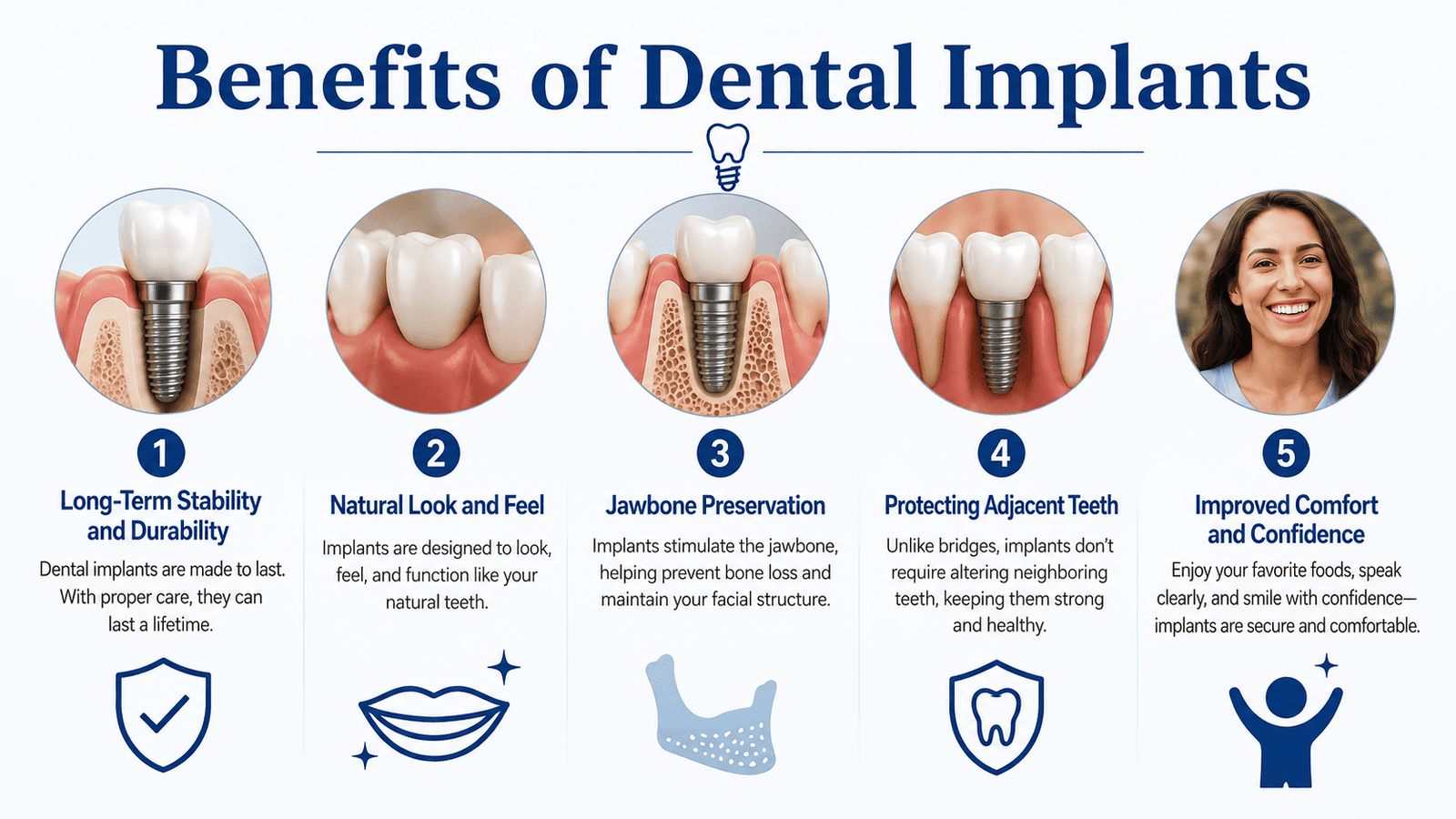
Dental implants have become the preferred choice for replacing missing teeth, mainly because they restore both how the mouth works and its structure. Unlike other methods that only replace the visible part of a tooth, implants also include the root. As a result, they can support the jawbone, which helps maintain oral health over time.
- Long-Term Stability and Durability: Dental implants achieve osseointegration, a process involving their integration with the jawbone. Once the surrounding tissue has completely mended, the implant serves as a solid foundation for the new crown.
- Natural Look and Feel: These crowns are designed to closely resemble the color and shape of your natural teeth. Since they’re securely attached to the bone, patients can eat and speak with ease.
- Jawbone Preservation: When a tooth is lost, the surrounding jawbone starts to deteriorate. In contrast, dental implants provide stimulation to the bone during chewing, which helps to preserve its size and structure.
- Protecting Adjacent Teeth: A major advantage of dental implants over bridges is that they don’t require the support of nearby teeth. This translates to less modification of otherwise healthy teeth and a reduction in the stress placed on the teeth beside them.
- Improved Comfort and Confidence: Implants, securely anchored, put an end to the shifting that can plague removable dentures. Patients appreciate the liberty to eat and converse without the nagging concern of their dental work shifting.
Signs That You Need a Dental Implant
Many people think that implants are only for people who have lost a lot of teeth, but there are a number of oral health problems that may mean that an implant is the best long-term solution. If you know what to look for, you can tell when it’s time to talk to your dentist about getting implants.
- Sign 1: You Are Missing One or More Teeth
A missing tooth makes more than just a hole in your smile. Over time, teeth that are close to the empty space may move toward it, which can change how your bite lines up and how well you chew. When front teeth are missing, speech may also change.
Dental implants take the place of both the tooth’s root and crown. This makes the dental arch stable again and lets the new tooth work like a real one.
- Sign 2: Your jawbone is thick enough to hold an implant.
For implants to stay in place, they need a strong bone base. Dentists use digital imaging to check the density of the jawbone during the consultation. There must be enough bone for the implant to fit securely with the surrounding structure.
If you’ve lost bone, procedures like bone grafting can rebuild the area and give the implant the support it needs.
- Sign 3: Your gums are in good shape
Healthy gums are important for dental implants to work. The surrounding bone can heal properly after an implant is put in place if the gum tissue stays free of infection.
People with gum disease may need gum treatment before getting an implant. Taking care of the infection first helps make sure the implant works for a long time.
- Sign 4: You want something other than dentures that will last.
Many patients want implants because they want a solution that stays in place instead of one that can be taken out. When you chew or talk, dentures can move around, which can be uncomfortable or embarrassing.
Dental implants stay in place in the jaw. Patients can eat, talk, and smile without worrying about their teeth moving because they are stable.
- Sign 5: You take care of your teeth well
To stay healthy, dental implants need regular care. The best way to make sure that implants last a long time is for patients to brush, floss, and go to the dentist regularly.
Good oral hygiene keeps plaque from building up around the implant and protects the tissue around it.
- Sign 6: Your Jawbone Hasn’t Lost a Lot of Bone Mass
The bone around a missing tooth slowly starts to shrink. If this keeps going on for a few years, the bone may get too thin to hold an implant.
People who still have enough bone volume can often get an implant without having to go through any other steps. Early treatment helps keep the rest of the structure.
- Sign 7: You are in good health overall
The body must be able to heal bone and tissue for implants to work. Before suggesting implant surgery, dentists look at a person’s medical history, medications, and daily habits.
Conditions like uncontrolled diabetes or heavy smoking can make healing take longer. Dental implants can give you long-lasting results that you can count on when your overall health is good.
You Might Also Like: Everything You Need to Know About Dental Crowns After a Root Canal
What If You Are Not an Ideal Candidate Yet?
At the first appointment, some patients learn they can’t get dental implants right away. Bone loss, gum disease, or certain health issues can throw a wrench into things. Dentists usually address these problems before the implants are put in, essentially preparing the mouth for the procedure.
- Bone Grafting: When a tooth has been missing for a long time, the bone around it might start to break down. Bone grafting builds up the area that was lost and gives an implant the support it needs.
- Sinus Lift Procedure: When there’s a shortage of bone height in the upper back jaw, making dental implants impossible, a sinus lift comes into play. The procedure involves adding bone to the area, which essentially builds the foundation needed for the implant to work.
- Gum Disease Treatment: This compromises the integrity of the tissues supporting teeth and implants. Prior to implant placement, dentists address any existing infections to restore healthy gums.
- Management of Health Issues: Conditions like diabetes can impede the healing process. Dentists frequently ensure these health concerns are well-managed before proceeding with surgery.
- Smoking Cessation: Smoking negatively impacts healing and alters blood flow to the gums. Dentists often tell people to stop using tobacco before getting implants.
- Plan to treat multiple missing teeth: People who are missing a lot of teeth may not need an implant for each one. Dentists can put implants in important places to help support bridges or full arch restorations.
A lot of patients can get dental implants after these issues are taken care of.
The Dental Implant Process
Dental implant treatment follows a structured process that restores both function and aesthetics. Each stage focuses on creating a stable and natural looking replacement tooth.
- Consultation and Diagnostic Imaging: The dentist evaluates the teeth, gums, and jawbone during the consultation. Digital X-rays or 3D scans help determine bone quality and ideal implant placement.
- Implant Placement Surgery: The dentist places a titanium implant into the jawbone during a minor surgical procedure. The implant acts as the artificial root for the replacement tooth.
- Healing and Osseointegration: Bone cells attach to the implant surface during healing. This process, known as osseointegration, secures the implant firmly within the jawbone.
- Temporary Tooth Options During Healing: Some patients receive a temporary crown or removable appliance while the implant heals. This helps maintain appearance and basic function.
- Custom Restoration Design: Dental labs design the final crown using digital scans or impressions. The restoration matches the color, shape, and alignment of surrounding teeth.
- Final Crown Placement: After healing, the dentist attaches an abutment and secures the custom crown to the implant. The restoration blends naturally with the smile.
- Follow-up Care and Monitoring: Regular checkups allow the dentist to monitor gum health and implant stability. Good oral hygiene and routine visits help ensure long-term success.
Must Read: Considering Dental Implants in Modesto? Everything You Need to Know Before You Decide
How to Care for Dental Implants After Placement
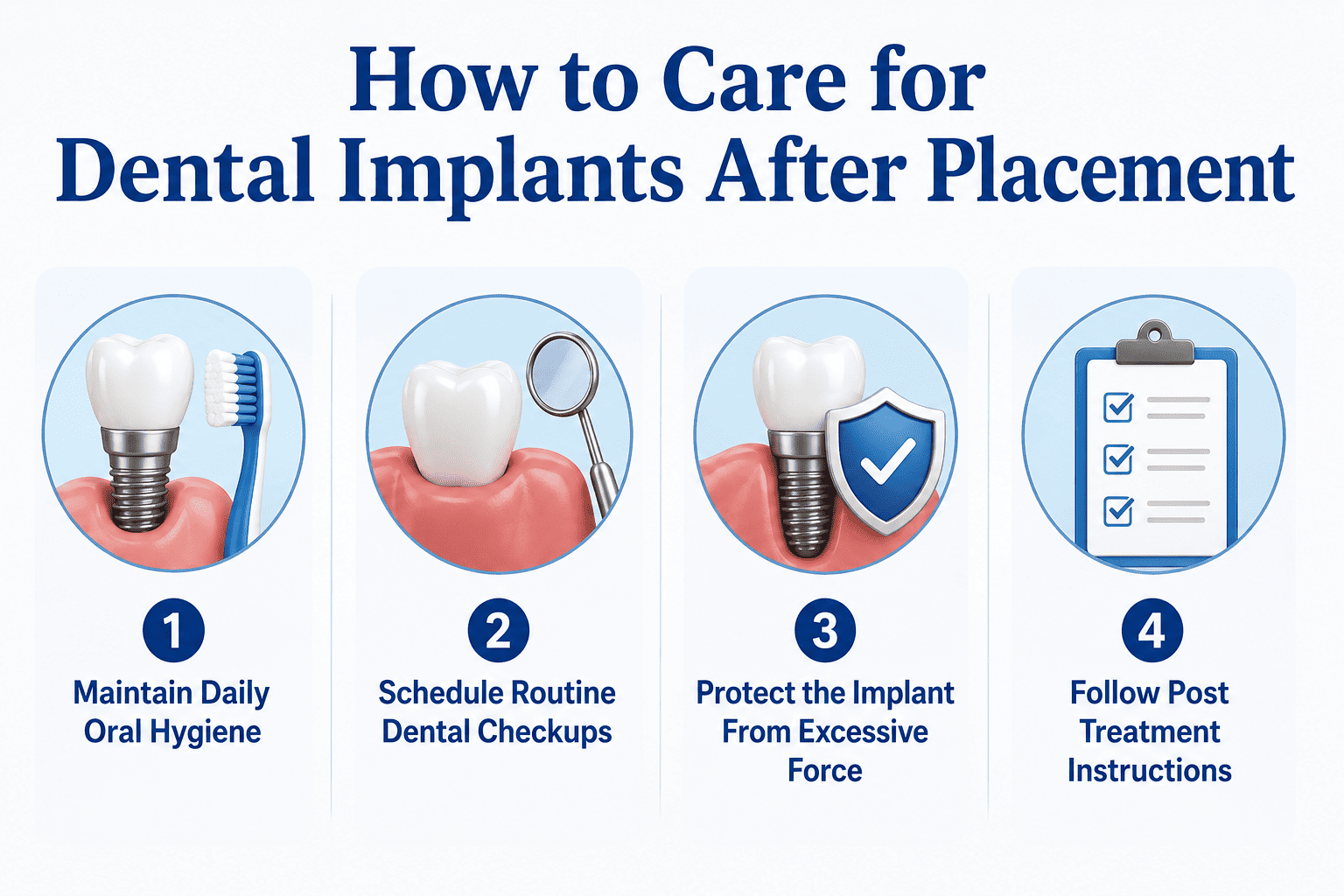
Dental implants require consistent care to maintain their function and longevity. Although implants cannot develop cavities, the surrounding gums and bone still need protection. Good oral hygiene and regular dental visits help ensure long term success.
- Maintain Daily Oral Hygiene: Patients should brush twice a day and floss around the implant area. Interdental brushes or water flossers can help clean areas around the implant crown and gumline.
- Schedule Routine Dental Checkups: Regular dental visits allow the dentist to examine the implant and surrounding tissue. Professional cleanings remove plaque buildup that could affect gum health.
- Protect the Implant From Excessive Force: Patients who grind their teeth may place excessive pressure on implants. Dentists often recommend a custom night guard to protect the implant and surrounding teeth.
- Follow Post Treatment Instructions: Dentists provide specific instructions after implant placement and crown delivery. Following these guidelines helps protect the implant during the healing phase.
Consistent care allows dental implants to remain stable and functional for many years.
How Paragon Dental Can Help Restore Your Smile with Dental Implants
Successful implant procedures hinge on meticulous planning and clinical skill. A skilled dental team is essential, ensuring that every step leads to lasting stability and a pleasing appearance.
At Paragon Dental, we start with a thorough consultation. We assess the health of your bones, gums, and the overall structure of your mouth. This assessment helps us decide if dental implants are right for you and lets us create a customized treatment plan.
Our team uses advanced diagnostic tools and precise implant placement methods, aiming for results that are both visually appealing and enduring.
From the initial consultation to the moment you walk out with your new smile, our priority is your comfort. We make sure everything goes smoothly and that your teeth are well cared for, now and in the future.
Want to get your smile back? Book your appointment with Paragon Dental today. Let’s explore whether dental implants are the right solution for you.
FAQs
- How long do dental implants last?
Dental implants are a long-term solution for tooth replacement. Most patients retain their implants for decades. The crown on the implant may need some attention over time because of normal wear, but the implant itself can last for many years if you have healthy gums, healthy bone and good oral hygiene.
- Does dental implant surgery hurt?
This is one of the first questions patients ask, and the answer is often surprising. You should not feel pain during treatment, as local anesthesia is used for the procedure. There is some soreness after, but many patients say it feels like the pain after a regular tooth extraction.
- Can dental implants replace more than one missing tooth?
Yes. Dental implants are used to replace a single missing tooth, support a bridge for multiple missing teeth, or provide anchorage for a full-arch restoration. The correct approach depends on the number of missing teeth and the condition of the surrounding bone and gums.
- How long does a dental implant take?
Dental implant treatment is not a one-visit procedure. The jawbone needs time to heal and to attach to the implant once it’s placed. The timeframe is different for each person, particularly if things such as bone grafting are part of the treatment plan.
- Are dental implants safe for seniors?
Yes, in many cases. Dentists consider overall health, bone support, and gum health more important than age. Many adults in their 60s, 70s and beyond have had dental implants successfully and enjoy the benefits for years afterwards.

As the leading cosmetic dentist in Modesto, CA, and founder of Paragon Dental, I’m proud to serve our community with state-of-the-art care. A Fellow of the International Congress of Implantology (ICOI) and Associate Fellow of the American Academy of Implant Dentistry (AAID), I focus on advanced, evidence-based care. Through continuous learning and modern technology, my team and I are committed to delivering comfortable, personalized treatment for healthy and lasting smiles