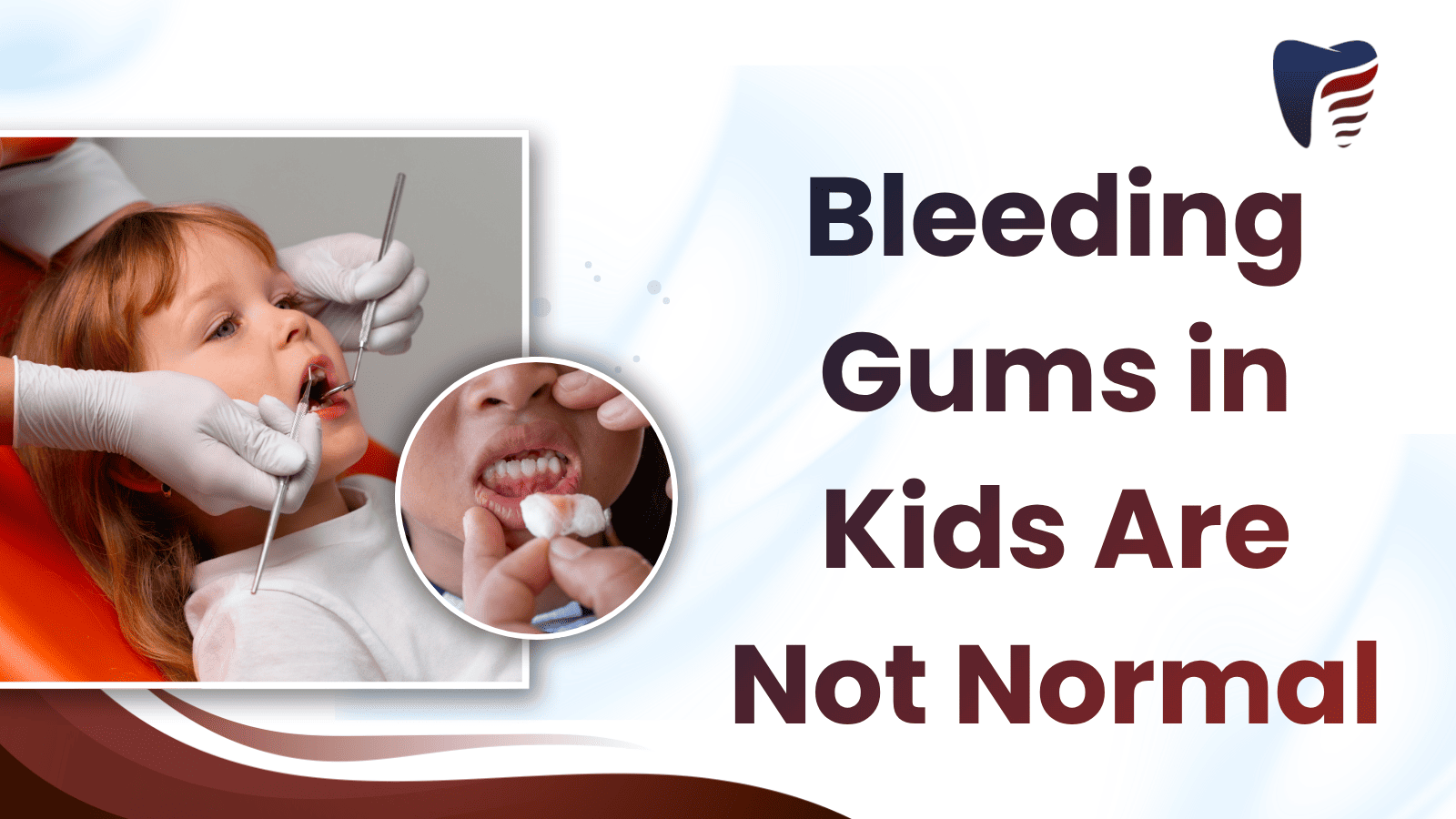
Parents generally focus on cavities and forget about gum health in childhood. Bleeding or swollen gums in kids may not feel urgent at first, because gum disease sounds like an adult problem. However, in many cases these symptoms are signs of plaque and early gum inflammation.
Children tend to miss spots around the molars and gum line with brushing, and that’s where bacteria build up over time. Some also develop bad breath, tenderness, or bleeding of the gums while brushing without realizing something is wrong.
Regular pediatric dentistry appointments in Modesto allow us to catch these problems early. Dentists can spot early signs of inflammation, plaque buildup, and oral hygiene errors before more serious gum problems happen.
Can Children Develop Gum Problems Early?
Yes, they can. Children can develop gum inflammation much earlier than a lot of parents may expect, especially when plaque is left near the gum line for long periods of time.
Gingivitis is the first stage of gum disease, and it’s often the beginning of the condition. At this stage, the gums may appear red, swollen, and bleed when brushed. Children tend to miss certain areas when brushing and flossing, allowing bacteria and food particles to collect around teeth and irritate the gum tissue.
Braces, crowded teeth, mouth breathing, and poor oral hygiene habits can also contribute to the risk of gum problems in children. In many cases, the problem starts quietly and without pain, which makes it easy for the parents to overlook the symptoms.
Common Causes of Gum Problems in Kids
Children’s gum problems don’t typically develop overnight. Most of the time, they begin because plaque remains in contact with the gums for too long.
Some of the most common reasons are:
- Brushing too fast: Children often brush too fast and overlook the areas behind the gums or the back teeth, where plaque can build up readily.
- Skipped flossing: Food trapped between the teeth continues to irritate the gums when flossing is not part of the routine.
- Too much sugar: Snacking and drinking sugary items too often will feed the bacteria in your mouth, causing additional plaque around your gums.
- Braces or crowded teeth: Brackets, wires and narrow gaps make cleaning more difficult, so food gets deposited more often.
- Mouth breathing: Saliva helps keep bacteria in check, when you breathe through your mouth, your dry gums get irritated faster.
- Missed dental appointments: No matter how well you brush, some plaque may turn into tartar, and only a professional cleaning can remove it correctly.
Often, it is not one thing that is creating the problem. Usually, children get swollen or sensitive gums due to a few habits together.
Also Read: Can Gum Disease Be Reversed? What Dentists Recommend for Healthier Gums
How Pediatric Dentistry Helps Protect Gum Health
A little bleeding when you brush, swollen gums or plaque at the gum line is frequently overlooked because it doesn’t look serious in the beginning. This is exactly why preventive dental appointments are so important early on.
Regular checkups help protect their gums this way:
Professional cleanings remove plaque
Plaque forms near the gums and on the back teeth, especially in areas children commonly overlook when they brush. Regular cleanings can eliminate that buildup before it starts to irritate your gums.
Early tests detect gum inflammation sooner
Dentists check for first symptoms, such redness, swelling, bleeding or tartar buildup, before they escalate into more serious gum disorders.
Kids learn to brush and floss better
Many children rush through brushing or forgetting spots without realizing. Pediatric dentists educate children and parents about proper methods in an easy, practical approach.
More focus on braces and crowded teeth
Brackets, wires and narrow areas make it easier for plaque to become trapped. Regular dental checkups will help keep the gums healthy during orthodontic treatment.
Getting preventive care early helps kids develop better dental hygiene habits and helps maintain their gums healthier as they grow.
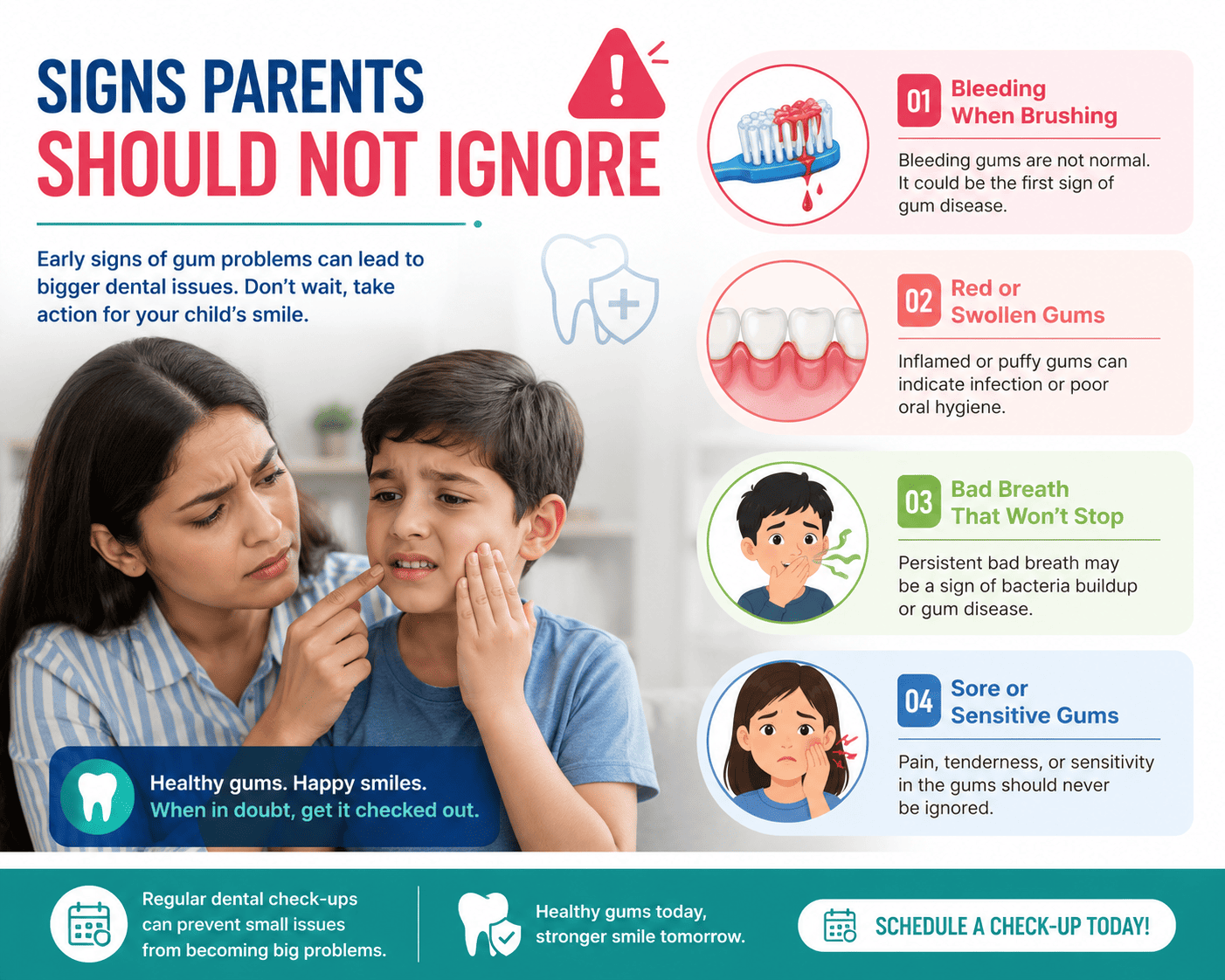
Signs Parents Should Not Ignore
Most gum disorders in children don’t begin with visible pain. Usually, it’s the little things that parents see while they’re brushing or looking at their child’s teeth. The signals are modest at first, and so easy to dismiss.
But a few things to be aware of:
- Bleeding when brushing: A child’s gums should not bleed every time they brush or floss. If it occurs again and again, it is usually a sign that the gums are irritated.
- Red or swollen gums: Healthy gums are pale pink and firm. If they look puffy, darker than normal, or swollen around certain teeth, something is troubling that area.
- Bad breath that won’t stop: Sometimes, bad breath isn’t solved by brushing. It can be caused by plaque or irritated gum.
- Sore or sensitive gums: Some children will start to avoid certain places when brushing because they feel uncomfortable.
None of these indications appears extremely dangerous at first, which is why they are regularly ignored. But early detection of gum problems makes them much easier to treat, and helps to prevent major dental problems down the road.
What Happens If Gum Problems Go Untreated?
If not treated, the gum inflammation might become worse around the teeth. Kids can experience persistent bleeding, swollen gums, plaque build-up, receding gums or discomfort when brushing and chewing.
These disorders could also have implications for oral hygiene. Children who feel discomfort or irritation when brushing often avoid brushing such regions.
Early treatment can help prevent the inflammation from developing into deeper gum disease in your gums and the structures that support your teeth.
You Might Also Like: Why Do Kids Get White Spots on Their Teeth? A Complete Guide for Parents in Modesto
Advanced Gum Treatment Options for Severe Cases
If inflammation goes below the gum line, dentists can suggest more specific periodontal treatment to control the infection and protect the gums.
For more advanced cases, here are some treatment options:
Thorough cleaning under the gum line
Deep cleaning takes plaque, tartar and bacteria from areas normal cleaning cannot fully reach.
Gum health during orthodontic treatment
Food particles can become stuck easily in braces and crowded teeth, which can lead to plaque buildup around the gums.
Laser treatment for gum disease
In more advanced situations, your dentist may suggest Modesto laser gum disease treatment to remove infected tissue while leaving surrounding healthy areas intact.
Personalized oral hygiene instructions
Children with recurring gum inflammation often require modifications in their brushing and flossing habits to reduce the formation of plaque at home.
Getting treatment early helps control gum diseases before they reach deeper periodontal systems.
Conclusion
A little bleeding while brushing or gums that look swollen might not seem like a big deal at first. But in many kids, those small signs are the beginning of gum problems caused by plaque building up near the gum line.
Catching it early makes a real difference. Regular dental visits help spot inflammation before it gets worse, improve brushing habits, and protect your child’s long-term oral health.
If your child has sensitive gums, bleeding while brushing, or trouble keeping their teeth clean, visit Paragon Dental for pediatric dentistry in Modesto and gentle early gum care support.

As the leading cosmetic dentist in Modesto, CA, and founder of Paragon Dental, I’m proud to serve our community with state-of-the-art care. A Fellow of the International Congress of Implantology (ICOI) and Associate Fellow of the American Academy of Implant Dentistry (AAID), I focus on advanced, evidence-based care. Through continuous learning and modern technology, my team and I are committed to delivering comfortable, personalized treatment for healthy and lasting smiles