A toothbrush is something you use every day, but it rarely gets a second thought. It stays in the same spot, part of the routine, even as it starts to wear out.
Over time, the bristles lose their shape. They spread out and soften, which makes it harder to clean your teeth properly, especially along the gum line. You may still brush twice a day, but an older brush doesn’t do the same job. Plaque can build up more easily, and your gums may not get the care they need.
In this guide, we’ll keep it simple. When to replace your toothbrush, the signs to look for, why it matters, and how to choose a better one next time.
How Often Should You Replace Your Toothbrush?
Most dentists follow a simple rule. Every three to four months, get a new toothbrush.
There is a rationale for that chronology. With use, the bristles of a toothbrush lose their form.
Here’s how to deal with it:
- Stick to the three- to four-month rule: Using it often wears down the bristles faster than you think. A new brush keeps in touch with teeth and gums the right way.
- If the bristles start to fray, get a new one sooner: If you can see wear on the brush, it won’t clean well anymore. The more you wait, the less effective it is.
- Change it when you get sick: Bacteria can stay on the bristles. A fresh brush helps keep germs from coming back.
- Keep an eye out for signs from the maker: Some brushes have color indicators that fade over time. They provide a clear message to replace.
It looks like a toothbrush will last a long time, but it doesn’t. Replacing it on time keeps your oral care routine working and going.
Also Read: What to Do Before You Reach an Emergency Dentist
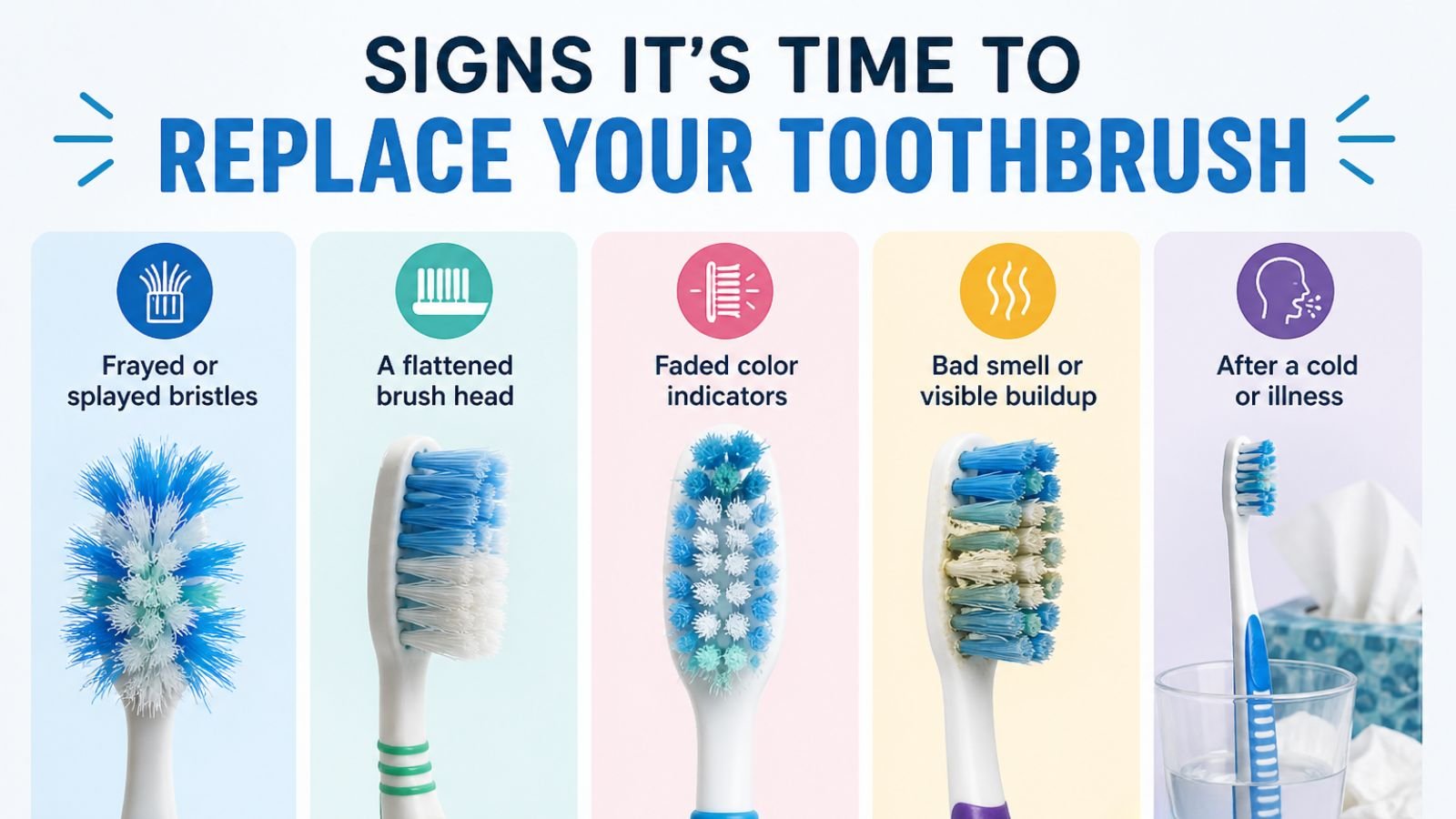
Signs It’s Time to Replace Your Toothbrush
You don’t need to remember when you started using your toothbrush. It usually shows you when it’s time to replace it. The problem is, these signs are easy to ignore if you’re not paying attention.
Here’s what to look for:
- Frayed or splayed bristles: Take a close look at the bristles. If they’ve started bending outward or losing shape, they won’t clean your teeth properly. They miss the gum line and don’t reach between teeth the way they should.
- A flattened brush head: Over time, the brush head starts to look pressed down or uneven. When that happens, it doesn’t sit right against your teeth. Some areas get cleaned, others don’t.
- Faded color indicators: Many toothbrushes come with bristles that fade with use. Once that color starts disappearing, it’s a sign the brush has already seen enough use.
- Bad smell or visible buildup: A toothbrush should feel clean after you rinse it. If it doesn’t, or if you notice any residue near the base of the bristles, it’s time to replace it. That buildup doesn’t go away with rinsing.
- After a cold or illness: Using the same toothbrush after being sick can reintroduce bacteria into your mouth. It’s a simple fix. Just replace it once you recover.
These are small things, but they matter. A worn toothbrush won’t do its job, no matter how often you use it. Once you notice any of these signs, don’t overthink it. Just switch to a new one.
Why Replacing Your Toothbrush Matters
A toothbrush that is worn out doesn’t just make cleaning less effective. It has long-term effects on your entire dental health.
If you don’t replace it on time, here’s what happens:
- Less plaque removal: Brushing with worn bristles doesn’t get rid of plaque very well. This lets plaque build up on teeth and gums.
- More bacteria: Bacteria can live on an old toothbrush. Using it more often increases exposure when brushing.
- More inflammation of the gums: Damaged bristles can make the gums feel scratchy. This could cause pain or slight swelling.
- Lower overall standards of cleanliness: Your habit may not change, but the results will get worse. This makes a gap between what you do and what you get.
Changing your toothbrush is a minor thing, but it helps with the basics of taking care of your mouth. It makes sure that the things you do every day keep giving you the results you want.
You Might Also Like: Cosmetic Dentistry in Modesto: How to Improve Your Smile with the Right Treatments
How to Replace Your Toothbrush the Right Way
Replacing your toothbrush sounds like a small thing, but it affects how well you clean your teeth every single day. They either stick with the same brush too long or pick a new one without paying attention to what actually works.
Here’s what’s worth paying attention to:
1. Stick with soft bristles
Soft bristles clean your teeth and along the gum line without being harsh. If you’ve ever felt soreness after brushing, the brush is often the reason. Hard bristles don’t clean better. They just wear things down over time.
2. Pick a brush that actually fits your mouth
This gets overlooked a lot. If the head feels too big, you’ll end up missing the back teeth or rushing through those areas. A smaller head usually gives you better reach and more control, especially around molars.
3. Manual or electric depends on how you brush
If you take your time and follow a proper technique, a manual brush works perfectly well. But if you tend to rush, press too hard, or don’t spend enough time, an electric brush can help keep things consistent.
4. Replace electric heads like you would a regular brush
A lot of people forget this. The handle lasts, but the head doesn’t. Once the bristles lose shape, it stops cleaning properly. The same three to four month rule still applies.
5. Don’t overcomplicate the choice
You don’t need multiple features or a high-end design. What matters is how the brush feels in your hand, how easily you can move it around your mouth, and whether the bristles hold their shape.
6. Pay attention to how you store it
After brushing, rinse it properly and keep it upright where it can dry. If it stays damp in a closed space, it doesn’t stay as clean as it should.
At the end of the day, this isn’t about finding the “perfect” toothbrush. It’s about using one that works well for you and replacing it before it stops doing its job. That alone makes your routine far more effective.
Common Mistakes People Make
People are brushing every day, yet they’re still running into the same issues. It’s usually not about effort. It’s the small things that get overlooked.
Here’s what I see most often:
- Using the same toothbrush for too long: If you’re waiting for it to look completely worn out, you’ve already used it past its prime. The bristles lose their shape much earlier than that.
- Brushing too hard: It’s a common instinct. Feels like it should clean better. It doesn’t. It just puts extra stress on your gums and enamel.
- A quick rinse and back in the holder: Most of us do this. But a rushed rinse can leave residue behind, especially near the base of the bristles.
- Keeping it in a closed case or damp corner: If your toothbrush stays damp all day, it’s not really getting clean between uses. It needs some airflow.
- Toothbrushes touching each other: When brushes sit head-to-head, they share more than just space. A little separation helps.
- Using the same brush after being sick: It’s easy to forget, but worth fixing. You don’t want to keep using the same brush after a cold or infection.
None of this is complicated. A few small tweaks, and your routine starts working the way you expect it to.
How Paragon Dental Helps You Stay on Track with Your Oral Health
A good toothbrush and a consistent routine form the base, but they don’t cover everything. Oral health needs periodic review and guidance to stay on track.
That’s where Paragon Dental steps in. Here’s how the team supports you beyond daily care:
- Regular checkups that go beyond surface cleaning: Routine visits help identify early signs of decay, gum issues, or enamel wear. Catching these early keeps treatment simple and controlled.
- Professional cleaning that removes what brushing cannot: Plaque can harden into tartar, which a toothbrush cannot remove. Professional cleaning restores a clean baseline for your oral health.
- Personalised guidance based on your habits: Your brushing technique, tool choice, and oral condition all vary. Tailored advice helps you refine your routine for better results.
- Recommendations on the right tools: From toothbrush type to replacement timing, the right tools depend on your needs. Expert input removes guesswork.
- Early intervention when something feels off: Sensitivity, bleeding gums, or discomfort should not be ignored. Timely evaluation prevents minor issues from turning into larger concerns.
If you’re unsure about your routine or noticing changes, connecting with a trusted dentist in Modesto can help you stay aligned with the right approach.
If you want clarity on your oral care routine or it’s been a while since your last checkup, book a visit with Paragon Dental. A quick review today can help prevent larger issues later.

As the leading cosmetic dentist in Modesto, CA, and founder of Paragon Dental, I’m proud to serve our community with state-of-the-art care. A Fellow of the International Congress of Implantology (ICOI) and Associate Fellow of the American Academy of Implant Dentistry (AAID), I focus on advanced, evidence-based care. Through continuous learning and modern technology, my team and I are committed to delivering comfortable, personalized treatment for healthy and lasting smiles