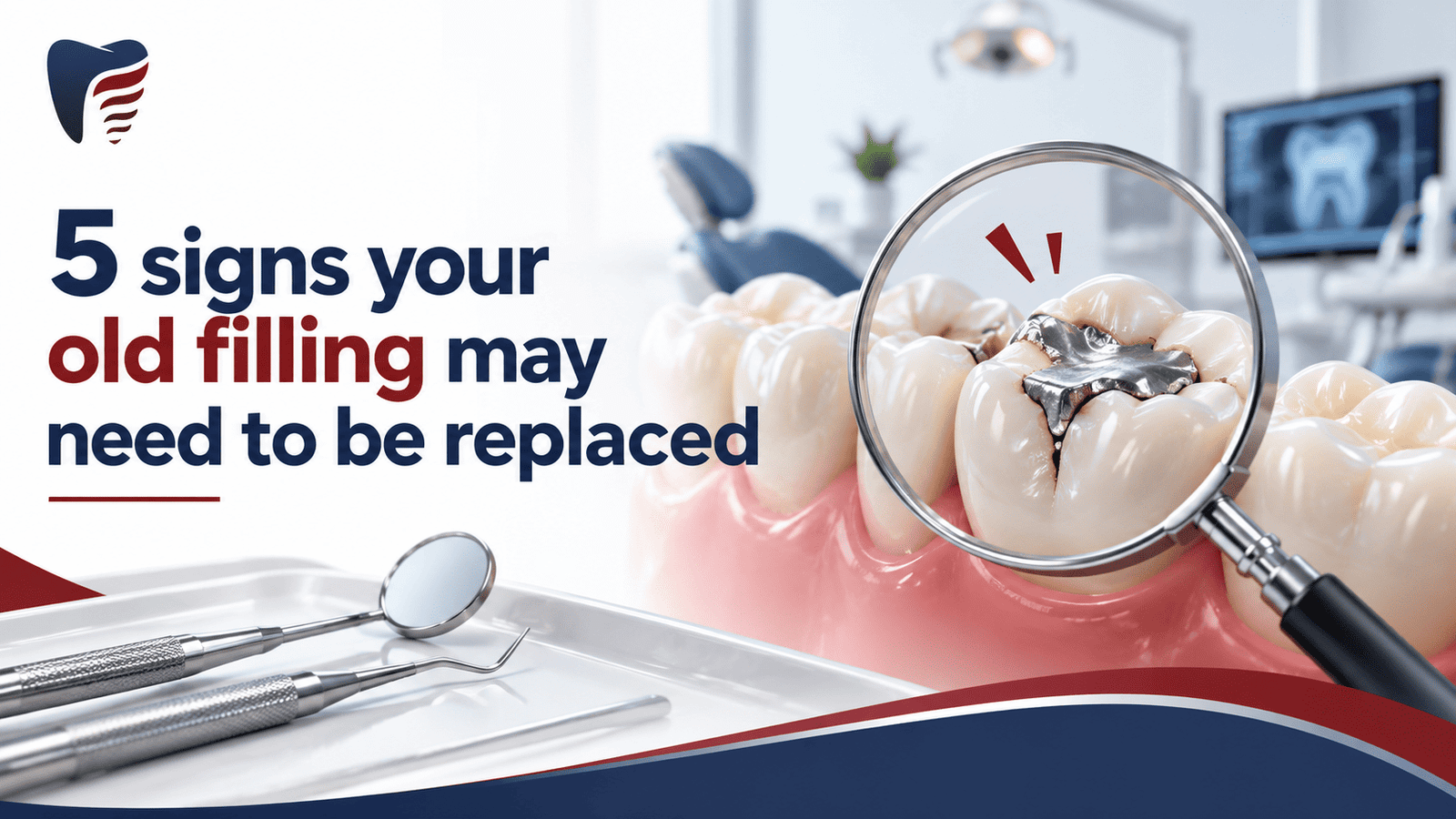
A dental filling might survive for years, but it can still wear down, break or develop decay around the edges. You may feel sensitivity, pain when you bite or a rough place on the filling.
These indications can be a sign of a problem with the restoration. Your dentist can check the filling and inform you if you need to replace a dental filling.
How Long Does a Dental Filling Last?
The longevity of a dental filling depends on the type of filling material used, the location of the filling, your bite, and your everyday oral hygiene practices and habits such as grinding your teeth.
Amalgam fillings last a long time, while composite fillings may need to be replaced sooner in areas of the mouth that get a lot of chewing pressure. A filling can also fail early if decay develops around it or the tooth cracks.
Age alone does not mean you need a new filling. Your dentist should look for wear, leakage, cracks, and recurrent decay on the restoration before recommending replacement.
5 Signs a Filling Needs to Be Replaced
A bad filling may make tiny alterations that are easy to overlook. Notice the feel of the tooth and the look of the filling.
Here are five symptoms that your filling needs to be replaced:
1. You Experience Pain or Sensitivity
Pain when you bite or sensitivity to hot, cold or sweet foods can indicate an issue with the filling or the tooth underneath it. Constant sensitivity can also lead to repeated deterioration or irritation of the dental pulp.
2. Filling Seems Loose or Rough
Run your tongue over the filling. A new rough spot, a loose feeling or a change in texture can signal that the restoration has worn down or broken.
3. You Notice a Crack or Chip
A cracked or chipped filling may expose part of the tooth. Decay may also develop if germs get around the repair through small fractures.
4. Food Gets Trapped Around It
Repeatedly Worn edges or poor contact between the teeth may indicate food trapping at a filling repeatedly. This can make the area more difficult to clean and increase the risk of plaque development.
5. Decay Around the Filling Your Dentist Discovered
Decay can form around an old filling even when you have no symptoms. During a dental exam, your dentist may notice recurrent decay, leakage or other abnormalities in the surrounding tooth structure that need treatment.
If you detect any of these indicators, have the filling evaluated before the condition damages more of the tooth.
Also Read: Preventive Dentistry in 2026: Why Are Regular Dental Visits Important
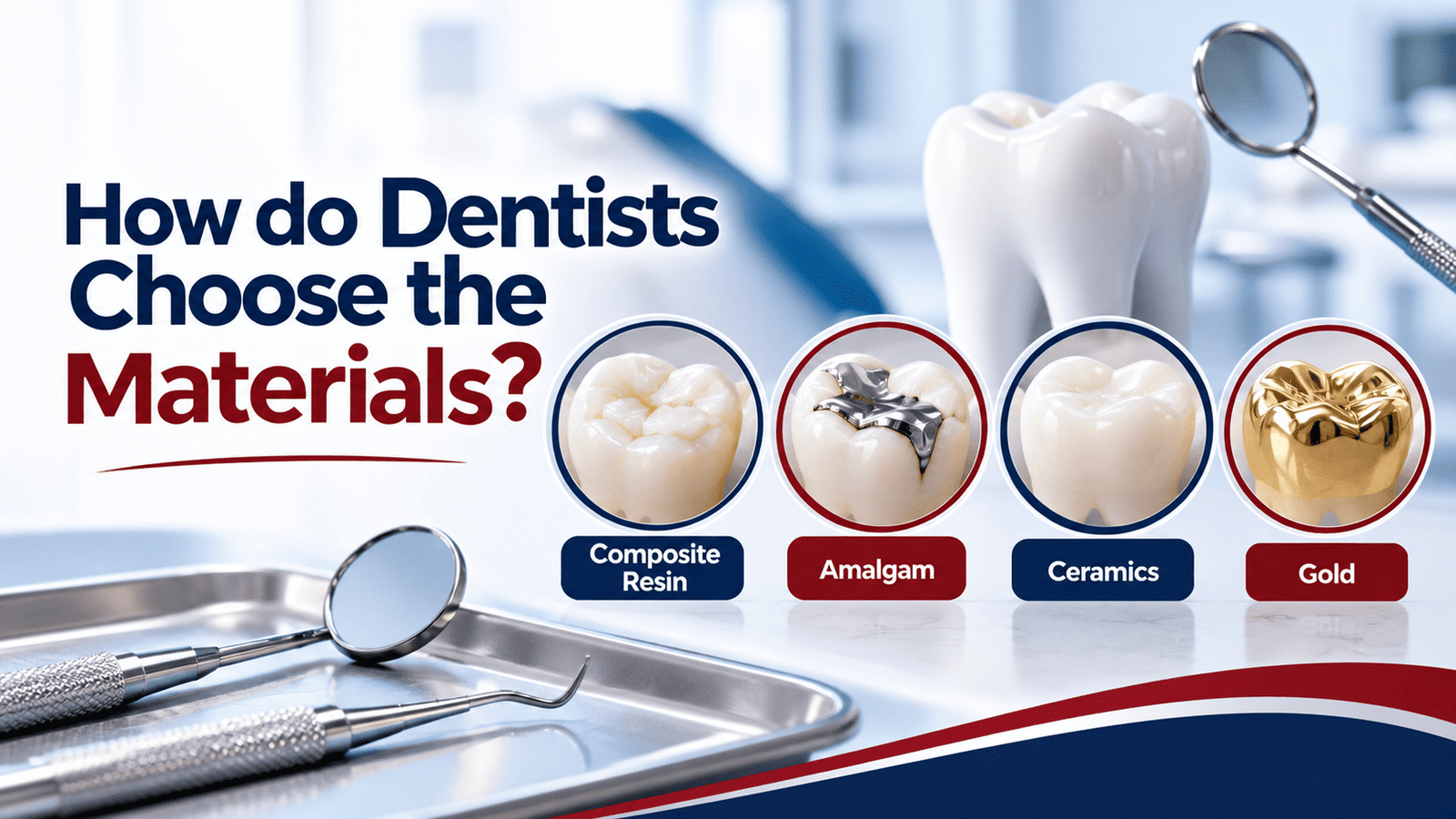
How do Dentists Choose the Materials?
The right filling material depends on where the tooth is located, the size of the restoration, bite forces, appearance, and your dental health.
1. Composite Resin
Composite mimics the natural color of the tooth; thus, dentists typically use it for visible teeth. It is good for small to medium restorations, but excessive chewing forces can affect its lifespan.
2. Amalgam
Amalgam is very wear-resistant and can take a lot of chewing pressure. Dentists will use this for larger restorations in rear teeth. But the silver hue makes it less ideal for places where looks count.
3. Ceramics
The ceramic restorations provide a natural look and excellent wear resistance. Dentists may suggest them for larger restorations requiring more material than a typical filling can supply.
4. Gold
Gold fillings are strong and can take a lot of chewing. They cost more, and their look may restrict their use in some patients.
Your dentist will also consider the placement of the restoration, recurrent decay, the remaining tooth structure, the bite pattern, allergies, and your preferences before selecting a material.
What Happens During a Filling Replacement?
Your dentist will first examine the filling and the surrounding teeth. They may take an X-ray to obtain a clearer look if they detect decay under or around the filling.
Your dentist will take out the filling and clean the area if the filling has to come out. Then they’ll check to see how much of the tooth is healthy before putting in a new filling.
What occurs next depends on the type of filling you have, the state of the tooth, and how much good dental structure remains.
Can You Prevent a Filling From Failing?
Good oral hygiene can help safeguard that restoration and the tooth around it, but you can’t prevent every filling from wearing out.
Brush Twice a Day
Use fluoride toothpaste and a toothbrush with soft bristles. Concentrate on the region around the filling where plaque can accumulate.
Scrub Your Teeth in Between
Use an interdental cleaning or floss every day. This helps get food and plaque out of those hard-to-reach places your toothbrush can’t reach.
Stay Away From Hard and Sticky Foods
Hard foods can stress a filling. Sticky meals might pull at the repair and leave debris around the edges.
Wearing a Nightguard If You Have Bruxism
Grinding your teeth can put extra pressure on fillings and natural teeth. If you grind or clench your teeth at night, a custom night guard can protect your teeth.
Don’t Skip Dental Check-ups
Routine checkups give your dentist the chance to find worn fillings, recurring decay, cracks, and other irregularities before they begin to show serious symptoms.
Must Read: How to Choose the Right Dentist for Your Family
When Should You See a Dentist?
If you experience discomfort, sensitivity, a rough or loose filling, or see a crack or chip, schedule a dental appointment.
Don’t wait until you have serious pain. A broken filling can cause bacteria to get into the tooth and can put greater stress on the remaining tooth structure.
A dental checkup can determine if you need a replacement for a tooth filling or if the dentist can restore the current treatment.
How Paragon Dental Can Help
An old or broken filling can affect the tooth without causing a lot of pain. Your dentist at Paragon Dental will examine the filling, look at the surrounding teeth and check for signs of recurrent decay or damage.
If restoration has failed, your experts can recommend the best treatment, depending on the condition of your teeth. This may require a new filling or other repair if the tooth needs further support.
If you see a change in a previous filling, make an appointment to have it evaluated at Paragon Dental.
FAQs
How can I know when my filling needs to be replaced?
If you have pain, sensitivity, a loose or abrasive filling, fissures, food getting trapped or rot around the filling, then you need a replacement. The dentist can examine the filling and check the underlying tooth for any damage.
How frequently do dental fillings have to be replaced?
There is no set time frame for replacing fillings. The longevity of their lives depends on the material, the position of the tooth, the pressure during biting, the level of dental hygiene and habits such as grinding teeth. Your dentist will check the filling during routine checkups.
Can an old filling cause tooth pain?
Yes. A filling that is old or broken might crack, loosen, wear down or have rot form around its edges. All of these issues can be painful. Pain can also arise from the tooth itself, and a dental exam can assist in determining what is causing the pain.
Will it hurt when the dentist replaces a filling?
Your dentist will most likely give you a local anesthetic to keep you comfortable during the procedure. You may feel some sensitivity after the procedure, but this usually goes away as the tooth settles with the new replacement.
Can a dentist repair an old filling rather than replace it?
Sometimes. It is contingent upon the condition of the filling and the tooth. A dentist can repair one small problem, but large damage, ongoing decay or a broken filling may need to be fully replaced.

As the leading cosmetic dentist in Modesto, CA, and founder of Paragon Dental, I’m proud to serve our community with state-of-the-art care. A Fellow of the International Congress of Implantology (ICOI) and Associate Fellow of the American Academy of Implant Dentistry (AAID), I focus on advanced, evidence-based care. Through continuous learning and modern technology, my team and I are committed to delivering comfortable, personalized treatment for healthy and lasting smiles