Cavities are common in children, especially in the deep grooves of their back teeth. Good brushing, fluoride, and regular dental visits form the base of cavity prevention for children. Dental sealants can add another layer of protection where plaque and food often collect.
This guide covers how sealants work, which children may benefit from them, what the treatment involves, and how sealants fit into a child’s overall cavity prevention routine.
What Are Dental Sealants for Kids?
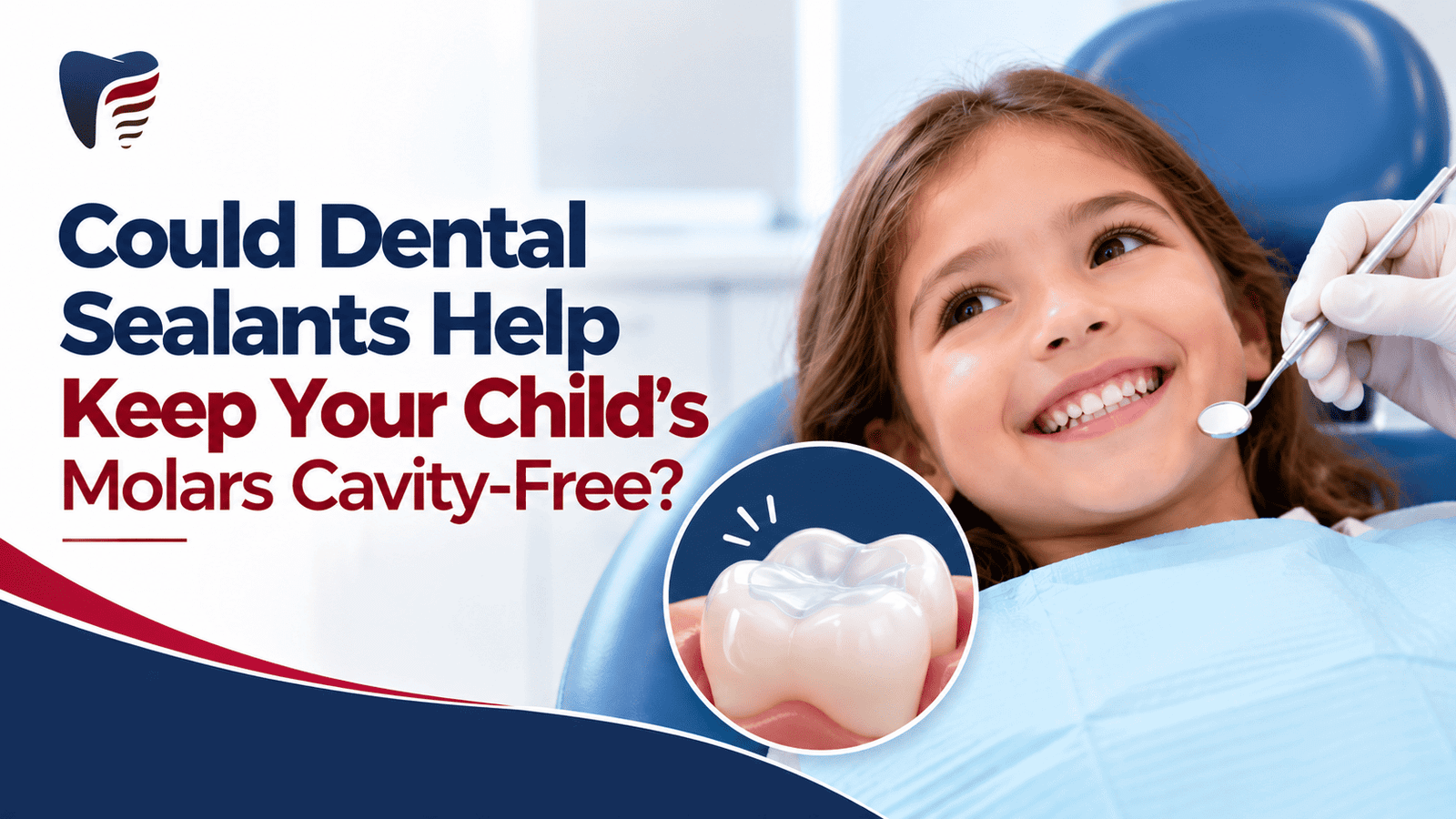
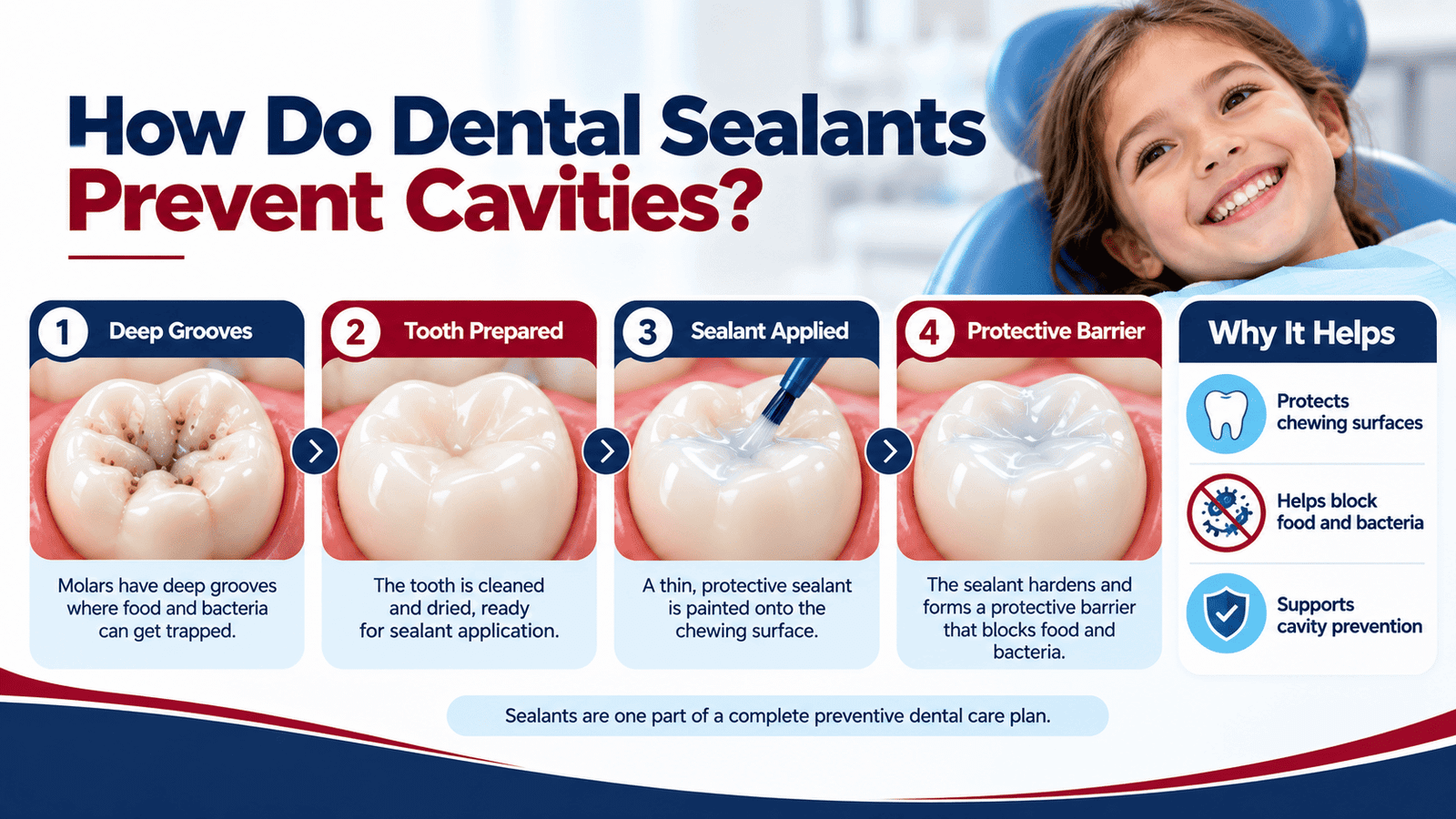
Dentists paint tiny coatings, called sealants, on the chewing surfaces of children’s molars. These teeth have microscopic pits and grooves that food and plaque can easily get lodged in. They are also more difficult to clean effectively with a toothbrush.
The sealant covers the grooves and gives the tooth an extra layer of protection from the bacteria and acids that cause cavities. While you’re at the dentist for routine visits, he or she can check the sealant and fix or replace it if it starts to wear away.
Also Read: How Pediatric Dentistry in Modesto Helps Prevent Gum Problems in Kids Early On
How Do Dental Sealants Prevent Cavities?
Your child’s molars include small pits and grooves that can retain plaque, even with daily brushing. These spots can provide a site for cavity-causing bacteria to hang out and create acids that damage enamel.
A dental sealant is a thin resin coating that fills such grooves. This results in a more even chewing surface that can be cleaned of plaque more easily and gives the enamel an extra layer of protection.
Sealants work best when used as part of a whole cavity prevention program for kids that includes fluoride toothpaste, good brushing, healthy eating habits, and regular dental checkups.
Are Dental Sealants Right for Your Children?
Sealants are useful if a child has deep grooves in their molars, a history of cavities, or a higher risk of tooth decay. Dentists generally prescribe them immediately after permanent molars come in because these teeth tend to trap plaque in hard-to-reach places.
The decision depends on the tooth, not just your child’s age. Your dentist can examine the molars and check their cavity risk before recommending dental sealants for kids.
Which Kids Should Get Dental Sealants?
Dental sealants are not necessary for certain children. It depends a lot on their teeth and how much of a cavity risk they are.
If your dentist recommends sealants:
- Deep grooves in their molars: Food and plaque can become lodged in these tiny grooves, and they might be hard for a child to reach with a toothbrush.
- They’ve had cavities before: Sealants can help protect your child’s rear teeth if they are prone to cavities.
- Some regions are hard to reach: Even kids who brush regularly can miss specific areas, especially around the rear molars. Sealants can help protect these locations.
- Their permanent molars have recently erupted: This is generally when dentists consider sealants. If the new molars are healthy, sealants can be applied to them to help protect them from cavities early on.
Sealants can be a helpful additional layer of protection, but they don’t substitute for brushing or frequent dental appointments. Your youngster still needs fluoride, proper brushing practices and periodic checkups to maintain their teeth’s health.
Must Read: How to Choose the Right Dentist for Your Family
What Happens During a Sealant Treatment?
Sealants are a rapid preventive treatment. Most of the time, your child won’t need any drilling or anesthetic. It only takes a few minutes per tooth.
The dentist first cleans the molar and removes any plaque or debris. Next, they dry and prepare the teeth so the sealant can bond. The dentist next adds a thin resin to the grooves of the molar and hardens it in seconds with a curing light.
Once the sealant has hardened, your child’s dentist will evaluate his or her bite to ensure it feels comfortable. Your kid can eat and drink normally after the appointment.
Next step: If your child has recently grown permanent molars, ask your dentist if sealants can help prevent dental decay.
How Long Do Dental Sealants Last?
Dental sealants can last many years to help protect your child’s molars, but they do tend to break down over time. The sealant is constantly under pressure from chewing, and harder or stickier foods can cause the breakdown to happen faster. This is why your dentist will inspect sealants during frequent visits.
There are a few things that can alter how long they last:
What Your Child is Eating
Hard and sticky meals might add extra pressure to the sealant. Eating these meals often can wear down the sealant sooner.
Changes to Sealant
A sealant can begin to wear away, and you may not even feel it, especially if it’s on a back tooth. Your dentist can check for small, worn or chipped areas and repair the sealant if necessary.
Regular Dental Check-ups
Routine dental checkups allow your dentist to inspect the sealants as well as your child’s teeth. If one has been damaged or worn, they can take care of it before the tooth loses that added protection.
Other Ways to Prevent Cavities in Children
Dental sealants are simply one element of the equation for preventing cavities in children, although they do protect the chewing surfaces of molars. Daily behavior continues to be very important.
Parents can concentrate on these basics:
- Brushing: Brush twice a day with fluoride toothpaste and help smaller children brush properly.
- Clean between the teeth: Floss daily when the teeth meet each other.
- Limit sugar frequency: Frequent exposure to sugary foods and drinks raises the risk of tooth decay.
- Offer water: Water helps flush the mouth and promote saliva flow.
- Go to the dentist regularly: Checkups let dentists catch early decay and check sealants.
Watch your child’s daily routine and pay attention to the habits that need the most attention. Ask your dental team for a cavity-risk assessment and customized prevention advice at your next dental visit.
Dental Sealants for Kids in Modesto
Parents often have questions about when their child needs sealants and how much protection they provide. A dental exam can answer that based on your child’s teeth and cavity risk.
If you want to take a proactive approach to cavity prevention for children, schedule your child’s appointment with Paragon Dental in Modesto. A dental exam can help identify cavity risks early and determine if sealants could benefit your child.
FAQs
Are dental sealants worth it for kids?
They can help guard the deep grooves of your molars where plaque and food like to gather. Whether or not sealants make sense will depend on your child’s cavity risk and tooth structure.
When should kids get dental sealants?
Most dentists recommend sealants around the time the permanent molars erupt, which is usually when children are about 6 years old, and then again at age 12. Your dentist can check teeth as they come in.
Are dental sealants safe for kids?
Dental sealants have been employed in preventive dentistry for a long time. Your dentist can analyze the material and your child’s dental needs before treatment.
How long will my sealants last?
Sealants may last many years, although they can get worn or chipped. Your dentist will be able to examine them during regular dental exams.
Can kids still get cavities with sealants?
Yes. Sealants protect the surfaces they are applied to, but there can be decay elsewhere. Fluoride, brushing, flossing, nutrition, and regular dental visits still matter.

As the leading cosmetic dentist in Modesto, CA, and founder of Paragon Dental, I’m proud to serve our community with state-of-the-art care. A Fellow of the International Congress of Implantology (ICOI) and Associate Fellow of the American Academy of Implant Dentistry (AAID), I focus on advanced, evidence-based care. Through continuous learning and modern technology, my team and I are committed to delivering comfortable, personalized treatment for healthy and lasting smiles