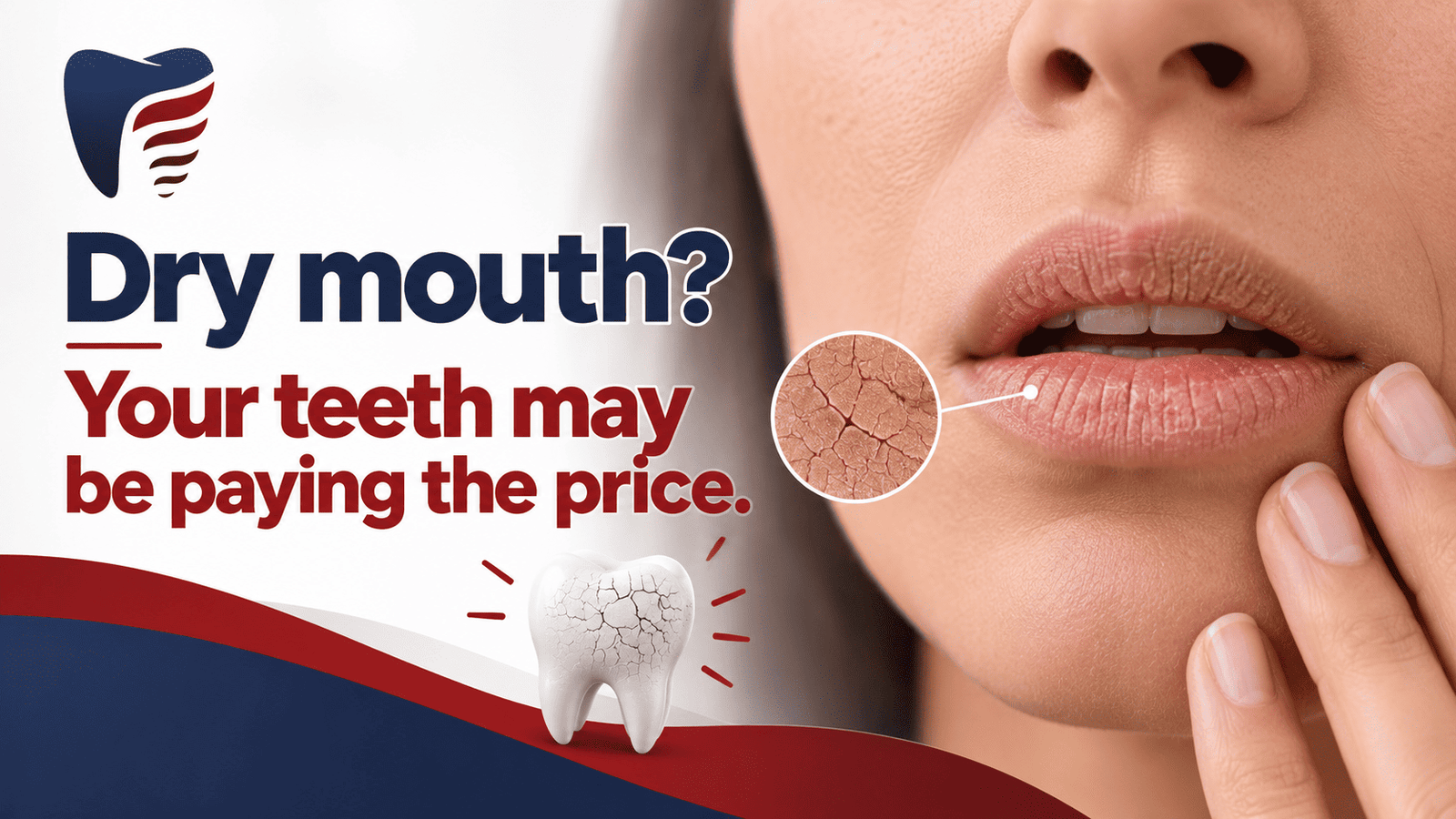
Dry mouth might be a minor irritation. You might feel sticky, grab water more often, or wake up with an unusually dry tongue. But saliva does a lot more than make your mouth feel comfy.
Saliva washes away food, neutralizes acids, protects tooth enamel, and keeps your gums healthy. You may be more likely to develop cavities, irritated gums, poor breath, and a painful mouth if you don’t create enough of it.
There are several reasons of dry mouth, including common habits, some drugs and health issues. Being aware of what might be causing the dryness might enable you to safeguard your teeth and gums before problems develop.
What Does Saliva Actually Do?
Saliva is a key aspect of the mouth’s natural defenses. When your mouth feels normal, you may not notice it at all, but saliva does a lot to keep your teeth, gums, and mouth healthy.
It clears away food left on your teeth and decreases the acids created by bacteria. It also contains minerals which help maintain your enamel and keep the pH in your mouth at a healthy level.
Saliva also helps prevent the tissues in your mouth from drying out. It’s important when you eat, swallow, converse, or even simply do your thing.
When you don’t produce enough saliva, your mouth loses part of that protection. Dry mouth can lead to cavities, gum irritation, bad breath, and more.
What Causes Dry Mouth?
Dry mouth can have several causes, and often several factors may be involved. The reason matters because long-term dryness might impact your teeth and gums down the road.
1. Medications
Dry mouth can be caused by many common drugs. Some of these are medicines for allergies, high blood pressure, depression, and other health concerns. If you start a new medication and notice your mouth is dry, check with your doctor or dentist before making any modifications.
2. Dehydration
Dry mouth can be caused by not drinking enough water. Fever, intense sweating, vomiting, and diarrhea can all induce fluid loss and impair saliva production.
3. Mouth breathing
Dry tissues in your mouth might be caused by allergies, a blocked nose, or sleeping with your mouth open. You’re probably aware of it most when you wake up in the morning.
4. Tobacco and alcohol
Smoking and other tobacco products can dry down saliva and irritate tissues in your mouth. Alcohol might also dehydrate you and leave your mouth feeling dry.
5. Anxiety & Stress
Stress affects some people’s saliva flow. You may find that you have a dry mouth before or during a stressful event, such as an important meeting or appointment.
6. Some health circumstances
Some health disorders, such as diabetes or Sjögren’s disease, might impair saliva production. Some cancer treatments, such as radiation therapy to the head and neck, can cause dry mouth, too.
If you have dry mouth for several weeks, or it’s starting to impact your teeth and gums, talk to your dentist. They can help find out the possible cause and propose the proper remedy.
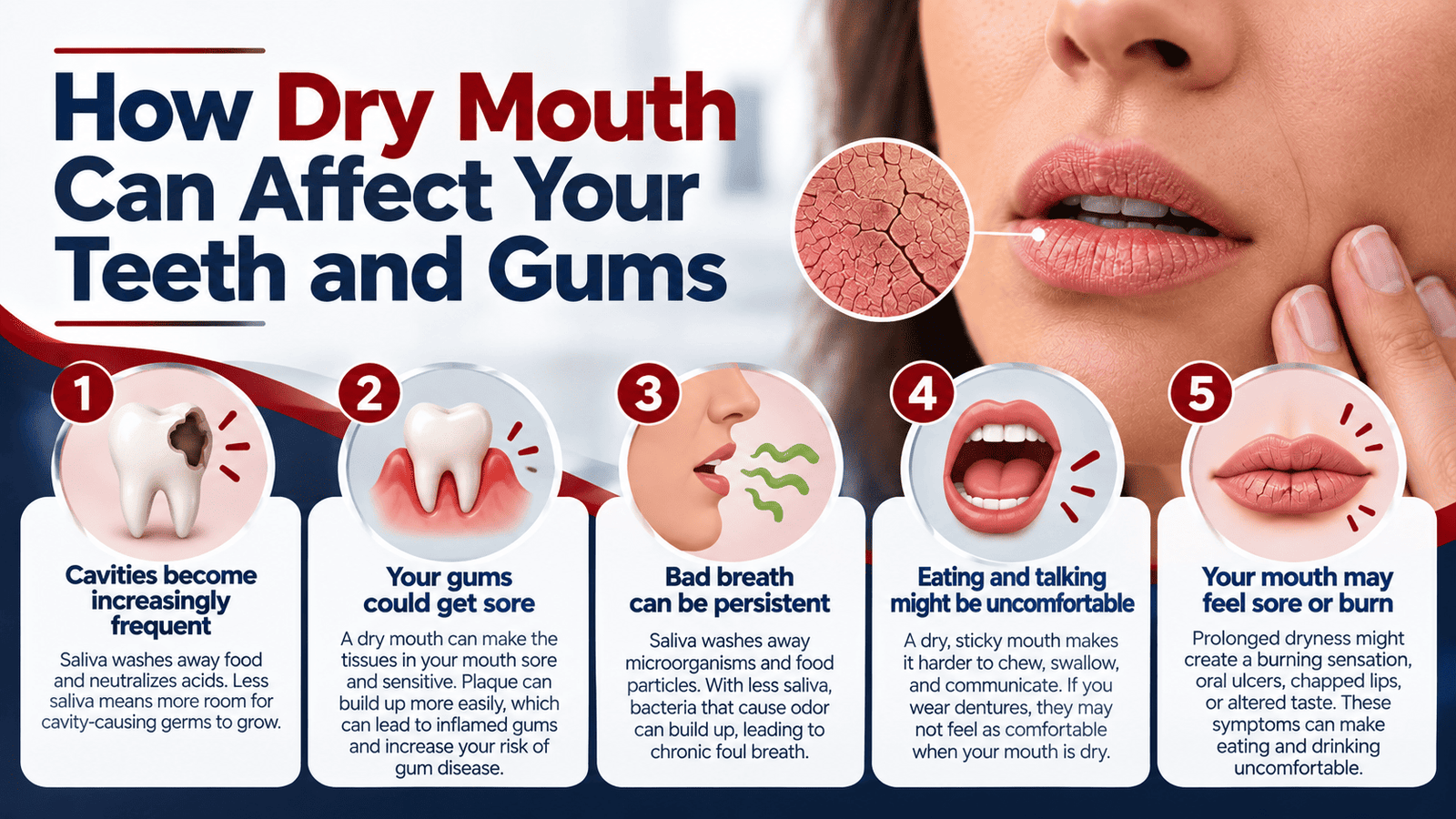
How Dry Mouth Can Affect Your Teeth and Gums
Saliva has an important role in maintaining the health of your mouth. When you don’t generate enough, your mouth loses some of its natural defense, leading to a variety of oral health problems.
1. Cavities become increasingly frequent
Saliva washes away food, neutralizes acids in your mouth. Less saliva means more room for cavity-causing germs to grow, which can increase your risk for tooth decay.
2. Your gums could get sore
A dry mouth can make the tissues in your mouth sore and sensitive. Plaque can also build up more easily, which can lead to inflamed gums and raise your risk of gum disease.
3. Bad breath can be persistent
Saliva washes away microorganisms and pieces of food. If you don’t have enough, bacteria that cause odor to pile up, and leave you with chronic foul breath.
4. Eating and talking might be uncomfortable
A dry, sticky mouth makes it harder to chew, swallow, and communicate. If you wear dentures, you may also discover they do not feel as comfortable if your mouth is dry.
5. Your mouth may feel sore or burn
Prolonged dryness might create a burning sensation, oral ulcers, chapped lips, or altered taste. These symptoms might make eating and drinking uncomfortable in your day-to-day life.
Don’t think you have to live with these problems if they keep coming up. A dental check-up can help identify the reason of dry mouth and safeguard your teeth and gums.
What Can You Do About Dry Mouth?
Sometimes you can’t help having dry mouth. It can be caused by certain medications and health issues. But there are a few basic things you can do to make dryness easier to cope with and to safeguard your teeth.
Keep yourself hydrated
Have a bottle of water with you and have little sips throughout the day. Water helps to prevent your mouth from feeling overly dry and removes food debris around your teeth.
Chew sugarless gum
Chewing gum can help to stimulate the production of saliva in your mouth. Choose a sugar-free product with xylitol, which might also help prevent cavities.
Stay with fluoride toothpaste
Fluoride strengthens your enamel and reduces your chances of cavities. Brush twice a day, and floss or clean between your teeth once a day.
Avoid sugary and acidic drinks
Soda, energy drinks and fruit juice can be tough on your teeth. If your mouth feels dry, then you are better off drinking water.
Don’t smoke
Dry mouth can be worsened by smoking and other tobacco products. They can also cause difficulties with the gums and teeth.
Talk with your dentist about saliva products
If you continue to have a dry mouth after making these changes, let your dentist know. They may recommend artificial saliva, mouth moisturizer, or another substance for aid.
And if you believe your medicine is causing dryness, don’t quit taking it on your own. Check with your doctor first.
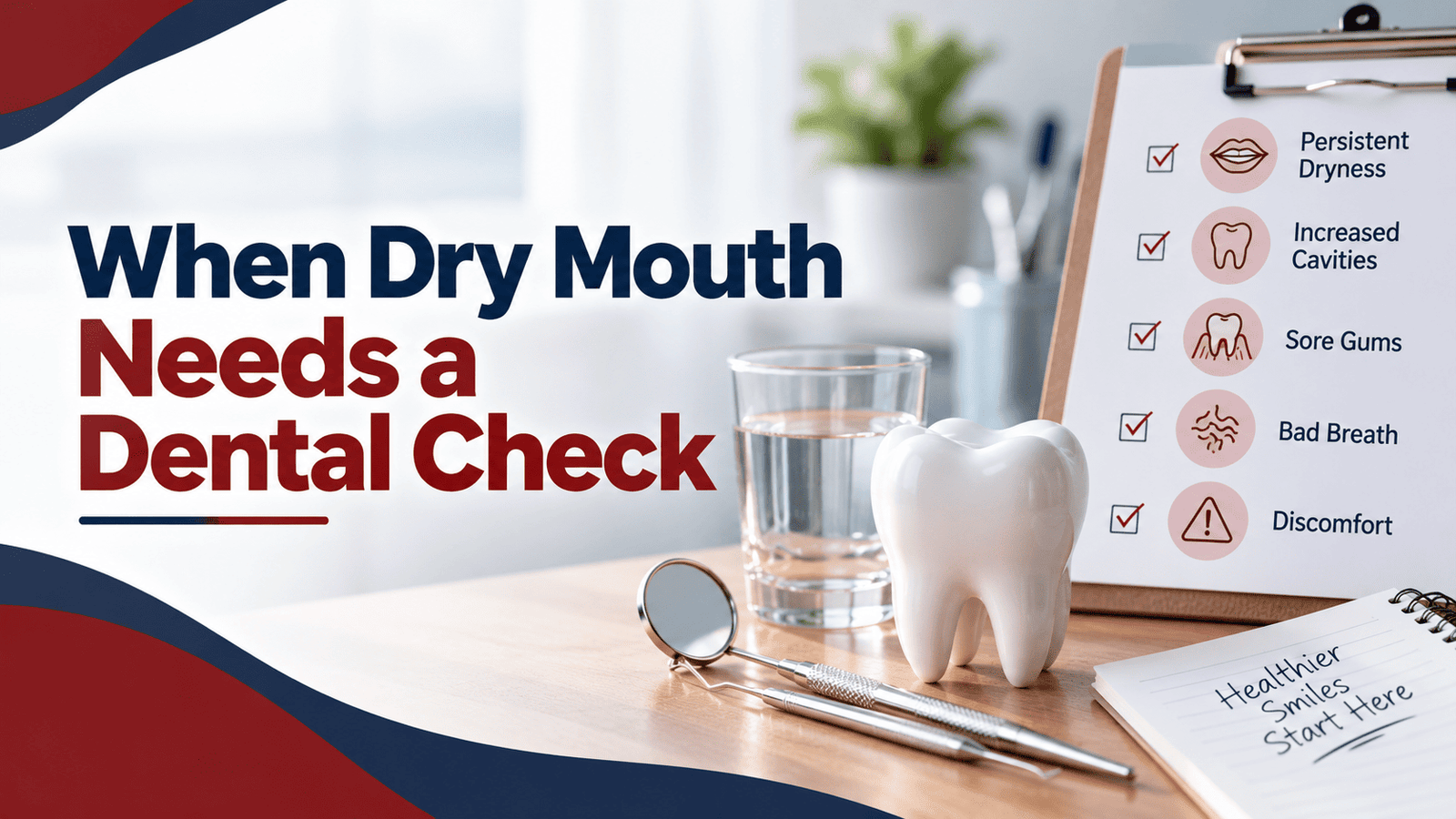
When Dry Mouth Needs a Dental Check
Occasional dry mouth can happen after exercise, during illness, or after a long day without enough water. Persistent dryness deserves more attention.
Talk to your dentist if you notice:
- Frequent cavities despite good oral care
- Bleeding, swollen, or irritated gums
- Persistent bad breath
- Mouth sores or a burning sensation
- Trouble chewing, swallowing, or speaking
- Dryness that continues for several weeks
Your dentist can check for tooth decay, enamel damage, gum problems, and other changes linked to reduced saliva. They can also discuss your medications, habits, and health history to help identify possible causes.
Early attention can help prevent dry mouth from turning into a bigger oral health problem.
How Paragon Dental Can Help
Dry mouth can harm your teeth and gums before you realize you have a problem. That’s where a dental checkup can assist to identify these changes early.
The experts at Paragon Dental examines for cavities, enamel loss, inflammatory gums, and other problems that might arise when you don’t produce enough saliva. They can also discuss with you your symptoms, medications and daily activities to assist identify probable explanations for dry mouth.
If your mouth is constantly dry, sticky, or itchy, don’t wait until you get a cavity or gum disease. Book a dental appointment with Paragon Dental and get personalized advice for your oral health requirements.

As the leading cosmetic dentist in Modesto, CA, and founder of Paragon Dental, I’m proud to serve our community with state-of-the-art care. A Fellow of the International Congress of Implantology (ICOI) and Associate Fellow of the American Academy of Implant Dentistry (AAID), I focus on advanced, evidence-based care. Through continuous learning and modern technology, my team and I are committed to delivering comfortable, personalized treatment for healthy and lasting smiles