One of the most popular cosmetic dental procedures is teeth whitening because it is a simple approach to give a smile a refresh. But many people are reluctant to initiate treatment. Are professional whitening treatments worth the money? Will they cause tooth sensitivity or poor results from over-the-counter products?
The answer depends on various factors such as why the teeth are discolored, their condition, and your goals. Treatment needs to be tailored as what works for one person may not work for another.
If you’re thinking about teeth whitening in Modesto, learning the difference between professional treatment and at-home alternatives will help you make a more educated decision.
Why Do Teeth Become Discolored?
There are many reasons why teeth may get discolored. Some stains are on the surface of the enamel, and some develop inside the tooth. If you know what is causing the discoloration, you can better decide which whitening procedure will most likely be successful.
Food and drink stains on surfaces
Coffee, tea, red wine, intensely colored meals damage your enamel over time. The more regularly you get them, the more prominent those stains tend to be.
Natural wearing of enamel
Your enamel starts to wear away gradually as you age. When that happens, yellow dentin below starts to come through, making teeth appear darker or more yellow. A dentist can tell whether whitening will improve the color.
Tobacco use
Smoking and chewing tobacco cause deep, permanent stains from the tar and nicotine. Usually, these stains don’t come off with a brush.
Some medicines and health conditions
Certain medical disorders, use of antibiotics in childhood and certain drugs might influence the color of teeth from the inside. In these circumstances, whitening procedures may not be as effective as they are for stains on the surface.
If you are wondering why your teeth are yellow or how to get rid of yellow teeth, the first step is to figure out what is causing the discoloration. Knowing why makes it a lot easier to find the best whitening product for you.
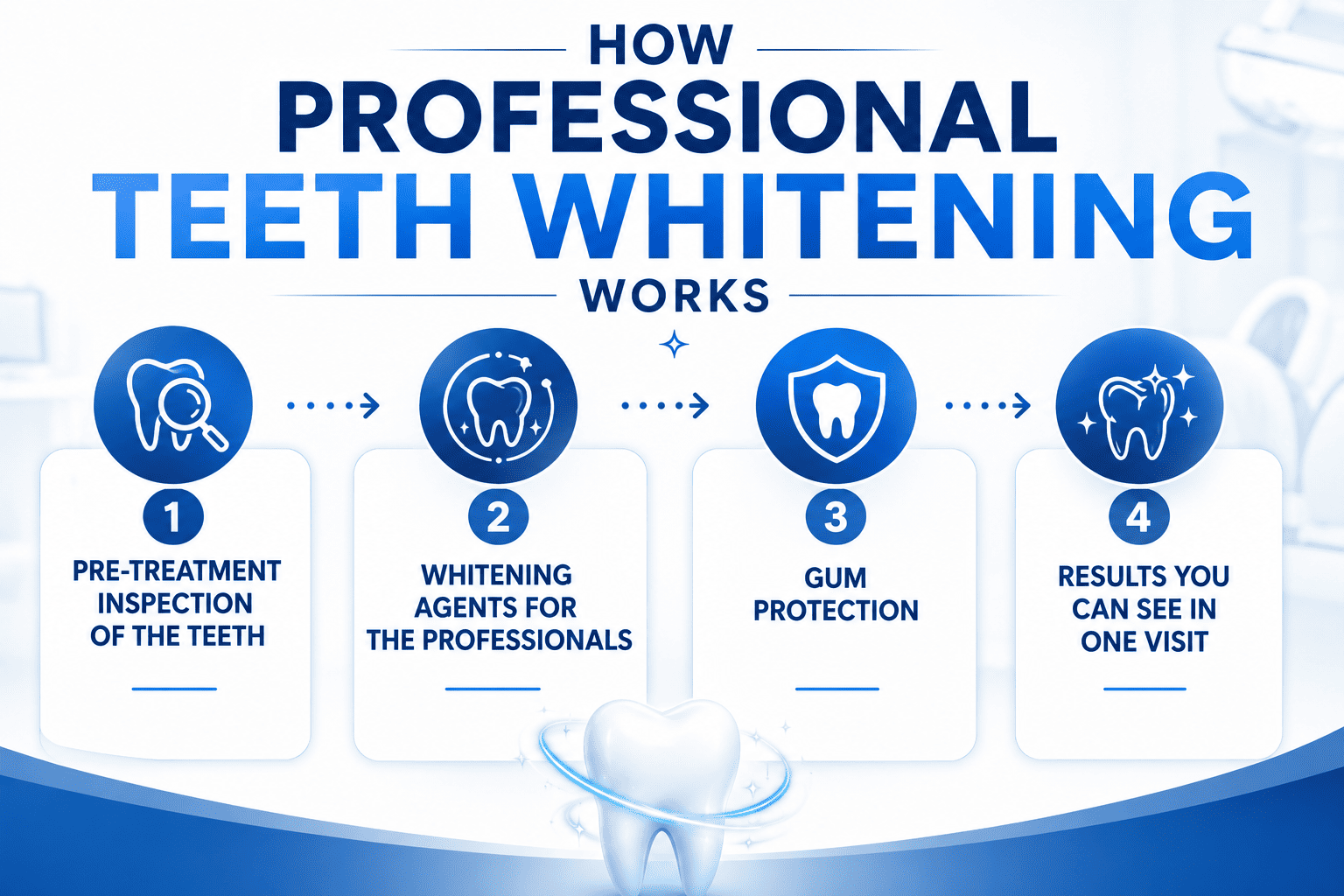
How Professional Teeth Whitening Works
The initial step to professional teeth whitening is an examination, not the whitening gel. First, your dentist will examine your teeth and gums to make sure that whitening is appropriate and to determine the type of discoloration that needs to be treated.
Here’s what the procedure normally looks like:
Pre-treatment inspection of the teeth
The dentist looks for cavities, gum disease, damaged enamel, and any dental work you might have. Addressing these problems first prevents discomfort and unequal results.
Whitening agents for the professionals
Professional whitening employs stronger bleaching gels than those you find in the market. These products are designed to fight stains better, yet still remain under clinical supervision.
Gum protection
To help decrease irritation during the whitening gel treatment, protective barriers are placed on the gums and other soft tissues.
Results you can see in one visit
Many patients leave one consultation with a brighter smile, although the final effect will vary depending on the type and severity of the discoloration.
Professional whitening is a controlled treatment method that’s personalized to meet your oral health and beauty goals.
How At-Home Teeth Whitening Works
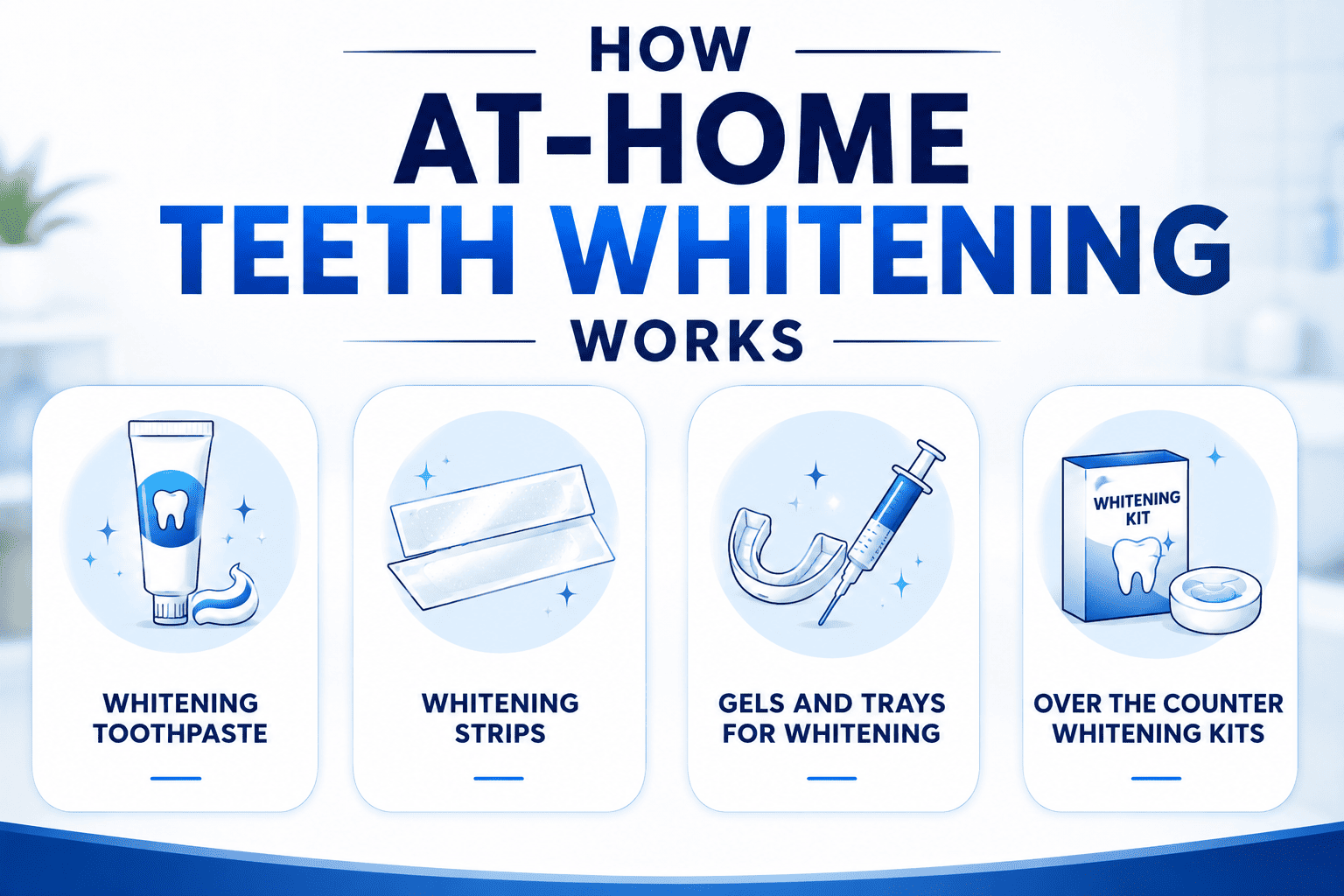
If you have light stains that have built up over time on your teeth, at-home whitening treatments can help. The results depend on the sort of stains you have, the product you use and how well you follow the instructions.
Some of the most prevalent alternatives are:
Whitening toothpaste
If you want a whitening toothpaste will work for surface stains. It can whiten your teeth and make them look cleaner and brighter, but it will not change the original colour of your teeth.
Whitening strips
These strips have a whitening gel and adhere directly to your teeth for a brief amount of time each day. They may help with mild to severe stains, but the benefits typically take a few of weeks to appear.
Gels and trays for whitening
Such products include trays that hold a whitening gel against your teeth. Most trays you buy in the market aren’t created for your mouth, so the gel may not spread equally over every tooth, and that can impair the ultimate results.
Over the counter whitening kits
Some kits feature strips or gels, some also come with an LED light. Results vary from person to person. They work best on surface stains and may not do much to treat deep discoloration.
If your stains are mild, at-home whitening is a fantastic place to start. If your teeth are severely stained or you desire a whiter, more uniform effect, professional whitening is generally the preferred alternative.
Professional Teeth Whitening vs. At-Home Whitening
Professional teeth whitening and home teeth whitening can both brighten your teeth, but they’re not the same in terms of experience or outcomes. The right choice for you depends on the stains you’re seeking to remove, your budget and the state of your teeth.
Some of the ways they compare:
Whitening results
If your teeth have deeper stains or yellow built up over time, you will generally have greater luck with professional whitening. Products you use at home can brighten your smile but are usually most effective on surface stains that aren’t too severe.
Length of treatment
A single visit to the dentist can be enough to detect a visible difference. If you go for whitening strips or trays from the shop, you’ll need to keep up with the procedure for a couple weeks before you see the full result.
Sensitive teeth
For some people, whitening might make sensitive teeth feel more painful. Your dentist can see things like damaged enamel or cavities before you get treatment and offer something that is kinder to your teeth.
Security
Before you start professional whitening, your dentist will check your teeth and gums to make sure they are healthy enough for treatment. Your dentist also safeguards your gums from the whitening gel during the process. At-home products can be safe too, but only when used exactly as advised.
Cost
Store-bought whitening products are less expensive, so they’re a fantastic alternative for a lot of people. Professional whitening is more expensive but can frequently produce faster, more dramatic effects.
It is not the same right choice for everybody. Having a quick chat with your dentist might help you decide which option makes the most sense for your smile.
Which Option Is Better for Sensitive Teeth?
A bit extra thought is required for whitening for sensitive teeth. Repeated use of strong whitening formulae or over-the-counter solutions can increase that sensitivity.
One benefit of professional whitening is that your dentist can figure out what is causing the sensitivity before treatment. They can either alter the whitening process or offer desensitizing items to make you more comfortable before and after the appointment.
Some over-the-counter whitening treatments for sensitive teeth have lower-strength whitening agents. They can be good for mild stains but generally it will take longer to see the change.
The finest teeth whitening for sensitive teeth is not just about the product you choose. It depends on your oral health, the cause of the staining, and how sensitive your teeth are. A dental exam can help you choose a whitening option that lightens your smile without making your teeth more sensitive.
Who Should Avoid Teeth Whitening?
Not everyone is a suitable candidate for teeth whitening. Sometimes dental problems need to be dealt with first. Some stains will not react well to teeth whitening either.
If you have: contact your dentist before whitening
Active Cavities
If you have a cavity, whitening treatments might penetrate the affected region and make your teeth more sensitive or painful.
Periodontal disease
Before any cosmetic treatment, it is crucial to have healthy gums. Your dentist will often suggest treating gum disease initially.
Sensitive teeth
If you have sensitive teeth already, whitening may make it worse. Sensitivity can also indicate that the enamel is worn away, the roots are exposed, or that there is some other problem that needs to be treated.
Crowns, Veneers or Fillings
Whitening will only work on natural teeth. Crowns, veneers, fillings and bonding won’t alter color, so you could end up with inconsistent looking results.
The best way to find out if teeth whitening is good for you is to have a dental exam. If it isn’t, your dentist can suggest alternative therapy that will produce a better result.
How Paragon Dental Can Help
At Paragon Dental, all whitening treatments begin with an understanding of why your teeth have changed color. The specialists will look inside your mouth, determine what is causing the discoloration, and offer a treatment option that meets your goals and comfort level.
Whether you’d like a brighter smile ahead of a particular event or you’re seeking a cosmetic treatment that will last, Paragon Dental offers professional teeth whitening in Modesto for a wide spectrum of patients including those with sensitive teeth.
Book a consultation to find out which whitening treatment is suitable for your smile.
FAQs
- Does professional teeth whitening really make a difference?
Yes, for a lot of people. For stains over-the-counter products can’t often remove, especially if they are from coffee, tea, tobacco or age, professional whitening can be effective. Your dentist also tailors the treatment to your teeth, which helps to create more even-looking results.
- After a professional teeth whitening, how long will they stay white?
It depends on your daily habits. Stains can reappear sooner with coffee, tea, red wine, tobacco, and poor oral hygiene. Having regular dental cleanings and good home care will extend the life of your results.
- My teeth are sensitive. Can I still bleach them?
In many cases, yes. Whitening treatment is not excluded for sensitive teeth. Your dentist can recommend a method that will suit your sensitivity level and reduce any discomfort during the process.
- Why didn’t a home whitening kit work for me?
Not all types of discoloration will react to the OTC products. Deep stains, enamel deterioration, and discoloration from some medications frequently necessitate professional evaluation. If whitening products haven’t helped you much, it might be worth looking into why your teeth got discolored in the first place.
- Do you need to have your teeth cleaned before whitening?
Professional cleaning is often a good starting point. The whitening treatment will work more effectively on the tooth surface by removing plaque and tartar, and also gives your dentist a chance to check for cavities, gum disease or other issues before treatment begins.

As the leading cosmetic dentist in Modesto, CA, and founder of Paragon Dental, I’m proud to serve our community with state-of-the-art care. A Fellow of the International Congress of Implantology (ICOI) and Associate Fellow of the American Academy of Implant Dentistry (AAID), I focus on advanced, evidence-based care. Through continuous learning and modern technology, my team and I are committed to delivering comfortable, personalized treatment for healthy and lasting smiles