Not having teeth affects more than just how you look. Over time, they change how you chew, how you talk, and how your bite works. A lot of patients get used to it at first. Harder foods are replaced by softer ones. The gap becomes a part of everyday life. But the effect on oral health that caused it to happen is still there.
Because of this, more patients are now looking for long-term solutions instead of quick fixes. Dental implants can help you get back both function and structure. They don’t just fill the hole. They take the place of the root and hold up the bone below it.
It’s a good idea to know everything about dental implants in Modesto before you make a choice. This guide explains the process, what recovery is like, and how to find a provider who can give you consistent results.
What Are Dental Implants?
A dental implant takes the place of the root of a tooth that is missing. It is in the jawbone and holds up a new tooth above the gumline.
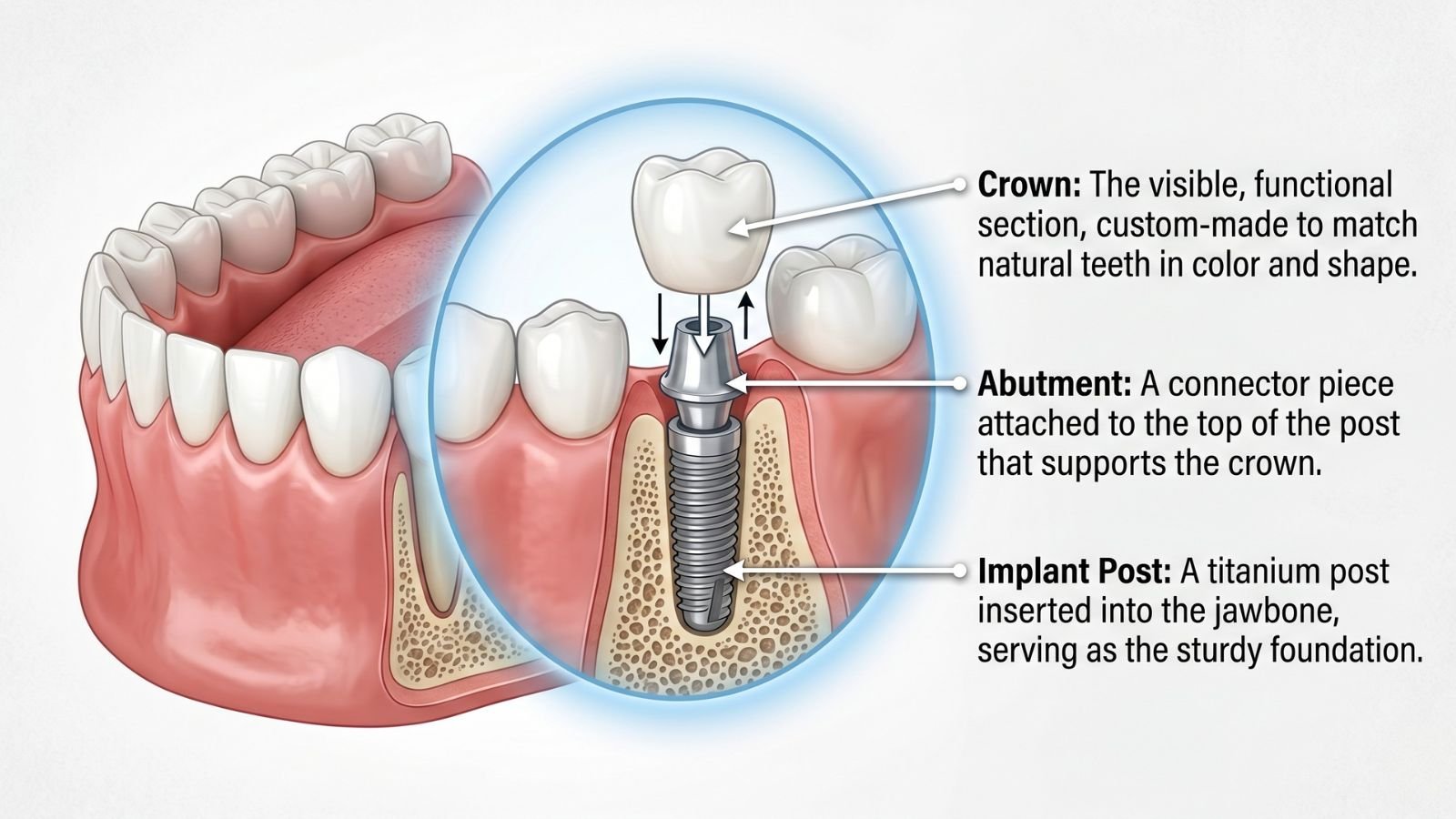
There are three key parts to each implant:
Implant post: A post made of titanium is put into the jawbone. It is the base of the restoration.
Abutment: A piece that connects to the implant post and holds up the crown.
Crown: The section of the tooth that you can see. It looks like the other teeth in the area, both in shape and color.
The main difference is how the implant works with the bone. The bone sticks to the implant surface, giving a strong platform for chewing forces.
Implants don’t need neighboring teeth to support them, as bridges or dentures do. This helps keep the other teeth healthy while restoring function in the area that was damaged.
Why Dental Implants Are a Preferred Option in Modesto
People who are sick want solutions that will last. Dental implants address that need by bringing back both function and structure. They don’t sit on the gums or rely on teeth that are close by. They connect to the jaw and work with the rest of the mouth.
Many people in Modesto choose dental implants over other options for these reasons:
- Function of the bite is stable: Patients can chew with confidence since implants anchor into the jawbone. There is no movement during meals, which makes it more comfortable and easier to handle.
- Looks natural: The crown fits the shape, contour, and color of the teeth next to it. This helps keep the style consistent without making the restoration stand out.
- Not depending on teeth next to it: Implants don’t need help from nearby teeth. This keeps the natural structure of the tooth and doesn’t change it in any way.
- Support for the structure of the bone: The bone around a tooth starts to lose volume when the tooth is absent. An implant moves the force of chewing into the bone, which helps keep its shape and density.
- Long-term performance that may be counted on: There is a set way to treat implants. If you put them in the right spot and take care of them, they will give you the same results over time.
- Better daily function: When you replace the lost tooth with a fixed treatment, your speech, chewing, and bite alignment get better. Patients typically notice that things are more stable in their daily lives.
When your schedule is full, it’s easy to keep putting off dentist appointments until “next week.” But then months go by. Paragon Dental is quick and kind, so you don’t feel like you have to spend the whole day getting care. Come see us and finally get that appointment done without any trouble.
Who Is a Good Candidate for Dental Implants?
A successful implant requires more than just the operation. The health of the bones, gums, and body as a whole has a direct effect on the outcome. Not every patient is eligible straight immediately, but a good evaluation helps figure out what to do next.
Before considering dental implants, dentists look for the following:
- Adequate bone density: The implant needs a solid basis. The jawbone must to be strong and big enough to hold the implantation. If you have lost bone, you may need several treatments to restore the area.
- Healthy gum tissue: Gums make a protective seal around the implant. Before therapy, any symptoms of infection or inflammation must be dealt with.
- Stable medical condition: The ability to heal is important. Before placement, conditions that impact recovery must remain under control.
- Good oral hygiene habits: The area needs to be kept clean for long-term success. Patients who take care of themselves every day tend to do better.
- Non-smoking or controlled habits: Lifestyle factors affect how well you recuperate and how stable you will be in the long run. Smoking can change how well the implant works with the bone.
- Commitment to follow-up care: You need to keep an eye on implants throughout time. Regular trips to the dentist help keep the tissue around the teeth healthy and catch problems early.
Not all patients who don’t meet these criteria are turned away. Dentists can often get the area ready for surgery by doing things like bone grafting or gum therapy.
Also Read: From Consultation to Smile: What to Expect with Dental Implants in Modesto
Dental Implant Procedure: Step by Step
There is a defined protocol for dental implants. There is no urgency, and each step has a reason for being there. Knowing what’s coming next makes the whole thing simpler to deal with.
This is how it normally goes:
Step 1: Talk to someone and make a plan
Your dentist looks at your teeth, gums, and jawbone. X-rays or scans can show where the implant should go and if the bone can hold it.
Tip: This is a good place to ask questions. Before you move forward, be sure you know the schedule and what your case is about.
Step 2: Get the site ready (if necessary)
You might need a graft if the bone isn’t strong enough. This phase produces a firm base for the implant to hold onto.
Tip: Pay strict attention to the prep instructions. This stage gets everything ready for what comes next.
Step 3: Putting in the implant
The dentist puts a small titanium post into the bone of the jaw. This is what makes the root of your new tooth. The area stays numb the whole time.
Tip: Relax for a day or two. Don’t chew on that side until the region settles down.
Step 4: The healing phase
This part takes a while. The bone grows around the implant, holding it in place. That’s what makes it strong.
Tip: Follow your dentist’s recommendations and keep the area clean. How well the implant stays in place later depends a lot on how well it heals.
Step 5: Putting on the crown
When the implant feels stable, the dentist puts on the last crown. It is shaped and colored to seem like your own teeth.
Tip: Treat it like you would your own teeth. Here, good habits matter.
Each step builds on the one before it. When placement is exact and healing proceeds well, the result seems natural and stays reliable.
That sharp tooth pain you want to go away? It usually doesn’t. And waiting it out often makes a small problem into a big one. At Paragon Dental, they make things simple and get you seen right away so you can take care of it before it gets worse. Call us today to have it looked at before it gets too big to ignore.
Recovery After Dental Implants: What to Expect
The first few days after surgery are not the only time you can recover. It goes through the healing phase, when the implant becomes one with the bone. Knowing this timeline can help you keep your expectations in check and avoid problems.
Most patients can expect the following during their recovery:
- First stage of healing: After placement, you might feel mild swelling, sensitivity, or discomfort. This is how the body reacts to the procedure.
- Adjustment of soft tissue: The gums start to change shape around the implant site. Taking care of the area at this stage helps keep it safe.
- Changes to your diet: Soft foods put less stress on the area where the implant is. You can slowly go back to your normal diet as long as you feel comfortable and your healing is going well.
- Routine for taking care of your mouth: Cleaning around the implant must always be the same, but it must be gentle. This helps keep infections from happening during the early stages of healing.
- Phase of bone integration: The implant and the jawbone connect. This step builds the strength needed for long-term use.
- Care after the fact: Regular visits let the dentist check on your progress and make sure the implant stays stable.
You need to be patient and stick with it to get better. How you take care of the implant during this time will have a direct effect on how well it works in the long run.
You Might Also Like: Considering Dental Implants in Modesto? Everything You Need to Know Before You Decide
How Long Do Dental Implants Last?
Dental implants are meant to last a long time, but how long they last depends on how well the structures around them hold up over time. The implant fits into the jawbone, which makes it stable. This is what makes it different from other ways to replace teeth.
Several things affect how long an implant works without problems:
- Integration of the implant with bone: The stability of the implant depends on how strong the bond is between it and the jawbone. Long-term success depends on good bone quality and proper placement.
- Well-being of nearby tissue: The gums seal the implant in place. This tissue keeps the bone underneath it safe from infection and inflammation as long as it stays healthy.
- Every day oral care: Plaque can still build up around an implant. If you don’t clean it properly, this can cause tissue to break down around the site.
- Aligning bites and spreading force: Grinding too hard or having an uneven bite can put stress on the implant. A stable situation is helped by a balanced distribution of force.
- Crown condition: The crown can handle the wear and tear of chewing every day. It might need to be replaced over time, but the implant itself will stay in place.
- Regular checkups at the doctor: Regular visits to the dentist help keep an eye on the implant and the tissue around it. Finding small problems early on can help keep them from becoming bigger ones.
If these things stay under control, implants can work for many years without any problems. The way they are placed and how well they are taken care of both affect how long they last.
Not every dental office takes the time to really listen. You go in with one problem and come out feeling like no one heard you. Paragon Dental is different because they listen to what you have to say before making any suggestions. Call us today and talk to someone who will listen to your worries.
Risks and Considerations
There is a set way to treat dental implants, but they still involve biological and mechanical factors that need to be taken care of. Patients can have realistic expectations about the process if they understand these things clearly.
Before moving forward, here are the most important things to think about:
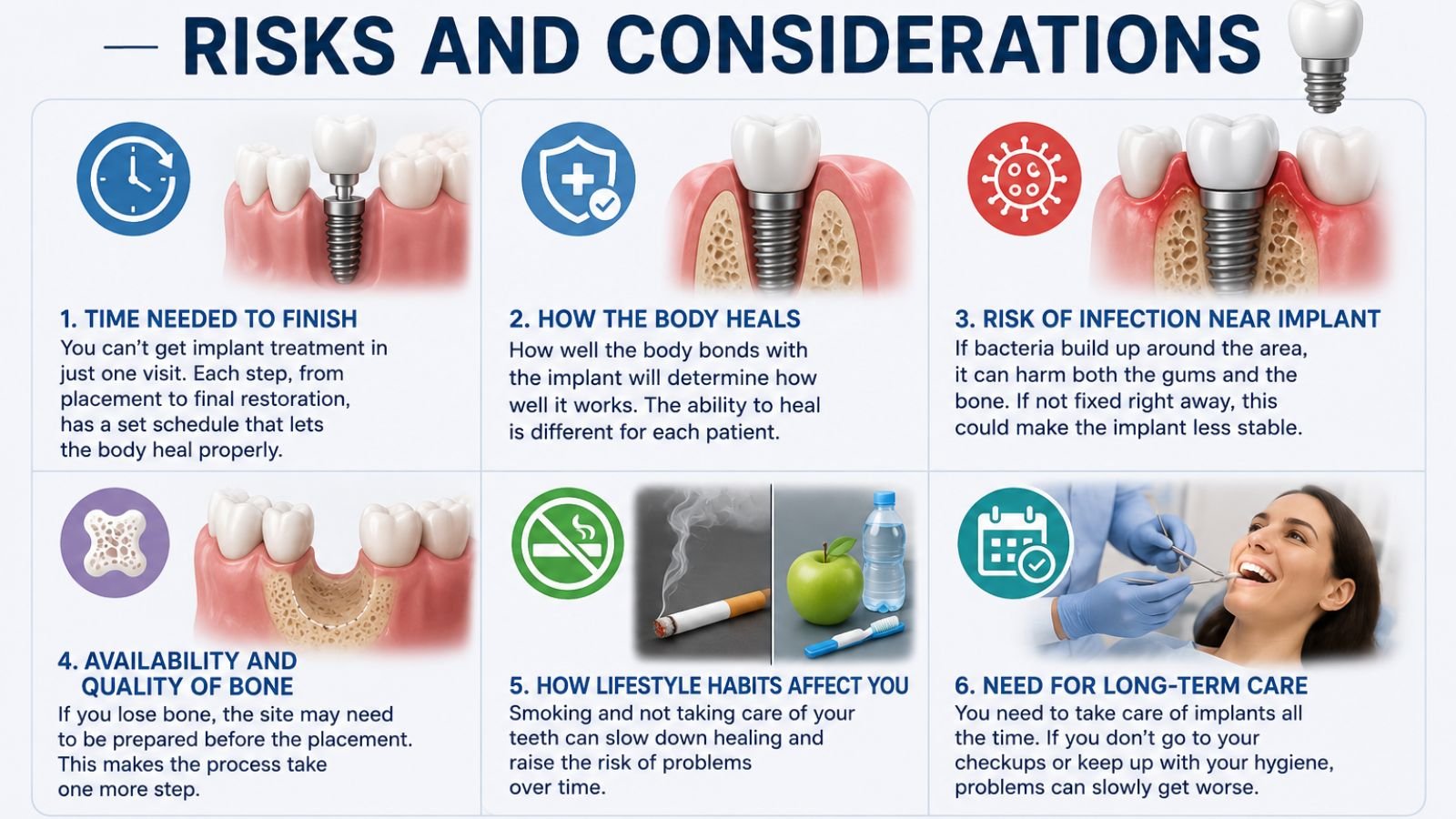
- Time needed to finish: You can’t get implant treatment in just one visit. Each step, from placement to final restoration, has a set schedule that lets the body heal properly.
- How the body heals: How well the body bonds with the implant will determine how well it works. The ability to heal is different for each patient.
- There is a risk of infection near the implant: If bacteria build up around the area, it can harm both the gums and the bone. If not fixed right away, this could make the implant less stable.
- Availability and quality of bone: If you lose bone, the site may need to be prepared before the placement. This makes the process take one more step.
- How lifestyle habits affect you: Over time, smoking and not taking care of your teeth can slow down healing and raise the risk of problems.
- Need for long-term care: You need to take care of implants all the time. If you don’t go to your checkups or keep up with your hygiene, problems can slowly get worse.
These things don’t make implants hard to predict. They stress how important it is to plan ahead, get the patient to stick with it, and get regular follow-up care to keep the results over time.
Dental Implants vs Other Tooth Replacement Options
There are many ways to replace missing teeth, and dental implants are one of them. Each option has a different way of working and meets a different need. The best choice depends on the patient’s preferences, long-term goals, and clinical conditions.
Here’s how implants stack up against other popular choices:
| Factor | Dental Implants | Dentures | Dental Bridges |
|---|---|---|---|
| Support | Placed within the jawbone | Rest on the gums | Supported by adjacent teeth |
| Stability | Fixed and stable | May shift during use | Fixed but dependent on nearby teeth |
| Impact on other teeth | No impact on adjacent teeth | No direct impact | Requires shaping of adjacent teeth |
| Bone preservation | Helps maintain bone structure | Does not support bone | Does not support bone |
| Comfort | Feels close to a natural tooth | May require adjustment | Feels stable but involves other teeth |
| Longevity | Long term with proper care | May need periodic replacement | May require replacement over time |
Implants are a better way to solve the problem on your own. They help keep the bone underneath healthy and restore function without putting stress on other teeth. In some cases, dentures and bridges are still good options, but patients should be aware of their limits.
How to Choose the Right Dental Implant Provider in Modesto
The provider is just as important as the process when it comes to the outcome of dental implant therapy. The end result is affected by experience, planning, and clinical accuracy.
When choosing a service in Modesto, keep these things in mind:
- Experience with instances involving implants: A clinician who does implant procedures often is better able to handle both simple and complicated cases.
- Thorough diagnostic method: Correct imaging and evaluation assist figure out where to put the implant and if any preliminary treatment is needed.
- Planning therapy clearly: You should get a step-by-step plan that shows you how the process will work, when it will happen, and what the results should be.
- Think about the long-term results: The goal should go beyond just finding a job. A good provider thinks about the health of the bones, the alignment of the bite, and the long-term stability.
- Talking to and making the patient feel comfortable: A planned approach and clear explanations help people feel less unsure and more trusting during the whole process.
- Choosing the correct practitioner helps make sure that each step of treatment leads to a steady and predictable outcome.
Why Patients Choose Paragon Dental for Dental Implants in Modesto
There is more to picking a supplier than just their qualifications. Patients want a clear, consistent treatment plan that will help them get better over time.
At Paragon Dental, they always pay close attention to detail. The method follows a set strategy based on the patient’s condition, from the first consultation to the last repair.
- Planning treatment that is specific to you: A thorough examination of the bones, gums, and bite is the first step in every case. The plan is based on what the patient requires, not a traditional way of doing things.
- Focus on long-term stability: When making treatment options, doctors don’t simply look at how the implant will work right away. They also think about how it will work over time.
- Clear communication: Patients know what will happen before, during, and after the procedure. This makes things less uncertain and more certain.
- Paying attention to comfort and care: The crew works hard to make the experience as easy as possible, especially during surgery and recuperation.
Take the next step if you want a clear plan and outcomes you can count on. Make an appointment with Paragon Dental to see if dental implants are appropriate for you.

As the leading cosmetic dentist in Modesto, CA, and founder of Paragon Dental, I’m proud to serve our community with state-of-the-art care. A Fellow of the International Congress of Implantology (ICOI) and Associate Fellow of the American Academy of Implant Dentistry (AAID), I focus on advanced, evidence-based care. Through continuous learning and modern technology, my team and I are committed to delivering comfortable, personalized treatment for healthy and lasting smiles