Tooth pain doesn’t often happen at a good time. It can start late at night, while you’re eating, or right before a big meeting. Most people ask the same thing at that time. Is this bad enough that you need to call a dentist right away?
Uncertainty often makes things take longer. Some people wait it out and hope the pain goes away. Some people rush to get help for problems that could have waited. Both situations cause stress and confusion.
The hard part is knowing what the difference is. Some dental problems need to be fixed right away to avoid infection, losing teeth, or more damage. Others can wait for their scheduled visit without any problems.
Knowing what counts as an emergency helps you act with confidence. It also keeps you from panicking for no reason while making sure you don’t miss a serious condition.
What Counts as a Dental Emergency?
A dental emergency is more than just pain. It usually has signs that the tooth and the structures around it are actively damaged, infected, or at risk.
Severe or Long-Lasting Pain: Pain that doesn’t go away or gets worse is often a sign of a bigger problem. It could be the pulp, the bone around it, or an active infection.
Bleeding that won’t stop: If bleeding doesn’t stop right away, you need to get help right away. It could happen after an injury or a recent dental procedure.
Infection or Swelling: When your gums, face, or jaw swell, it usually means you have an infection. If you don’t treat it, it could spread and hurt your health in other ways.
The chance of losing a tooth: You need to take care of a knocked-out or badly broken tooth right away. Acting quickly can mean the difference between keeping and losing the tooth.
The state of your teeth alone does not make it an emergency. It depends on the symptoms and how much risk there is. Recognizing these signs early leads to better care and better outcomes.
Also Read: What to Do Before You Reach an Emergency Dentist
Common Dental Emergencies That Need Immediate Care
Some dental issues need to be fixed right away. These conditions often involve pain, trauma, or infection that can get worse if not treated right away.
1. Bad Toothache
If you have pain that doesn’t go away, it may be because something is wrong with the tooth or the tissue around it. It could mean that the decay has reached the pulp or that there is an infection near the root. You shouldn’t ignore pain that makes it hard to eat or sleep.
2. Knocked-Out Tooth
You need to do something right away if you knock out a tooth. How quickly you get to the dentist will affect how likely it is that the tooth can be saved. Taking care of the tooth and keeping it wet can make things better.
3. Broken or cracked tooth
A visible crack or break shows the tooth’s inner structure. This raises the risk of infection and more damage. Prompt treatment helps keep the rest of the tooth structure safe.
4. Swelling or an abscess in the mouth
When an infection builds up near the root or gum tissue, an abscess forms. After that, you might feel pain, swelling, or a bad taste. To stop the infection from spreading, this condition needs immediate medical attention.
5. Uncontrolled Bleeding
If you are bleeding after an injury or dental procedure, you need to get help right away. It could mean that the tissue is damaged and needs professional help.
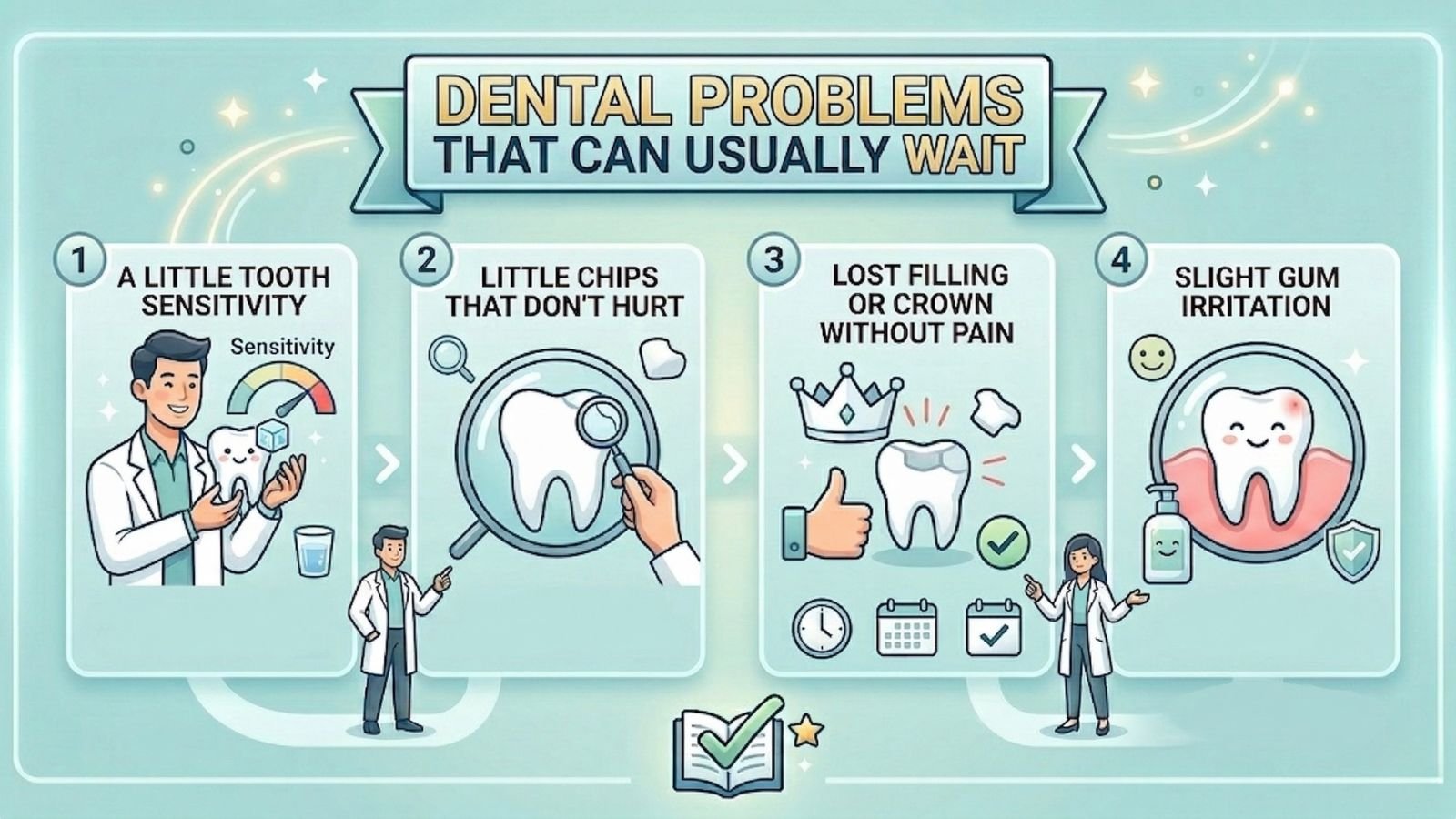
Dental Problems That Can Usually Wait
Not every dental problem needs immediate attention. Some conditions may be uncomfortable but are not dangerous right away. Most of the time, these cases can wait for an appointment.
- A Little Tooth Sensitivity: If your enamel wears down or your gums recede a little, you may be sensitive to hot or cold foods. It doesn’t always mean there’s an emergency unless the pain gets worse.
- Little chips that don’t hurt: Small chips that don’t show deeper layers of the tooth don’t always need to be treated right away. You can have them fixed by a dentist during a regular visit.
- Lost Filling or Crown Without Pain: If a filling or crown is missing, the tooth may be exposed, but it may not hurt right away. Temporary care can keep the area safe until you can see a dentist.
- Slight Gum Irritation: Brushing too hard or food particles getting stuck in the gums can cause slight redness or irritation. If better oral care fixes it, it might not need to be treated right away.
Knowing which problems can wait helps you avoid stress and make sure that real emergencies get the help they need right away.
You Might Also Like: Everything You Need to Know About Dental Crowns After a Root Canal
When to Call an Emergency Dentist
In some cases, there isn’t much time to waste. Making the right call at the right time can stop more damage from happening and make treatment less complicated.
- Pain That Makes It Hard to Do Normal Things: Pain that makes it hard to eat, talk, or sleep is a sign of a bigger problem. This level of pain usually needs to be looked at right away.
- Swelling in the face or jaw that you can see: If you have swelling near your jaw or cheek, it could be a sign of an infection. If not treated quickly, this can spread, so it’s important to get care right away.
- Fever and toothache at the same time: Fever means that the body is fighting off an infection. It means you need to see a doctor right away when it shows up with dental problems.
- Trouble Chewing or Opening the Mouth: If you have trouble moving or pain while chewing, it could be a sign of an infection or joint involvement. A dentist should quickly figure out what the problem is.
- Sudden Damage to the Teeth or Gums: Any injury to the teeth, gums, or jaw needs to be looked at right away. Taking quick action can help protect the tooth and stop more damage from happening.
If you see these signs, you should call an emergency dentist right away instead of waiting for the problem to get better.
What to Do Before You Reach the Dentist
What you do before you get to the clinic can affect the outcome. Simple things can make the area less painful and keep it safe.
- For a toothache: To get rid of debris, rinse your mouth with warm water. Stay away from foods that are very hot or cold, as they may cause pain. Don’t put medicine directly on your gums.
- For a Tooth That Is Knocked Out: Don’t hold the tooth by the root; hold it by the crown. Put it back in the socket if you can. If not, put it in milk or saliva and get medical help right away.
- For Swelling or an Abscess: Put a cold compress on the outside of the cheek to help with the pain. Don’t put heat or pressure on the area.
- For a broken tooth: If you can, rinse your mouth and keep any pieces that are broken. Don’t chew on that side until a dentist looks at the damage.
These steps won’t replace treatment, but they can help keep the tooth safe and lower the risk of problems before you see a dentist.
What to Expect During an Emergency Dental Visit
The goal of an emergency visit is clear. Get rid of the pain and make the problem stable. The dentist works in a planned way to fix the problem right away.
- First Look: The dentist looks at the area that hurts and talks to you about your symptoms. You may need to have X-rays done to find out where the pain or damage is coming from.
- Pain Relief Right Away: The first step is to make the pain less severe. Depending on the condition, this could mean taking medicine or getting local anesthesia.
- Treatment that is aimed at a specific problem: What kind of treatment you need depends on the problem. It could mean draining an abscess, fixing a broken bone, or making a tooth more stable. Sometimes, the dentist will put in a temporary fix before a permanent one.
- Clear Next Steps: The dentist explains what will happen next in your care before you leave. This could mean more visits or treatment to get full function back.
The process stays focused and efficient, with an eye on both short-term relief and long-term stability.
Risks of Delaying Emergency Dental Care
Putting off care can make a problem that is easy to deal with into one that is hard to deal with. What starts out as mild pain can turn into a serious problem.
- Infection Can Go Around: Infections that aren’t treated can spread beyond the tooth and into the tissue around it. This can cause swelling and other problems to get worse.
- More Damage to the Tooth: Over time, cracks, decay, or trauma can get worse. If you wait too long, you might not be able to save the tooth.
- More complicated treatment: Early intervention usually needs less complicated steps. If you wait too long, you may need more complicated treatments that take more time and planning.
- More expensive care: As the illness gets worse, the treatment gets more complicated. This usually means higher costs and a longer recovery time.
Getting care right away helps keep the problem from getting worse and protects both your oral health and your overall health.
How to Prevent Dental Emergencies
Most dental emergencies don’t happen out of the blue. When small problems aren’t fixed, they can get worse over time. You can lower that risk by doing a few things on a regular basis.
1. Keep up with your dental checkups.
Regular visits help find early signs of gum problems, decay, or cracks. Taking care of small problems on time stops them from becoming big ones.
2. Take Care of Your Teeth When Doing High-Impact Activities
Playing sports and being active makes it more likely that you’ll get hurt. A custom mouthguard can help keep your teeth safe from sudden hits.
3. Don’t do things that stress your teeth.
Chewing on hard foods like ice or using your teeth to open packages can cause cracks or breaks. Over time, these habits make the structure weaker.
4. Take care of small problems right away.
A small cavity or a filling that isn’t tight may not hurt right away. Early treatment stops more damage from happening and lowers the chance of needing urgent care later.
You don’t have to make big changes to stop something from happening. It depends on being aware and getting regular care.
How Paragon Dental Supports You During Dental Emergencies
Dental emergencies require timely care and a clear approach. Quick action, accurate diagnosis, and focused treatment make a direct difference in outcomes.
At Paragon Dental, care begins with a prompt assessment of your condition. The team focuses on identifying the cause, relieving pain, and stabilizing the issue without delay.
- Quick Access to Care: Timely appointments help address urgent dental concerns before they escalate.
- Focused Pain Management: The first step involves reducing discomfort so the patient can remain at ease during treatment.
- Precise Diagnosis and Treatment: Careful evaluation guides the right treatment approach, whether it involves repair, infection control, or stabilization.
- Clear Follow-Up Plan: Patients receive clear guidance on next steps to restore full function and prevent recurrence.
If you face sudden dental pain, injury, or swelling, do not wait. Reach out to Paragon Dental and get the care you need at the right time.
FAQs
1. How do I know if I need an emergency dentist?
Ans. You may need an emergency dentist if you have severe tooth pain, swelling, uncontrolled bleeding, or a knocked-out or broken tooth. These signs often indicate conditions that require immediate care.
2. Can a toothache be a dental emergency?
Ans. A mild toothache may not need urgent care, but persistent or severe pain can signal infection or nerve damage. If the pain disrupts daily activity or worsens, you should seek emergency dental care.
3. What should I do if I knock out a tooth?
Ans. Hold the tooth by the crown, not the root. Try to place it back in the socket or keep it in milk. Seek an emergency dentist as soon as possible, as quick action improves the chances of saving the tooth.
4. Is swelling in the gums or face a dental emergency?
Ans. Yes, swelling in the gums, face, or jaw may indicate infection. This can spread if left untreated, so it is important to contact an emergency dentist without delay.

As the leading cosmetic dentist in Modesto, CA, and founder of Paragon Dental, I’m proud to serve our community with state-of-the-art care. A Fellow of the International Congress of Implantology (ICOI) and Associate Fellow of the American Academy of Implant Dentistry (AAID), I focus on advanced, evidence-based care. Through continuous learning and modern technology, my team and I are committed to delivering comfortable, personalized treatment for healthy and lasting smiles