People usually care about their teeth. Not many people think about their gums until something goes wrong. People often ignore a little bleeding or swelling while brushing their teeth. It doesn’t seem important, so it gets put off.
That’s where the trouble starts. Pain is not a common sign of gum disease. It grows slowly. It might have already moved on to the next stage by the time you notice it.
This brings up a very important point. Can gum disease be reversed, or does it cause permanent damage? The answer depends on how quickly you find it and how you deal with it.
What Is Gum Disease?
Plaque is the first step in gum disease. During the day, this sticky layer of bacteria builds up on the teeth and along the gumline. It starts to hurt the gums if it stays in place.
At first, the gums might look a little red or feel sore. You might see blood when you brush or floss. This stage is known as gingivitis. It stays on the surface and doesn’t affect the deeper structures.
The condition can get worse if plaque keeps building up. The infection spreads below the gumline and starts to hurt the bone that holds the teeth in place. This stage is called periodontitis. At this point, the damage is more complicated and needs to be looked after all the time.
One thing is clear after learning about this progression. Taking action early on can make a big difference in how gum disease is treated.
Also Read: Everything You Need to Know About Dental Crowns After a Root Canal
Signs Your Gums Need Attention
Gum disease doesn’t show up out of nowhere. It shows up in little ways that a lot of people don’t notice. Seeing these indications early will help save things from getting worse.
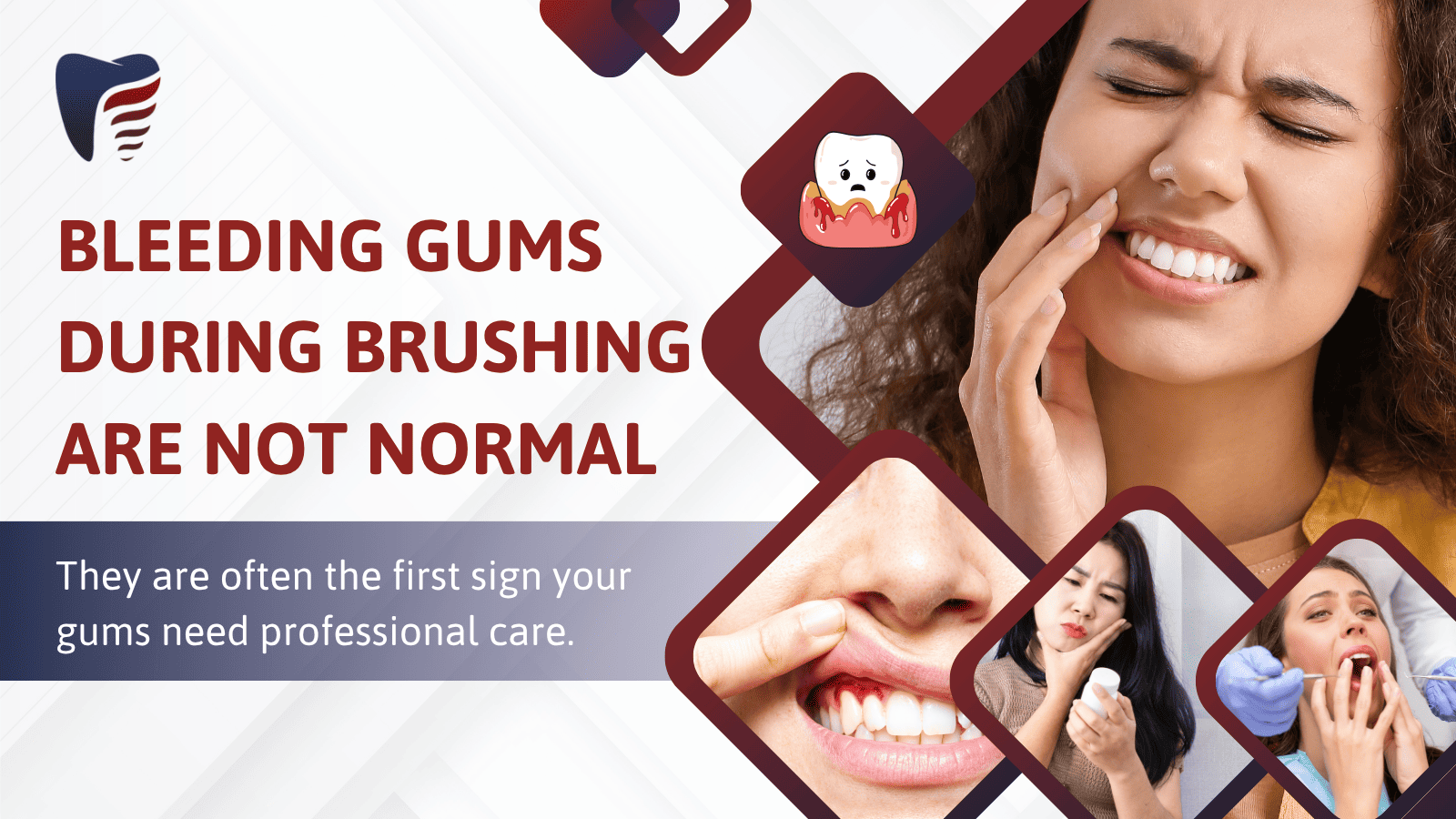
- Bleeding while brushing or flossing: Healthy gums don’t bleed when you clean them. Bleeding is a common symptom of inflammation around the gumline.
- Gums should be firm and pale pink, not red or swollen: If your gums are red or swollen, it means that plaque buildup is bothering them.
- Nasty breath that won’t go away: Bacteria that get stuck along the gumline might make a nasty smell that won’t go away even after brushing.
- Discomfort or sensitivity along the gums: Pain along the gumline could be a sign of an early infection or tissue irritation.
These indicators might not seem like much, but they are often the first signs of gum disease. Taking action at this point makes it feasible to change things back.
Can Gum Disease Be Reversed?
The answer depends on how far along the disease is.
Gingivitis is the first stage of gum disease, and it can be reversed. The inflammation only affects the gums’ surface. The tissue can get back to being healthy if you clean it well and take care of your mouth on a regular basis. Bleeding stops, swelling goes down, and the gums get their normal color and texture back.
The situation changes when things get worse. Periodontitis impacts the deeper supportive structures, such as bone. The damage can’t be fixed at this point. The goal of treatment is to stop the infection, stop the teeth from breaking down more, and keep the support around the teeth that is still there.
This difference is important. Finding it early means you can fully recover. Delay changes the goal from reversal to management.
How Long Does It Take to See Improvement?
Your gums don’t get better overnight. The timeline depends on how bad the condition is and how well the care stays the same.
In the beginning, patients often see less bleeding and swelling after a few weeks. As plaque control gets better, the gums start to look and feel better.
Treatment takes longer in more serious cases. Regular trips to the dentist and good care at home are very important for managing the condition.
The pattern is still clear. The sooner you do something, the better it will get.
You Might Also Like:
What Happens If You Ignore It?
Gum disease changes over time. Without treatment, it keeps getting worse and spreads to deeper structures over time.
- Moving on to a more serious type of gum disease: Periodontitis is when an infection that starts as mild inflammation spreads below the gumline and becomes harder to control.
- Hurt the bone that holds it up: The infection starts to hurt the bone that holds the teeth in place. As this support gets weaker, teeth may become less stable.
- Teeth that aren’t tight or that move: The bite or position of the teeth may change as the supporting structures break down.
- More likely to lose teeth: In very bad cases, the damage may be so bad that the tooth is hard to save.
If you ignore early signs, you may need more complicated treatment and have long-term effects.
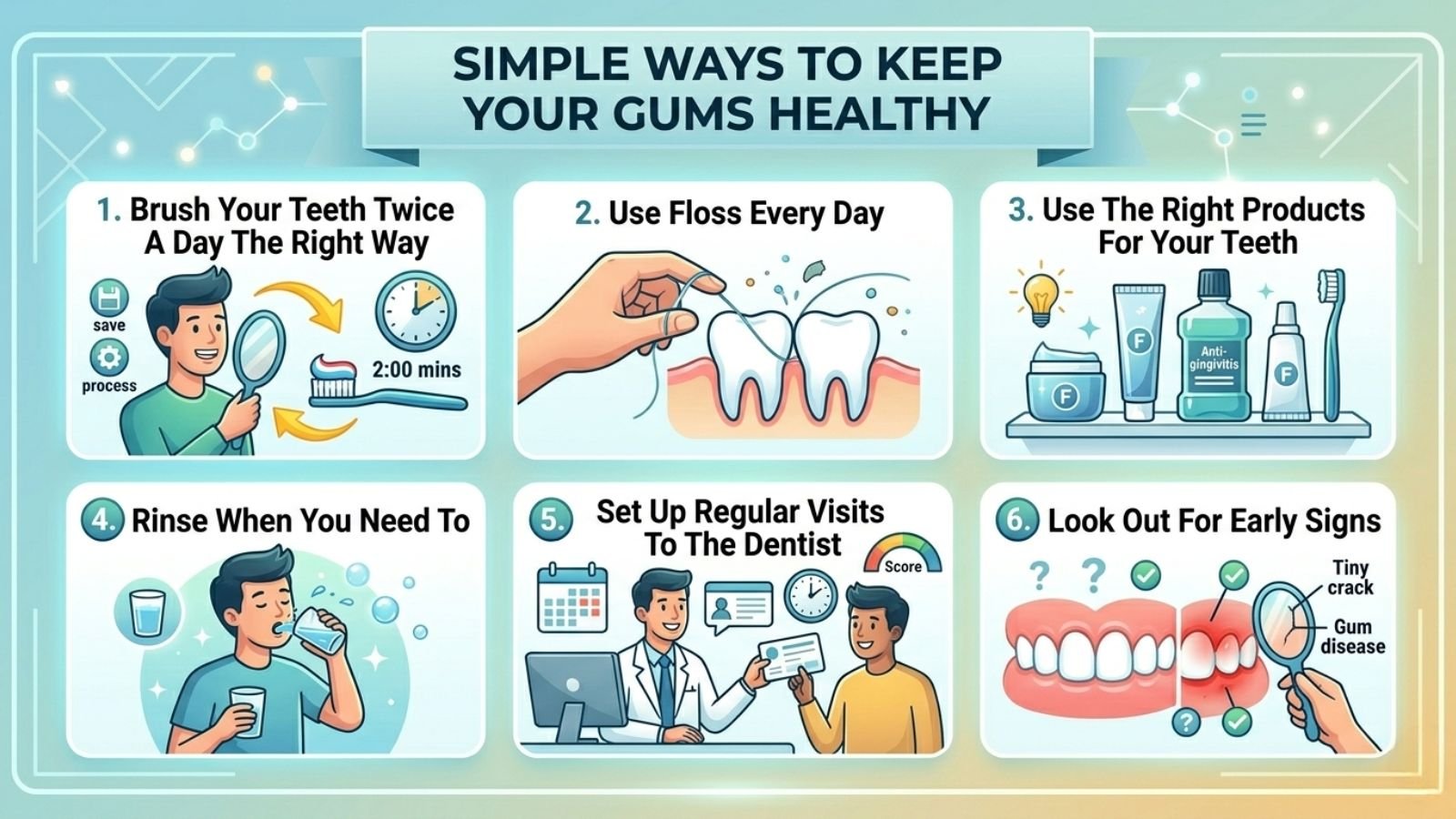
Simple Ways to Keep Your Gums Healthy
Taking care of your gums doesn’t have to be hard. Over time, a few good habits can make a big difference.
- Brush your teeth twice a day the right way: Cleaning along the gumline is important because plaque tends to build up there.
- Use floss every day: Flossing gets rid of food and plaque that gets stuck between teeth and under the gumline.
- Use the right products for your teeth: A toothbrush with soft bristles and fluoride toothpaste are safe for daily use and won’t hurt the gums.
- Rinse when you need to: An antibacterial mouthwash can help get rid of bacteria in places that are hard to clean.
- Set up regular visits to the dentist: Regular checkups can help find early signs of gum disease and keep plaque in check with professional cleanings.
- Look out for early signs: Don’t ignore bleeding, swelling, or bad breath that won’t go away. Taking action early makes treatment easier.
These small, regular steps help keep your gums healthy and lower your risk of long-term problems.
When Should You See a Dentist?
Gum problems usually start out small, but some signs need to be looked at right away. A visit at the right time can stop more damage from happening and speed up treatment.
- Bleeding that doesn’t get better: If your gums bleed a lot even when you brush and floss them correctly, it means that they are still inflamed and need to be looked at.
- Redness that doesn’t go away or swelling: The gums should be pale pink and firm. Changes in color or shape that keep happening could mean an infection.
- Breath that smells bad and won’t go away: A smell that doesn’t go away could mean that bacteria are building up below the gumline.
- Recession of the gums: If your teeth look longer or the gumline pulls back, it could mean that the tissue is breaking down.
- Changes in your bite or teeth that are loose: If your teeth start to fit together differently, you need to see a dentist right away.
Talking to someone early on makes treatment easier and more focused.
How Paragon Dental Helps You Restore Gum Health
Healthy gums need timely care and the right guidance. With a structured approach, you can control gum disease and protect your smile for the long term.
At Paragon Dental, treatment begins with a clear understanding of your gum health. The focus stays on stopping the disease early and protecting long term oral stability.
- Thorough gum assessment: Dentists evaluate gum pockets, tissue condition, and bone support to identify the stage of disease.
- Personalized treatment approach: Care plans address your specific condition, whether it involves routine cleaning or deeper periodontal therapy.
- Focused infection control: Targeted treatments aim to remove bacteria and support tissue healing.
- Ongoing maintenance support: Regular follow ups and cleanings help keep gum disease under control and prevent relapse.
- Patient guidance at every step: Clear instructions help you maintain results at home with confidence.
If you notice early signs or want to protect your gum health, schedule a consultation and take the first step toward healthier gums.
FAQs
- Can gum disease really be reversed at home?
Gum disease in its early stage can improve with consistent brushing, flossing, and better oral habits. However, a professional cleaning is often needed to fully remove plaque buildup and restore gum health.
- What is the fastest way to improve gum health?
Start with a professional dental cleaning, then maintain a strict oral care routine at home. Daily flossing and proper brushing along the gumline can lead to visible improvement within a few weeks.
- How do I know if my gum disease is serious?
Persistent bleeding, gum recession, loose teeth, or changes in bite often indicate advanced gum disease. These signs require prompt evaluation by a dentist.
- How often should I visit a dentist for gum health?
Most people benefit from checkups every six months. If you have gum disease, your dentist may recommend more frequent visits to monitor and manage the condition.

As the leading cosmetic dentist in Modesto, CA, and founder of Paragon Dental, I’m proud to serve our community with state-of-the-art care. A Fellow of the International Congress of Implantology (ICOI) and Associate Fellow of the American Academy of Implant Dentistry (AAID), I focus on advanced, evidence-based care. Through continuous learning and modern technology, my team and I are committed to delivering comfortable, personalized treatment for healthy and lasting smiles