A child’s dental care begins before they have a complete set of baby teeth. Parents should begin a brushing program as soon as the first tooth erupts to protect the enamel and to avoid early childhood cavities. Fluoride toothpaste is a vital part of this practice.
But how much to use, and what age should your child start? It is contingent upon your child’s age and brushing practices. This resource provides information about when to start using fluoride toothpaste, how much to use, and what parents should know about its safety.
When Should Kids Start Using Fluoride Toothpaste?
Once a child’s first tooth appears, he should start using fluoride toothpaste. Usually, this occurs at about six months of age. As your child gets older, the amount of toothpaste should increase.
Here’s a simple, age-wise guide.
| Child’s Age | When To Use Fluoride Toothpaste | Recommended Amount |
|---|---|---|
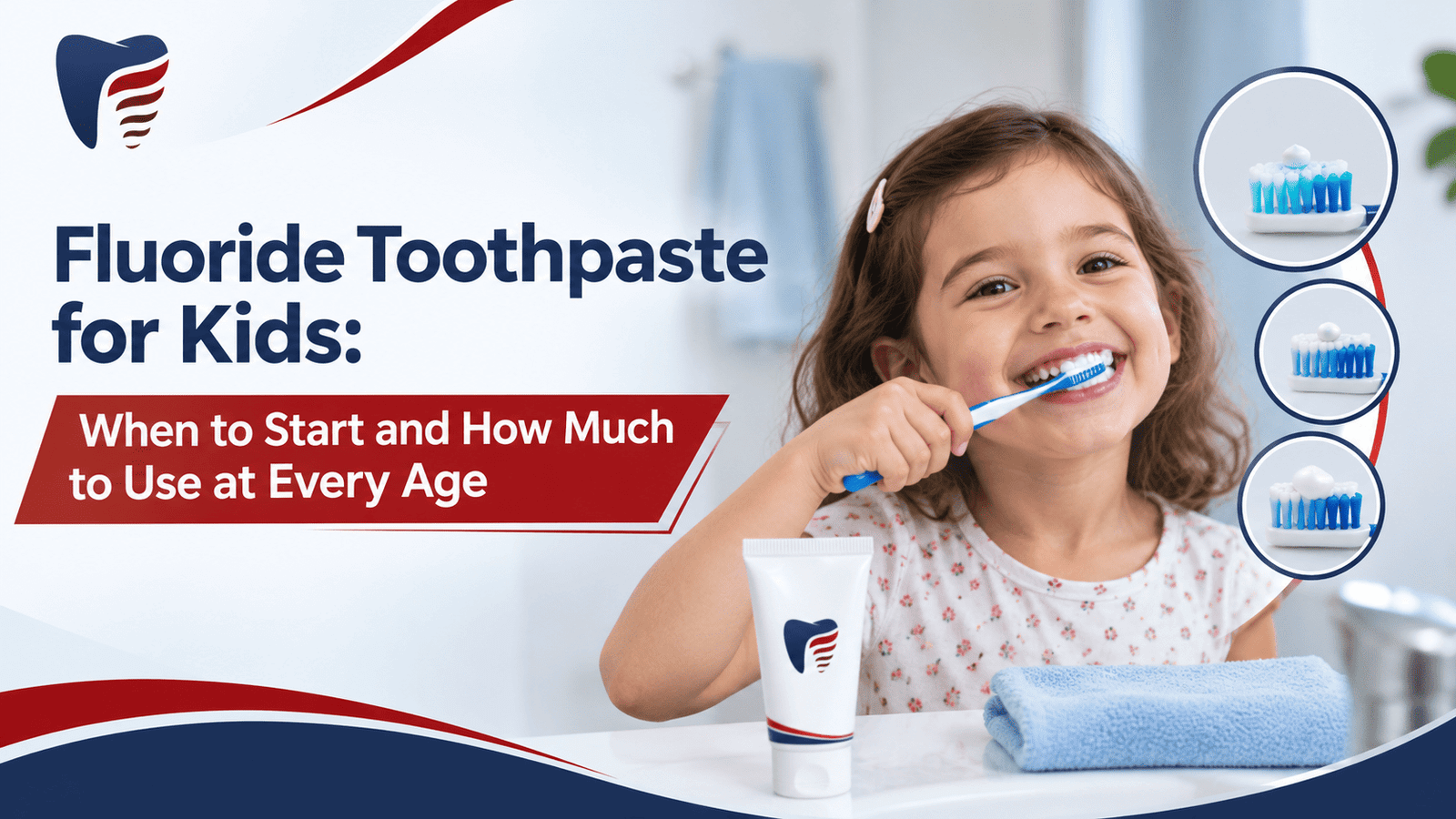
| First tooth to age 3 | Start as soon as the first tooth appears | Rice-grain-sized smear |
| Ages 3 to 6 | Brush twice a day with fluoride toothpaste | Pea-sized amount |
| After age 6 | Continue brushing twice a day | Follow the toothpaste label or dentist’s advice |
Parents should monitor all brushing and squeeze the toothpaste onto the toothbrush for young children. Teach your child to spit the toothpaste out after he is finished brushing and not swallow it.
What’s important is to start early and utilize the amount recommended for your child’s age. Consult your dentist if your child is at high risk for cavities or has trouble spitting up toothpaste.
Also Read: Are Dental Sealants Worth It for Kids? What Parents Should Know About Cavity Prevention
Is Fluoride Toothpaste Safe for Children?
Yes. Fluoride toothpaste is safe for children when used at the dose recommended for their age. It helps to strengthen tooth enamel, aids in remineralization, and helps prevent cavities. Dentists recommend using it from the moment the first tooth erupts in a child.
The big worry is too much fluoride. Young children might ingest toothpaste before they learn to spit it out. Dental fluorosis is a condition that can cause faint white markings to appear on permanent teeth. Regularly ingesting too much fluoride can cause it.
Using a smear the size of a grain of rice for children under 3 and a pea-sized quantity for ages 3 to 6 minimizes this risk. Parents should watch their youngsters brush and instruct them to spit out toothpaste. If you are concerned about fluoride exposure, discuss it with your child’s dentist.
How Should Parents Brush Their Child’s Teeth?
Good brushing practices begin as soon as the first tooth comes in your child. Parents should brush babies and toddlers’ teeth and then assist youngsters as they gain the coordination to brush independently.
Bear these things in mind:
Select the right toothbrush: Use a child-sized toothbrush that fits comfortably in your child’s mouth and has soft bristles.
Use fluoride toothpaste: Use a rice-grain-sized smear for toddlers under 3 and a pea-sized quantity for children aged 3 to 6.
Brush twice daily: Brush your child’s teeth for two minutes in the morning and before bedtime.
Brush each tooth surface: Front, rear and chewing surfaces, along the gumline.
Spit, don’t swallow: Teach your youngster to spit the toothpaste out after brushing, not to swallow it.
Watch your youngster brush until they have the ability to clean every tooth surface and spit out toothpaste on their own. Regular dental checkups can also help you examine your child’s brushing technique and oral hygiene.
You Might Also Like: Dental Anxiety in Modesto: How Sedation Dentistry Can Make Treatment More Comfortable
How Do You Choose the Right Fluoride Toothpaste for Your Child?
Look for a fluoride toothpaste that is suitable for your child’s age. Fluoride levels and age requirements vary from product to product, so check the label before you buy it.
Look for components like sodium fluoride or stannous fluoride. The pack will also indicate the amount of toothpaste to use for your child’s age. If your child gets cavities often, their dentist could prescribe a little extra fluoride protection.
Some youngsters may also need to use prescription-strength fluoride toothpaste, depending on their oral health. If you’re not sure which to choose, ask your child’s dentist. They can look at your child’s teeth and prescribe a toothpaste that suits them.
When Should Your Child First Visit a Dentist?
Your child should see a dentist by age 1 or within 6 months of the first tooth coming in. This enables the dentist to monitor the early development of teeth and look for deterioration.
The dentist may check your child’s teeth and gums at the appointment and check the risk for cavities and talk about brushing, fluoride and feeding habits. They can also help you with issues around teething and protecting infant teeth.
Regular trips to the dentist help your child learn good oral hygiene habits early in life. If you see white spots, brown markings or apparent damage on your child’s teeth, get an appointment straight away.
Conclusion
Fluoride toothpaste is a vital part of safeguarding your child’s teeth from the first tooth. The appropriate amount, consistent brushing and parental supervision aid to reduce cavities and help healthy tooth development.
If you have questions about fluoride, use or your child’s oral health, go to a pediatric dentist. To arrange your child’s dental visit and discuss preventive care, contact Paragon Dental in Modesto.
FAQs
Can newborns have fluoride toothpaste?
Yes. Fluoride toothpaste can be used on babies when they get their first tooth, which is usually around six months of age. Use a rice-sized amount of toothpaste and a soft infant toothbrush twice a day. Parents should brush the baby’s teeth and ensure no excess toothpaste is swallowed.
What does a toddler do if they eat fluoride toothpaste?
It is common for children to swallow small amounts of toothpaste during brushing. This is generally harmless. However, swallowing too much or too often can lead to an increased fluoride intake and increased risk of dental fluorosis. Use a smear of toothpaste the size of a grain of rice for children under 3 years of age and supervise them every time they brush.
Is it safe for kids to use fluoride toothpaste every day?
Yup. Brush your teeth twice a day with fluoride toothpaste, after breakfast and before you go to bed. Regular use makes the enamel stronger and prevents decay. Parents should use the amount indicated for their child’s age.
Is fluoride-free toothpaste safer for children?
No. Toothpaste with fluoride has been proven to help prevent cavities by strengthening enamel and helping remineralization. Fluoride-free toothpaste is less effective in preventing cavities. If you have concerns regarding fluoride, discuss them with your child’s dentist before you switch products.
Is too much fluoride bad for a child’s teeth?
Yeah. Permanent teeth may show faint white spots of dental fluorosis, which is caused by too much fluoride during tooth formation. Young children using toothpaste regularly are at increased risk. Supervise brushing. Use the recommended amount to help prevent over-ingestion.
At what age may my child brush their teeth by themselves?
Most kids have the coordination to brush on their own by age 7 or 8. But that depends on the kid. Until your child can brush all tooth surfaces correctly, use the right amount of toothpaste, and spit it out without aid, supervise brushing.

As the leading cosmetic dentist in Modesto, CA, and founder of Paragon Dental, I’m proud to serve our community with state-of-the-art care. A Fellow of the International Congress of Implantology (ICOI) and Associate Fellow of the American Academy of Implant Dentistry (AAID), I focus on advanced, evidence-based care. Through continuous learning and modern technology, my team and I are committed to delivering comfortable, personalized treatment for healthy and lasting smiles