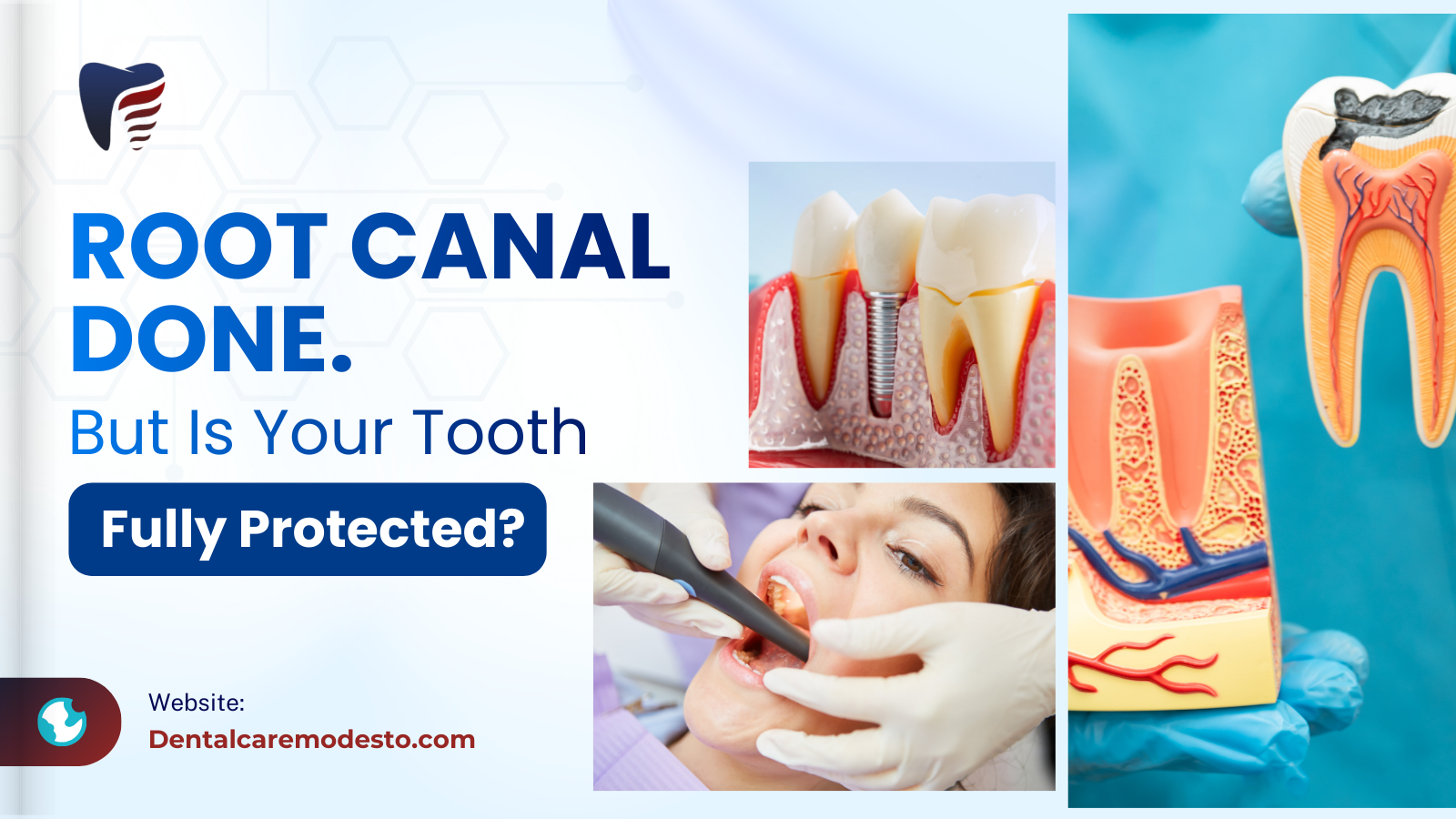
You walk out of your root canal appointment with relief. The pain has stopped. The infection has cleared. Then your dentist says, “We need to place a crown.”
Many patients pause at that point. They ask, “Why do I need another procedure if the root canal fixed the problem?”
That question makes sense. A root canal removes infection and saves your natural tooth. A dental crown protects that tooth for the long term. If you forgo a crown, you’re opening the door to potential problems: a fractured tooth, reinfection, or, in the worst-case scenario, loss of the tooth altogether.
This guide will walk you through the importance of dental crowns following a root canal, the consequences of postponing the procedure, the most effective materials, and what you can anticipate during the process.
Why Your Dentist Insists on a Crown After a Root Canal
A root canal procedure eliminates infection and alleviates pain, but it doesn’t restore the tooth’s structural integrity. Once the pulp is removed, the tooth loses its internal nourishment and support. This alteration impacts its strength, particularly in the back teeth, which endure significant biting forces.
Here is why dentists strongly recommend a dental crown after root canal treatment:
- Loss of Internal Support: The pulp chamber once housed nerves and blood vessels that supported the tooth. After removal, the remaining structure becomes more brittle and prone to fracture.
- High Chewing Pressure on Molars and Premolars: Back teeth absorb significant occlusal force during daily function. Without full coverage, weakened cusps can crack under normal chewing.
- Risk of Sudden Fracture: A treated tooth can split without warning. Once a fracture extends below the gumline, restoration may no longer remain possible.
- Need for Structural Reinforcement: A dental crown covers the entire visible portion of the tooth. It binds weakened cusps together and redistributes bite pressure evenly.
- Long-Term Preservation of the Natural Tooth: Dentists recommend crowns as protection, not as an upgrade. When you complete both the root canal and crown placement, you strengthen the tooth and increase its lifespan.
A root canal saves the tooth from infection. A crown protects it from structural failure. Together, they restore both health and function.
Also Read: Top Cosmetic Dentistry Modesto Procedures and Which One Is Right for You
What Happens to a Tooth After a Root Canal?
You need to know what a root canal does to the tooth itself in order to understand why dental crowns are important.
Your dentist takes out infected pulp from the inner chamber during a root canal. Nerves, blood vessels, and connective tissue are all in that pulp. The pulp can’t heal once the infection spreads. Removal is the only way to save the tooth.
Your dentist will seal the canals with a material that is safe for the body after cleaning and shaping them. The tooth stays in your mouth, but the inside of it changes.
After treatment, this is what changes:
- The tooth loses moisture from the inside.
- The dentin gets more fragile.
- There may be big repairs or decay in the rest of the structure.
- Most of the time, the biting surface needs to be cut down a lot.
A back tooth has to deal with a lot of pressure from the other teeth. The risk of breaking increases when it doesn’t have support inside. A vertical crack can break the tooth beyond repair. At that point, the only choice may be to pull it out.
A dental crown helps keep the structure of the tooth strong. It covers weak cusps and makes a single, smooth surface.
Why Dental Crowns Are Usually Needed After a Root Canal
There are clear clinical reasons why dentists put dental crowns on after root canal treatment. Their goal is to stop failure, not make more work for themselves.
- Structural Protection: A treated molar can break when you chew normally. A crown goes over the cusps and keeps them from breaking off.
- Reinforcement Against Fracture: Teeth that have been endodontically treated are more likely to break if they don’t have full coverage restorations. A crown takes in stress and spreads force across the arch.
- Seal Against Bacteria: A well-fitted crown creates a snug seal at the top of the tooth. This seal prevents bacteria from re-entering the canal system. Without this barrier, reinfection is a real possibility.
- Functional Restoration: Extensive decay or old fillings can compromise a tooth’s structure before root canal treatment even begins. A crown restores the tooth’s shape, bite, and contact with neighboring teeth.
- Improving appearance: Crowns may be needed on front teeth that are discolored or badly damaged. Porcelain or zirconia materials look like real enamel.
When Might a Crown Not Be Necessary?
A front tooth that has lost very little structure may not need a crown in some cases. If the damage is minor and the enamel remains unbroken, your dentist might opt for a composite filling. The decision hinges on a careful assessment of the bite, the teeth’s alignment, and the remaining tooth structure.
You Might Also Like: Pediatric Dentistry in Modesto: A Complete Parent’s Guide to Your Child’s Oral Health (From First Tooth to Teen Years)
What Happens If You Do Not Get a Crown After a Root Canal?
A lot of patients put off getting crowns because they feel fine. Pain relief gives you a false sense of safety.
If you don’t wear the crown, this could happen:
- Cuspal Fracture: The back teeth take the most pressure when you chew. A cusp that is weak can break without warning. Once that crack goes below the gumline, it can’t be fixed.
- Vertical Root Fracture: A crack that goes down the root often means that the tooth needs to be pulled. A filling won’t fix this kind of fracture.
- Reinfection: Temporary fillings don’t keep your teeth safe for long. Microleakage can let bacteria into the canal system. Reinfection may need more treatment or surgery.
- More expensive: Putting in a dental implant or bridge to replace a broken tooth costs a lot more than putting in a crown. Early protection saves both money and the structure of the tooth.
The tooth is saved by a root canal. A dental crown keeps that investment safe.
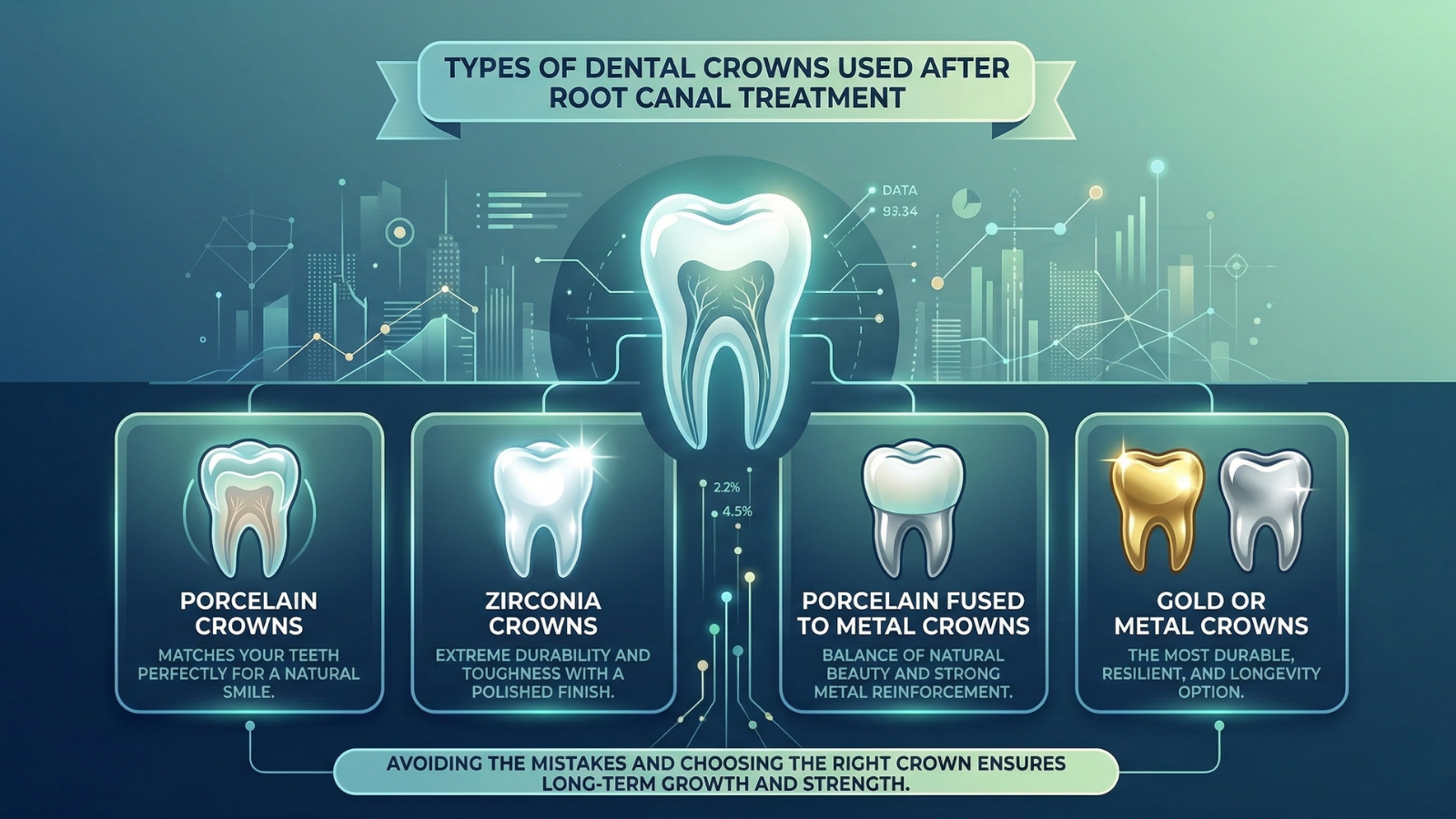
Types of Dental Crowns Used After Root Canal Treatment
Your dentist chooses the crown material based on how it works, how it looks, and how your teeth fit together. There are different benefits to each option.
Porcelain Crowns
Porcelain is a common material for front teeth. The way the material reflects light is similar to how natural enamel does. It has a lot of aesthetic value. Porcelain alone, on the other hand, might not be strong enough for molars that are under a lot of stress.
Zirconia Crowns
People like zirconia for their back teeth. It has a tooth-colored look and a lot of strength when bent. Many patients choose zirconia because it looks good and lasts a long time.
Porcelain Fused to Metal Crowns
There is a metal base and a porcelain top on these crowns. They are strong and look good. Over time, some patients may see a dark line near the gum.
Gold or Metal Crowns
Gold crowns last a long time and are very biocompatible. They don’t wear out easily and don’t need much tooth reduction. Many patients don’t want them for cosmetic reasons, but they work well in the molar areas.
Choosing the Right Material
Your dentist checks:
- Where the tooth is
- Force of the bite
- Grinding habits
- Expectations for beauty
- Things to think about when making a budget
The goal is still simple: keep the tooth safe and keep your bite in balance.
The Dental Crown Procedure Step by Step
A lot of people who have had a root canal don’t know what happens next. The steps in the crown process are clear. You feel more ready and sure of yourself when you know what to expect.
Here is how the process usually goes, along with some useful advice for each step.
Step 1: Evaluation and Tooth Preparation
Your dentist looks at the tooth that was treated and the tissue around it. They check the bite, look at the structure that is still there, and make sure that the root canal has healed correctly.
The dentist then shapes the tooth. This step makes room for the crown and sets a clean edge for a perfect fit.
Tips: Ask your dentist to show you a picture of the tooth that has been prepared. Seeing the structure helps you understand why full coverage keeps you safe.
Step 2: Core Build-Up
Your dentist may put in a core build-up if the tooth has lost a lot of structure because of decay or old fillings. This material strengthens the inside of the crown so that it has stable support.
A strong core makes it less likely that you will break a bone and keeps you from losing weight.
Tip: If you grind your teeth, tell your dentist before they put on the crown. The force of a bite affects the choice of materials and the design.
Step 3: Impressions or Digital Scanning
Your dentist takes an exact measurement of the tooth that is ready. Instead of traditional impression material, many practices now use digital scanners. Digital models make things more accurate and less distorted.
The lab uses this information to make a custom dental crown that fits your bite.
Tip: When you scan or make impressions, keep your jaw relaxed. Small movements can change how accurate something is.
Step 4: Temporary Crown Placement
While the final crown is being made, your dentist puts a temporary crown on the prepared tooth to protect it. This temporary shield stops sensitivity and the growth of bacteria.
Temporary crowns aren’t as strong as permanent ones.
Tip: Don’t eat foods that are sticky, like caramel or gum. These can move the temporary crown. Call your dentist right away if it comes loose.
Step 5: Final Crown Fitting and Cementation
Your dentist will take off the temporary crown and check the fit of the permanent one during your second visit. They check the contact points, the bite alignment, and the shade match.
The dentist then cements the crown in place once it fits right.
Tip: After putting them in, pay attention to how your bite feels. If you feel uneven pressure or pain, make an appointment for a quick adjustment. Small changes made early can keep the tooth from getting too stressed out over time.
Step 6: Post-Placement Care
You can eat normally again after cementation, but only after the numbness goes away. The crown should feel normal in a few days.
Tip: Brush and floss around the crown margin every day. Long-term success depends on having healthy gums.
The crown process finishes your root canal treatment. Strength, fit, and function are the main goals of each step. A dental crown can protect your tooth for many years if it is put on correctly and taken care of properly.
Must Read: Considering Dental Implants in Modesto? Everything You Need to Know Before You Decide
How Long Do Dental Crowns Last After a Root Canal?
A dental crown that is made well can last for ten to fifteen years or more. There are a number of things that affect how long something lasts.
- Material Choice: In areas with a lot of stress, zirconia and gold crowns last longer than porcelain crowns.
- Taking care of your teeth: Plaque buildup around the crown margin can cause decay to form under the restoration. Brushing and flossing every day keep the supporting tooth structure safe.
- Bite Forces: Teeth grinding, or bruxism, puts too much stress on crowns. To protect your restoration, your dentist may suggest a night guard.
- Regular dental visits: Regular checkups help find wear, margin breakdown, or cement failure early on.
Here are some signs that a crown might need to be replaced:
- Cracks that can be seen
- Gum loss around the edge
- Constant pain
- Lack of tightness
If you take good care of it, a crown can last for a long time.
Cost of Dental Crowns After a Root Canal
Cost is still a big worry. The price of dental crowns depends on the material, the quality of the lab, and where you live.
Things that affect the price are:
- Material used to make the crown
- Need for core build-up
- How complicated the case is
- Technology used to make things
After a root canal, a lot of dental insurance plans will pay for part of the cost of putting in a crown. Your policy will tell you what it covers.
Putting off treatment may make the total cost go up. A broken tooth may need to be pulled, have bone grafted, and have an implant put in. Early protection is often cheaper.
If you’re not sure because of your budget, ask your dentist about phased treatment plans or ways to pay for them.
Caring for Your Dental Crown
A crown does not require special tools or complex routines. It does require consistent care. Here’s what you should do:
- Brush Twice Daily: Use a soft-bristled toothbrush and fluoride toothpaste. Focus on the gumline where plaque accumulates.
- Floss Daily: Slide floss gently under the contact point. Remove debris along the crown margin.
- Avoid Excessive Force: Do not chew ice or hard objects. Such habits increase fracture risk.
- Protect Against Grinding: If you clench or grind, wear a custom night guard. This device reduces occlusal stress.
- Schedule Regular Checkups: Your dentist monitors crown integrity and surrounding tissue health.
Strong habits protect both the crown and the underlying tooth.
Common Myths About Dental Crowns After a Root Canal
People often put off getting crowns because they hear things that aren’t true from other people. Let’s get rid of the most common myths in a simple and useful way.
Myth 1: “I don’t need a crown if the pain is gone.”
The infection is gone if the pain goes away. It doesn’t mean the tooth is healthy. After a root canal, the tooth is weaker and more likely to break, especially the molars.
How to fix: Put the crown in the time frame that your dentist suggests. Don’t wait for symptoms to show up. Before damage happens, protection works best.
Myth 2: “Crowns are only for looks.”
A crown does make things look better, but its main job is to hold things together. It covers and keeps the rest of the tooth stable. The tooth can break if you chew on it without it.
How to fix: Ask your dentist to tell you how much of the natural structure is still there. First, think about how it works, and then how it looks.
Myth 3: “A tooth that doesn’t have a nerve can’t break.”
The nerve doesn’t control strength; it controls feeling. The enamel and dentin can still handle the forces of daily bites. A tooth that has been treated can break without warning.
How to fix: Don’t judge how healthy your teeth are by how much they hurt. Complete the full coverage to stop structural failure.
Myth 4: “The temporary filling is all you need.”
Temporary materials don’t last long. They can break or leak, which makes it more likely that you will get sick again or break something.
How to fix it: Make an appointment for your permanent crown as soon as you can. Don’t eat hard foods until the last placement.
Myth 5: “I’ll fix it later if it breaks.”
Some fractures go below the gumline. In those situations, the tooth can’t be saved. It takes more time and money to replace something with an implant or bridge.
How to fix: Think of the crown as preventive care. Take care of the tooth now so you don’t have to have it pulled later.
Myth 6: “I only need crowns on my back teeth if I chew hard.”
Chewing normally puts a lot of pressure on molars. You can’t stop using one side of your mouth forever.
How to fix it: Fully restore the tooth so that it can do its normal job without any problems.
The purpose becomes clear once you get rid of the myths. A dental crown after a root canal protects the tooth, makes it stronger, and lowers the risk of problems in the future.
When to Contact Your Dentist
Be on the lookout for warning signs even after the crown is in place.
If you see any of the following, call your dentist:
- Pain or pressure that doesn’t go away
- Swelling around the gum
- A temporary crown that is loose or has come off
- A tooth that is broken before the final crown is put on
Quick care keeps problems from getting worse.
How Paragon Dental Solutions Protects Your Smile After a Root Canal
A root canal is not the end of saving your tooth. For long-term success, you need to be precise, plan ahead, and use the right restorative method. Our team at Paragon Dental Solutions is focused on making sure that your teeth are strong, balanced, and protected for a long time.
This is how we help you with every part of the crown process:
- Full Evaluation and Diagnosis
Before suggesting a crown, we look at the remaining tooth structure, the way the teeth fit together, and the tissue around the tooth. This makes sure that the treatment helps both strength and the long-term outcome.
- Choosing materials based on their function
Not all teeth need the same kind of material. We help you choose between zirconia, porcelain, and other crown types based on how strong your bite is, how good they look, and how long they last. The goal is still simple: keep your smile in harmony while protecting your tooth.
- Crown preparation that is precise
A strong marginal seal is made by preparing the tooth correctly. This keeps bacteria from leaking out and protects the root canal treatment underneath.
- Digital impressions and advanced imaging
Digital scanning makes things fit better and cuts down on guesswork. A precise crown reduces the need for adjustments and helps keep things stable over time.
- Alignment of the bite and balance of the occlusion
Too much pressure on the bite can shorten the life of the crown. We look at the contact points and change the occlusion to keep the restored tooth from getting too much stress.
- Keeping an eye on and taking care of things over time
Regular checkups help us find wear, changes in the margin, or problems that are starting to happen. Preventive care can help your dental crown last for a long time.
A root canal will save your real tooth. A dental crown that is well-made protects it. At Paragon Dental Solutions, we care about both function and longevity so you can eat, talk, and smile with confidence.
Make an appointment for your consultation today and finish your treatment with peace of mind.
FAQs
- Do I always need a crown after getting a root canal?
Ans. Most molars and premolars need crowns because they can handle a lot of chewing pressure. Front teeth may not need full coverage if there is still enough natural structure left. Before making a recommendation, your dentist will check how much of the tooth is still there.
- How long can Iput off getting the crown?
Ans. Most of the time, dentists say to put the crown on within a few weeks. If you wait too long, you are more likely to get cracks, fractures, or infections again. Early protection increases the chances of success in the long run.
- How long will a crown stay on a tooth that has been treated?
Ans. With the right care, a well-made crown can last 10 to 15 years or more. The length of time they last depends on how well you take care of your teeth, how hard you bite, how often you grind your teeth, and how often you go to the dentist.
- Will the procedure hurt?
Ans. Most patients don’t feel much pain or discomfort during placement. The nerve has already been taken out, and local anesthesia keeps the area from hurting. Your gums may be sore for a short time.
- What will happen ifI don’t wear the crown?
Ans. The tooth can break when you chew normally if it isn’t protected. In very bad cases, the fracture may go below the gumline and need to be pulled out. Finishing treatment lowers this risk.

As the leading cosmetic dentist in Modesto, CA, and founder of Paragon Dental, I’m proud to serve our community with state-of-the-art care. A Fellow of the International Congress of Implantology (ICOI) and Associate Fellow of the American Academy of Implant Dentistry (AAID), I focus on advanced, evidence-based care. Through continuous learning and modern technology, my team and I are committed to delivering comfortable, personalized treatment for healthy and lasting smiles