The success of the dental implants, Modesto, depends on the strength of the jawbone. Thus, bone grafting becomes an important procedure when bone volume is not sufficient due to tooth loss, gum disease, trauma, or denture wear.
According to clinical research, over 50% of dental implant sites require bone grafting to ensure sufficient jawbone support before implant placement. For many patients in Modesto, bone grafting is the procedure that turns a first “no” into a resounding “yes” for dental implants.
However, with the latest grafting methods, dental implants, Modesto can now be placed even after several years of losing teeth.
What Is Bone Grafting for Dental Implants?
Bone grafting is a procedure that helps rebuild or densify the jawbone enough to support dental implants. The bone graft serves as a matrix to stimulate the growth of new bone in your body.
Once it is healed, the bone graft is strong enough to support Dental implants just like the jawbone.
Why Do Modesto Patients Need Bone Grafting Before Implants?
The rate at which bone loss occurs is much quicker than most people think. In the first year following the loss of teeth, patients can experience a loss of up to 25% of the bone surrounding the teeth. The causes of this bone loss are:
- Missing teeth left untreated
- Advanced gum disease
- Long-term denture wear
- Trauma or infection
- Fully erupted wisdom teeth with bone destruction
Bone grafting undoes the damage and makes implants possible again.
How Do Dentists Determine If You Need Bone Grafting?
Dental Implant, Modesto dentists use:
- 3D CBCT Scans
- Digital X-rays
- Bone height and width measurements
- Sinus proximity analysis (Upper jaw)
If the bone height is below the safe levels (usually below 8mm), then grafting is advised to guarantee the success of the implant.
What kinds of bone grafts are there for dental implants?
- Autograft (Your Own Bone)
Here, the bone is transferred from another part of your jaw or body. It has the highest compatibility and is often used in complex cases.
- Allograft (Donor Bone)
A processed and sterilized donor bone is used for grafting. It is very common and safe as it eliminates the need to have a second incision in the body.
- Xenograft (Animal-Derived)
It serves as a permanent scaffold and is commonly used in sinus lifts.
- Synthetic Bone Grafts
It uses biocompatible materials and has predictable healing. It’s ideal for smaller grafts
Sinus Lifts: A Common Bone Grafting Procedure in Modesto
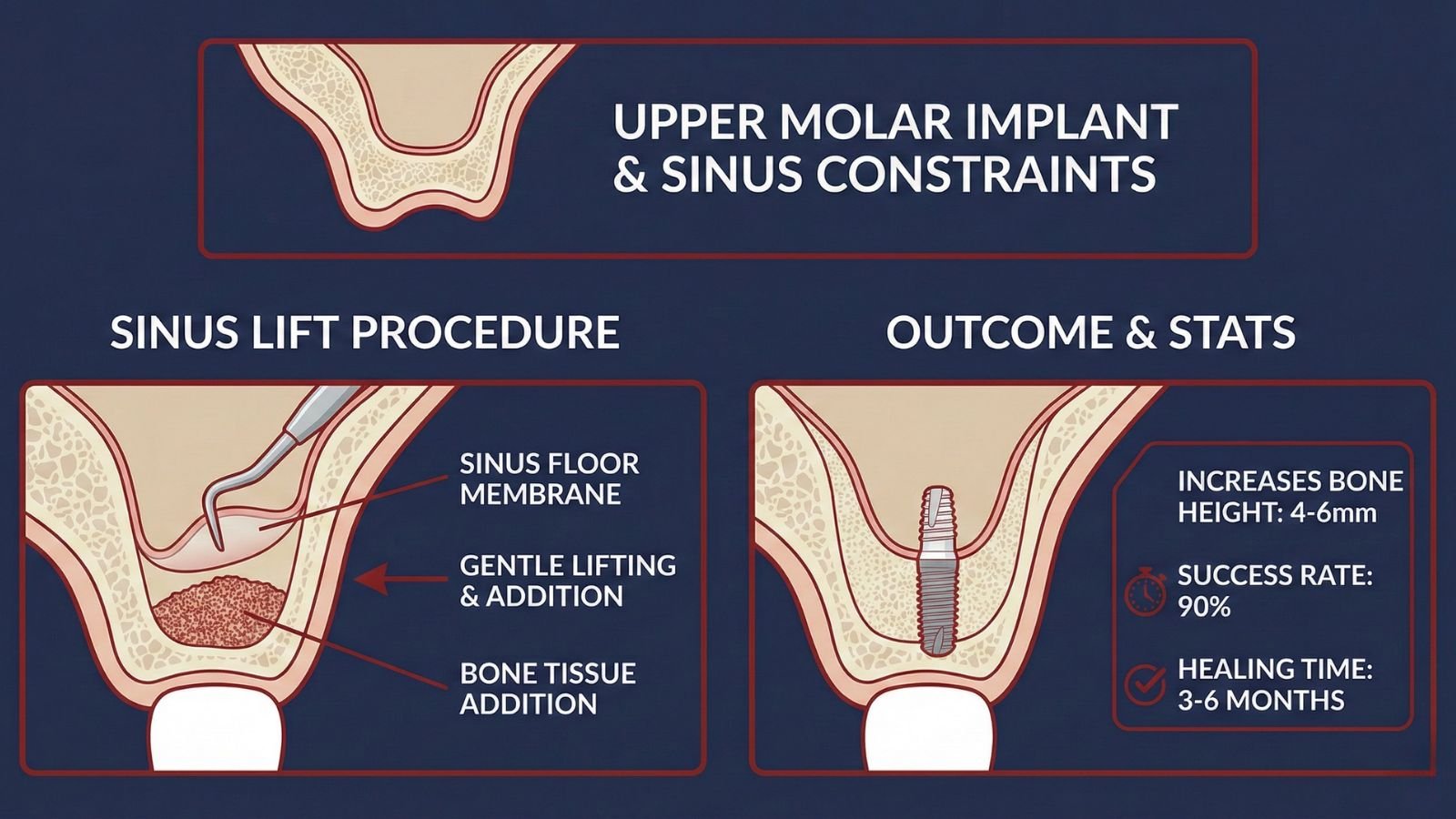
The upper molar implant may encounter sinus constraints. The sinus lift is a gentle lifting of the sinus floor membrane, along with the addition of bone tissue beneath it.
- Increases bone height by 4-6mm
- Success rate: 90%
- Healing time: 3-6
Is bone grafting painful?
Most patients experience only minimal discomfort, as in a routine extraction. Local anesthesia and sedation alternatives are readily available in Modesto.
The symptoms that may be experienced after the procedure:
- Mild swelling
- Temporary soreness
- Little bruising
The pain can be managed with medication and can be resolved within a few days.
Bone Grafting Procedure: 5 Simple Steps (Modesto Timeline)
Bone grafting can seem like a complicated process, but for most patients in Modesto, it is a simple procedure that can be accomplished in under an hour. Here is what happens, step by step.
Step 1: Anesthesia & Comfort (About 10 Minutes)
Your comfort is the priority. The process involves local anesthesia, which may be combined with nitrous oxide or IV sedation if you are nervous. Most patients report no pain during the procedure and feel relaxed.
Step 2: Bone Graft Preparation (Approx. 15 Minutes)
The dentist will then process the grafting material according to your treatment plan:
Autograft: Bone taken from your own jaw (chin or back of your mouth)
Allograft: Sterilized bone from a donor, widely used and very effective.
If the bone grafting procedure is carried out at the same time as the tooth extraction, the bone graft will be placed directly into the socket.
Step 3: Graft Placement & Site Preparation (Approx. 20 Minutes)
The Implant Dentist, Modesto makes a small incision to gain access to the bone. The area is cleaned, and the grafting material is placed exactly where the bone is needed. They also use a collagen membrane sometimes to protect the bone and ensure proper healing.
This is an important step in ensuring good bone regeneration.
Step 4: Suturing & Stabilization (Approx. 10 minutes)
The site is closed with dissolvable stitches. In the case of larger or block grafts, small titanium screws may be employed to fix the graft in place.
Once it is closed, the graft is secure from movement and infection.
Step 5: Healing Check & Confirmation (Week 2 and beyond)
During your follow-up appointment, your dentist will check on the healing progress. In most instances, a CBCT scan is performed later to verify bone integration.
After the graft has fully healed, you will be ready to proceed with dental implant placement.
Total surgery time: 45-60 minutes; Patients are discharged the same day.
Aftercare for Bone Grafting: Your 30-Day Survival Guide
Aftercare is a massive factor in the success of the graft. Follow this easy timeline to ensure that your bone heals properly.
Days 1-3: Protect the Graft
- Use ice packs (20 minutes on, 20 minutes off)
- Eat soft foods such as yogurt, soup, and smoothies
- Avoid sucking, spitting, or using straws
- Rest and keep your head elevated
Days 4-7: Healing Phase
- Rinse gently with chlorhexidine or salt solution (as directed)
- Tylenol or ibuprofen for pain relief (do not take aspirin unless directed)
- Light brushing, excluding the surgical area
- The swelling should start to resolve at this stage.
- Weeks 2-4: Stabilization Period
- Avoid crunchy, hard, or sticky foods
- Resume gentle brushing around the area
- No smoking or vaping as it significantly impacts the success of the graft.
After this, new bone starts to grow underneath.
Month 2: Implant Readiness Check
A CBCT scan can be performed to verify bone integration. Once healed, you will be given the green light to proceed with dental implants.
What is the average cost of bone grafts in Modesto?
| Type | Bone Gain | Cost | Timeline |
| Socket Preservation | 2-3mm | $500-$1,200 | +2 months |
| Block Graft | 4-6mm | $1,500-$3,000 | +4 months |
| Sinus Lift | 4-8mm | $2,000-$4,500 | +6 months |
Insurance: 50% medical dental plans cover. CareCredit = $100/month
What are the signs of Bone Graft failure?
Call your Modesto Dentist if you experience any of these symptoms-
- Persistent pain past week 2
- Pus/drainage from site
- Loose graft material
- Numbness that lasts more than 7 days
Conclusion
Bone grafting is not a problem; it’s a solution. For Modesto patients who have been told they do not have enough bone to support implants, bone grafting provides a second opportunity to replace teeth permanently.

As the leading cosmetic dentist in Modesto, CA, and founder of Paragon Dental, I’m proud to serve our community with state-of-the-art care. A Fellow of the International Congress of Implantology (ICOI) and Associate Fellow of the American Academy of Implant Dentistry (AAID), I focus on advanced, evidence-based care. Through continuous learning and modern technology, my team and I are committed to delivering comfortable, personalized treatment for healthy and lasting smiles